
World Cup 2026 in Travel
The largest World Cup in history stretched across three countries, turning travel, recovery and logistics into part of the competition itself. It became a story of crowds, commerce and the journeys required to hold it together. Behind the football’s defining moments was a vast, largely unseen network moving players, officials and fans across a continent.
A World Cup spread across a continent
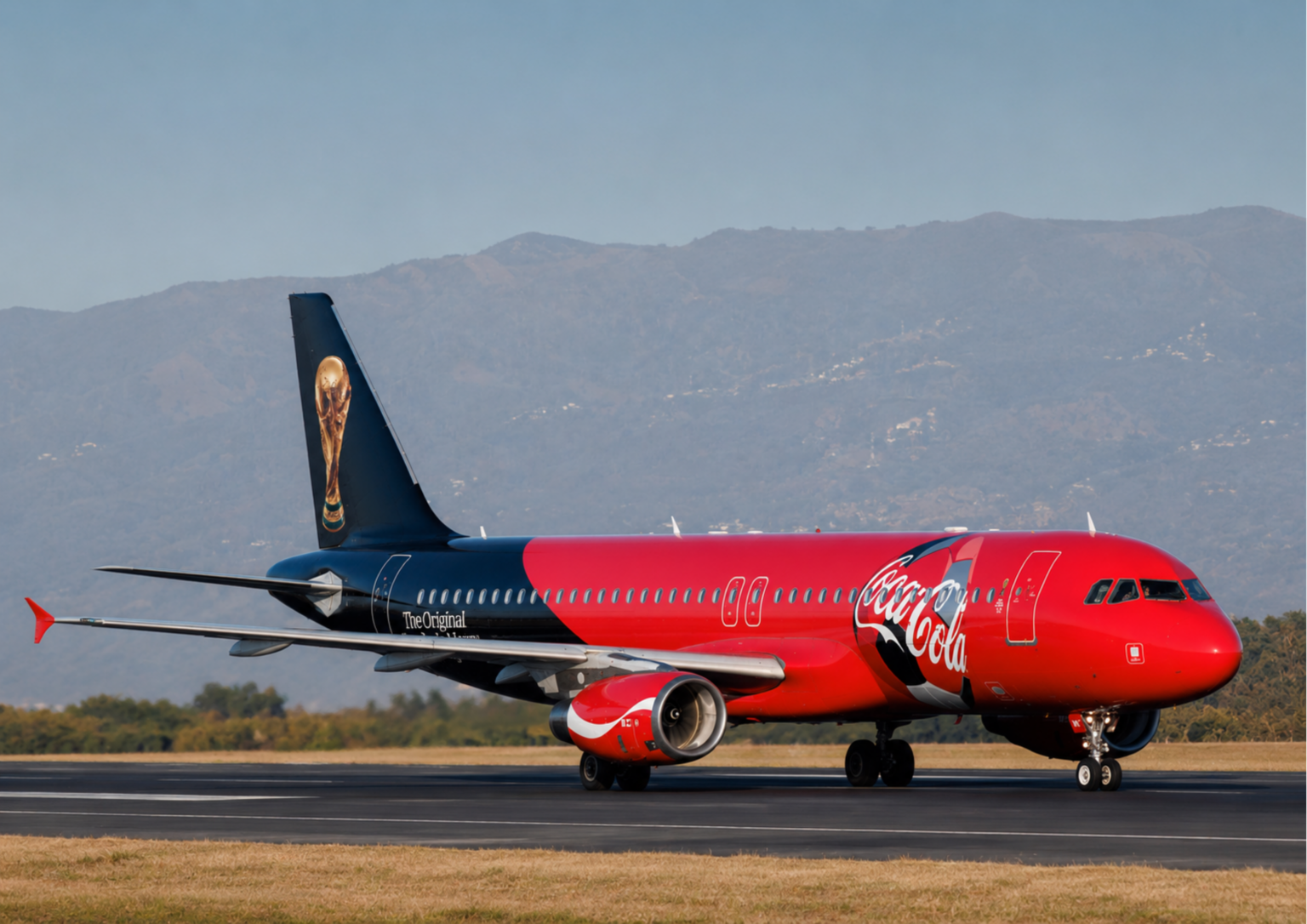
The 2026 World Cup was designed to be larger than anything before it: 48 teams, 104 matches and 16 host cities spread across the United States, Canada and Mexico. The group stage drew more than 4.6 million spectators, while FIFA’s revenue for the four-year cycle reached approximately US$15 billion. Yet the figures only describe its scale. The more revealing story was what it took to hold the tournament together.
Unlike Qatar in 2022, where eight stadiums sat within one metropolitan area, this World Cup unfolded across a continent. A team could play near the Atlantic coast, return to a base in the Midwest and then travel to Mexico or Florida before its next match. Supporters faced the same map with less certainty, often learning their next destination only after the final whistle.
The expanded format therefore changed more than the number of teams and fixtures. Geography became part of the competition itself. Every decision about a base, airport or departure time affected the hours available for sleep, treatment, preparation and, for supporters, the practical possibility of following the tournament at all.
When the match ended, the journey began
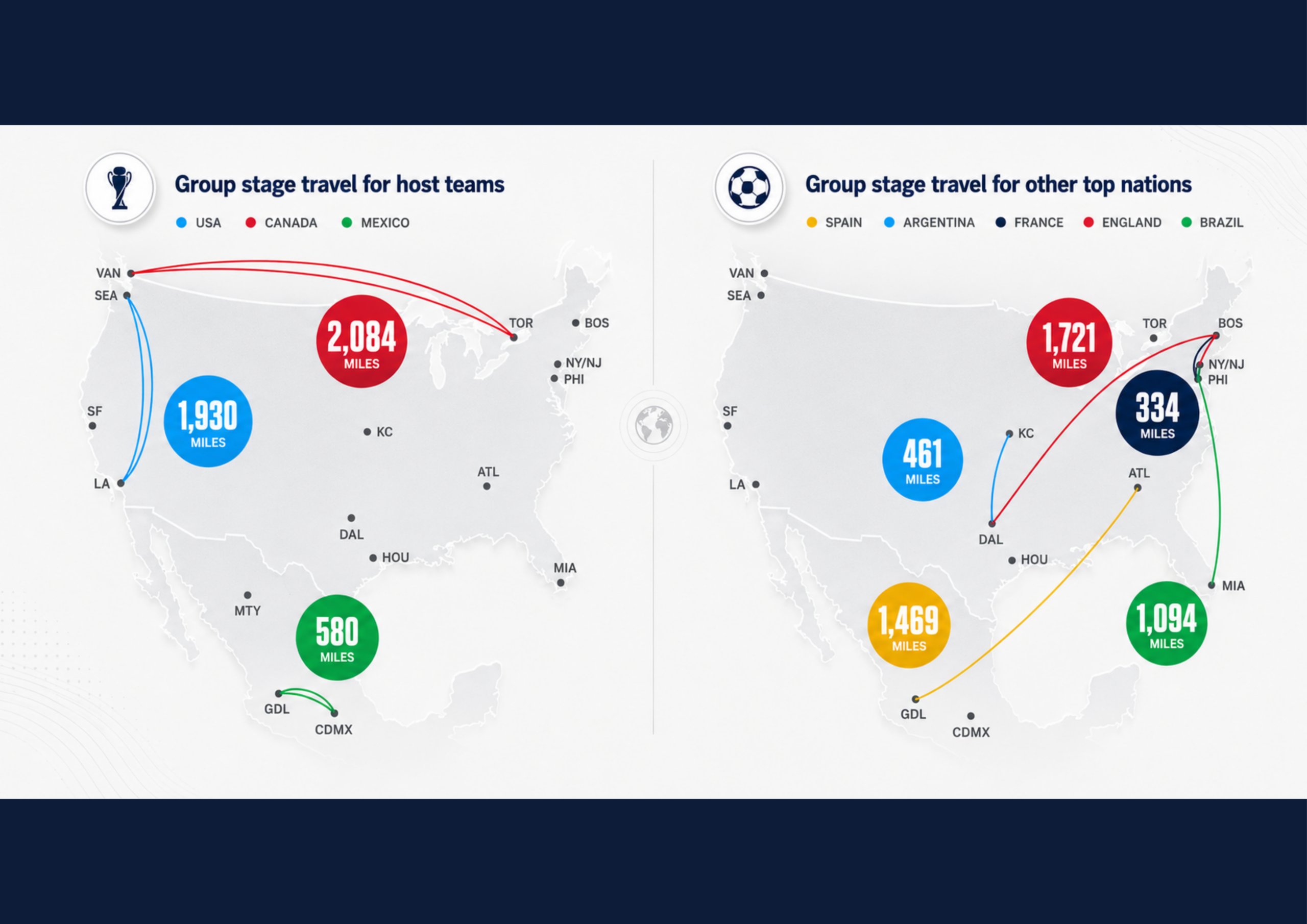
England’s choice of Kansas City as a base looked sensible on paper. The city offered privacy, dedicated training facilities and relatively even access to the tournament’s eastern, southern and Mexican venues. The problem was that England did not play there.
Every fixture therefore required a return flight. Trips to Foxborough, East Rutherford and Mexico City each exceeded 1,100 miles one way. Across their first five matches, England averaged roughly 1,800 miles of travel per fixture — close to flying from London to Lisbon and back every time the team played. By the quarter-final, the squad had travelled more than 14,000 miles.
The arrangement still had logic. Players returned to familiar rooms, chefs, medical facilities and training pitches rather than rebuilding their routine in a new city after every match. Other federations made the opposite calculation and moved their base as the bracket developed. England moved the players; others moved the environment around them.
That distinction mattered because a World Cup journey is not simply the time shown on a flight plan. It includes the transfer from the hotel, security, equipment handling, the flight itself and the journey at the other end. A nominal two-hour sector can consume much of an afternoon. After a late match, recovery treatment and media duties might be followed by a departure after midnight and a hotel arrival at three or four in the morning.
For players, the important measure was not mileage alone but the useful hours left before the next training session. An elite outfield player typically covers around 10 to 12 kilometres during a match. By the end of the group stage, a regular starter may already have covered 30 to 36 kilometres in competitive play, before warm-ups, training and the repeated accelerations that make the workload more demanding than distance suggests.
Supporters experienced the same geography with fewer protections. Scotland’s first two fixtures were in the Boston area before the schedule shifted roughly 1,250 miles south to Miami. The Tartan Army left its mark on Boston — including Glasgow-style traffic cones placed on city statues — but following the team onward required a new flight, hotel and plan, often arranged with only days of notice.
A tournament run from the air
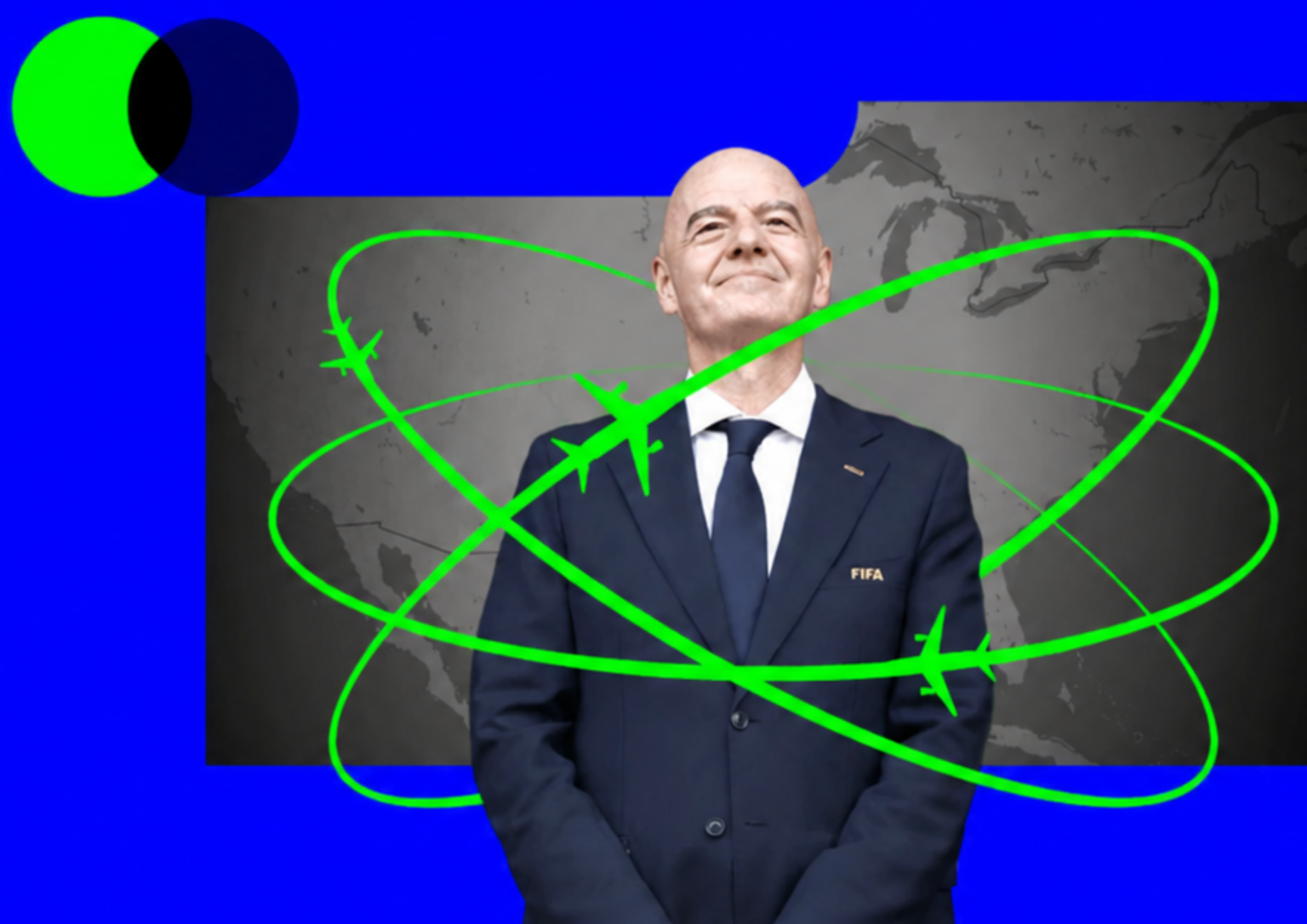
FIFA President Gianni Infantino supplied the clearest demonstration of what private aviation could do within that geography. Over 39 days, the FIFA president travelled more than 59,000 miles aboard a Gulfstream G650, attending 44 matches and visiting all 16 stadiums.
His itinerary did not follow airline timetables. The aircraft departed around matches, crossed international borders and used executive airports including Opa-locka in Miami and Fulton County in Atlanta. On one day, Infantino travelled from Miami to Dallas, continued to Seattle and returned overnight to Miami — nearly 5,800 miles between fixtures.
The point was not the distance alone. It was the ability to compress it. A schedule of that kind could not have been reproduced through ordinary connections without sacrificing matches or entire days. The Gulfstream turned a tournament spread across four principal time zones into one continuous itinerary, showing how private aviation becomes most valuable when time, rather than distance, is the fixed constraint.
For smaller groups — federation executives, sponsors, broadcasters or guests — the same principle applied on a less theatrical scale. Evening fixtures often ended after the final commercial departures. Secondary airports could shorten the ground journey and allow passengers to reach the next host city before the following morning disappeared into a connection.
Aircraft as part of the preparation
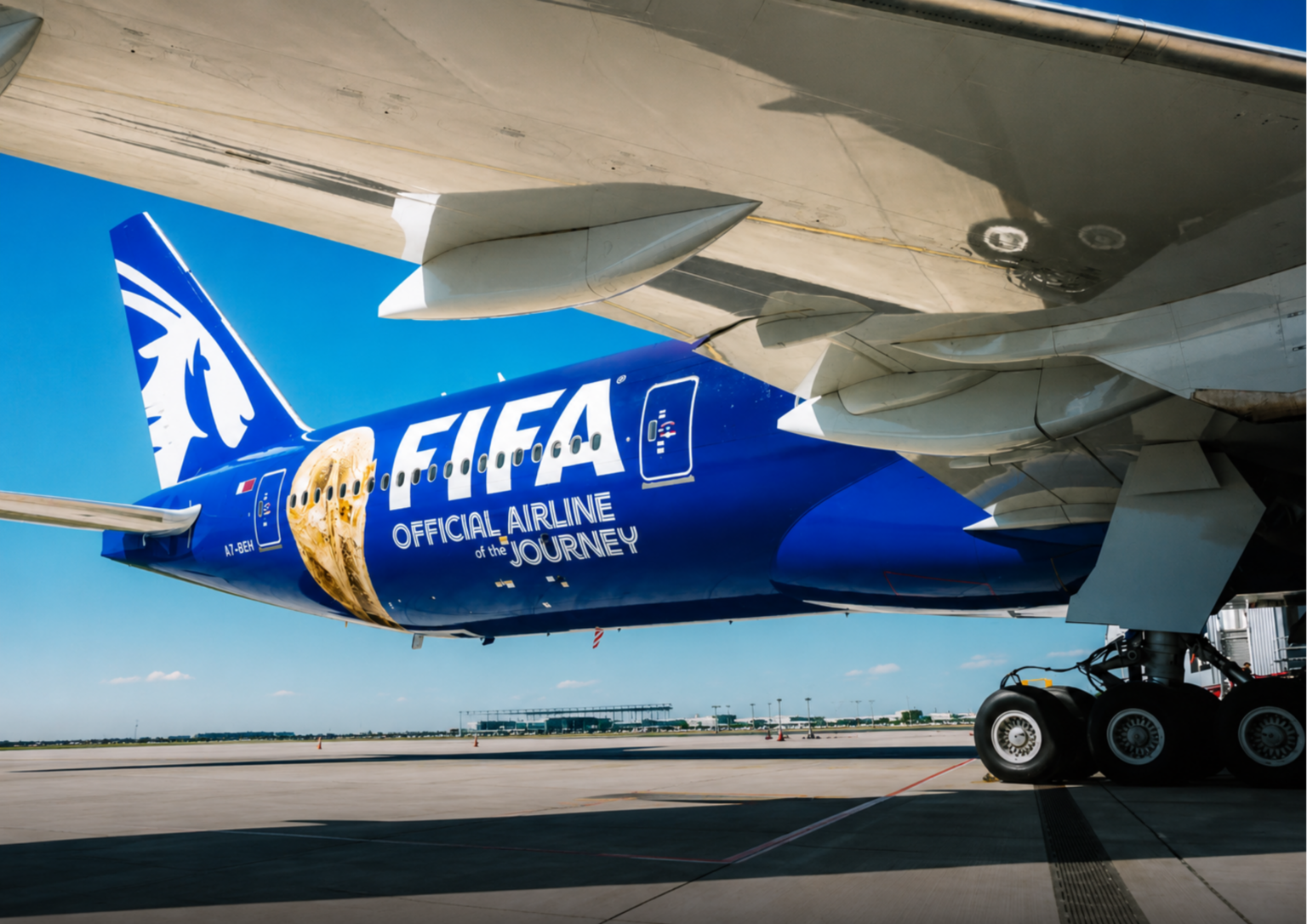
National teams require aviation on an entirely different scale. These aircraft carried full delegations: players, coaches, medical teams, security personnel, baggage and equipment. The England team chartered an Airbus A320 operated by GlobalX for their domestic travel, a specialist US carrier whose substantial airliner fleet supported several national teams throughout the tournament. Argentina flew to Kansas City aboard an Aerolíneas Argentinas Airbus A330, while Scotland crossed the Atlantic on an Icelandair Boeing 757.
These were commercial airliners dedicated to one delegation and one timetable. The advantage was not luxury but control. Catering and cabin access could be managed, treatment could continue before departure and the entire group could move together. A charter could also wait after extra time, a prolonged recovery session or a delayed departure from the stadium without creating the risk of a missed scheduled service.
At this World Cup, aviation became part of sports science. The cabin mattered less than the departure time, the airport and how much of the night remained when the journey ended. A well-planned flight could not remove the physical demands of the tournament, but it could protect the recovery window around them.
Results shaping the journey
The most difficult journeys were often the ones nobody could confirm in advance. During the knockout stage, the next city depended on the previous result. Supporters could reserve a route early and risk following the wrong team, or wait until the bracket became clear and enter a market where seats, rooms and tickets were all being chased at once.
After Argentina beat England in the semi-final, Aerolíneas Argentinas released two additional Buenos Aires–New York services. All 540 seats sold within hours, despite return fares of approximately US$5,000 in economy and US$10,000 in business class. Searches for New York on the travel platform Despegar rose by 6,000 percent after the final whistle.
Argentina’s place in the final was confirmed on Wednesday evening. The match was in New Jersey four days later. That small window captured the central problem of tournament travel: demand became greatest at precisely the moment the journey became certain.
Private aviation served a narrower audience, but answered the same problem. For a family, corporate group or sponsor moving between several fixtures, it could turn a late multi-city itinerary from an exercise in connections into a direct journey shaped around the match. It did not move the crowds. It allowed a small number of passengers to keep pace with a competition whose route changed every few days.
The final still belonged to football
For all the movement around it, the tournament was ultimately remembered through moments that required no map. Cape Verde, appearing for the first time, twice equalised against Argentina before losing 3–2 after extra time. Scotland left earlier, but its supporters created one of the competition’s warmer afterlives in Boston, where the city’s statues briefly acquired the traffic cones associated with Glasgow.
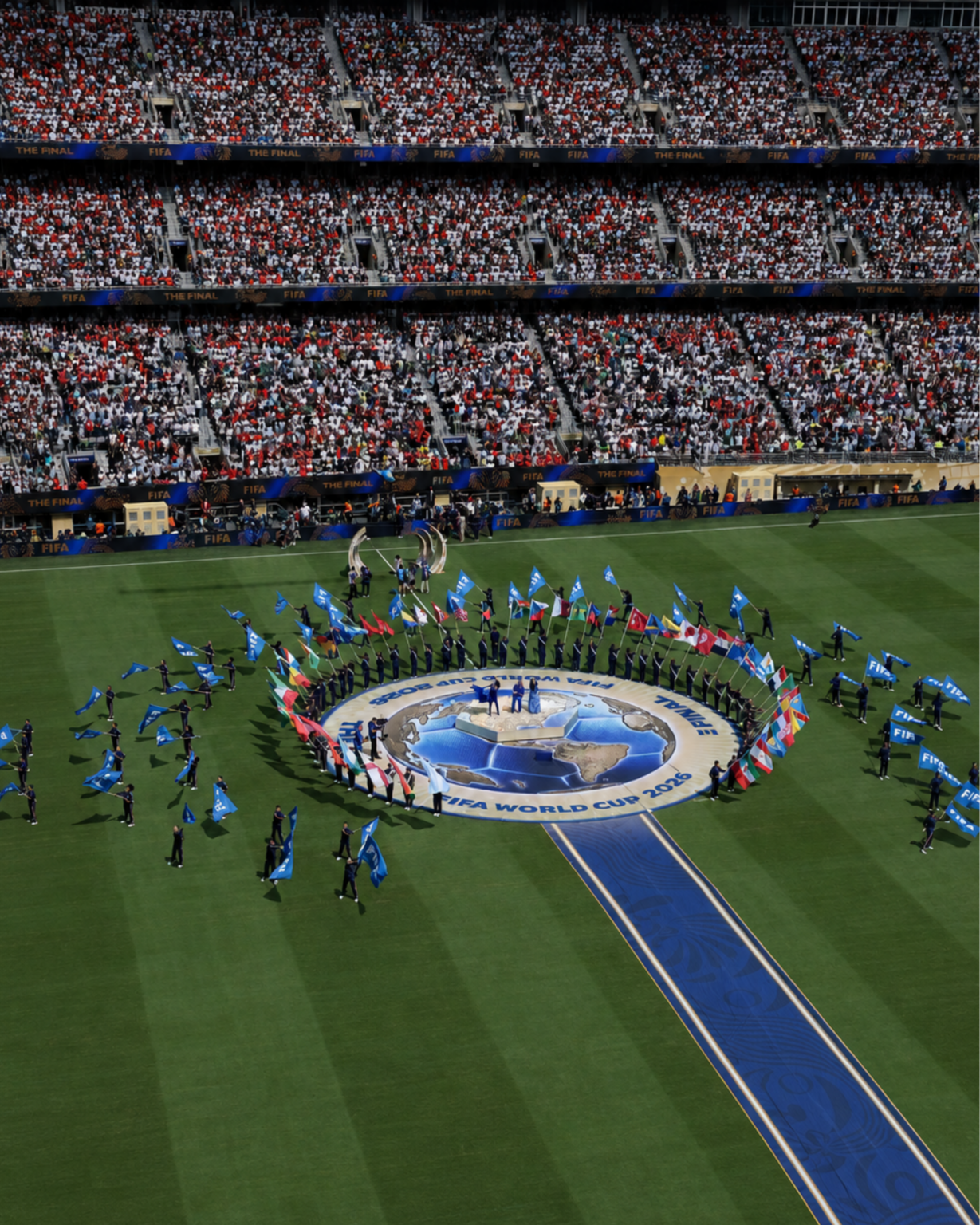
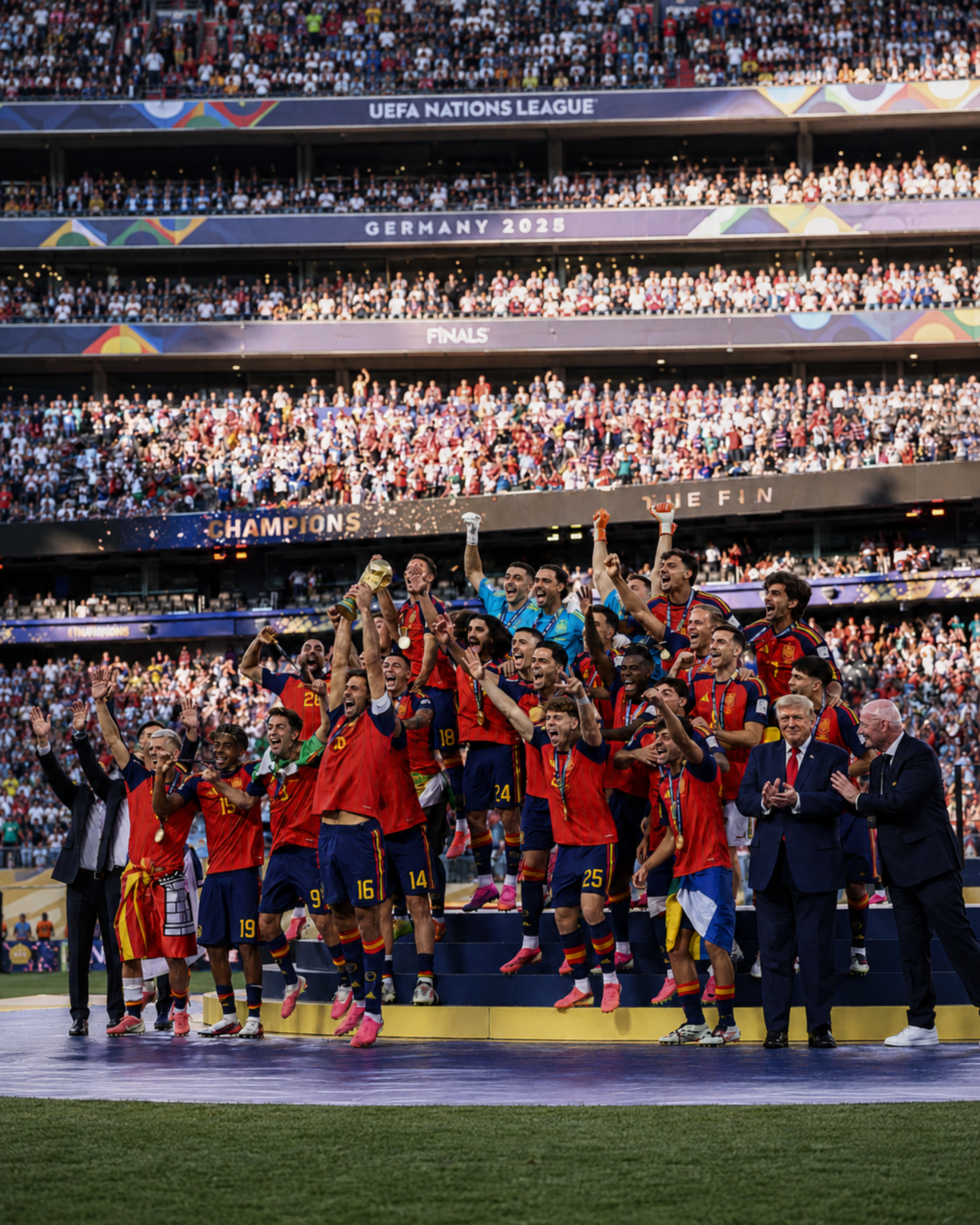
The final brought Spain and Argentina to New Jersey after six weeks of very different journeys. Spain won 1–0 through Ferran Torres in extra time, completing a campaign in which it conceded only once. Yet the lasting image came afterwards, when Lionel Messi, almost certainly leaving the World Cup stage for the final time, embraced Lamine Yamal, the teenager expected to occupy much of football’s next decade. One era appeared to be handing the tournament to another.
It was a useful reminder of why the logistical effort mattered. The flights, bases and late-night transfers were not the story supporters had travelled to see. They were the machinery that allowed the story to happen in 16 cities without losing its shape.
The architecture behind the football
Spain and Argentina eventually arrived at the same final in New Jersey by different routes. Spain moved through Los Angeles and Dallas; Argentina through Miami, Atlanta and Kansas City. England repeatedly returned to its base. Scotland’s supporters carried Boston into Miami. Infantino followed the entire tournament from one aircraft.
The football supplied the images that remained: Cape Verde taking Argentina into extra time, the Tartan Army briefly turning Boston into New Scotland, Lionel Messi embracing Lamine Yamal and Spain lifting the trophy.
Behind those moments sat another sequence: medical teams finishing treatment before departure, ground crews loading equipment after midnight, supporters searching for flights as soon as a result was confirmed and aircraft leaving secondary airports long after the stadiums had emptied.
That was the less visible architecture of the 2026 World Cup. The matches lasted 90 minutes. Moving the tournament required 39 days, three countries and an aviation network capable of following a competition that never stayed in one place for long.
Sources include: BBC, ESPN, FIFA, Fox Sports, Getty Images, New York Post, Sky Sports, The Guardian, The Times, USA Today