
Two Rivals, One Boatyard
Ferrari and Lamborghini both found their way to Riva, drawn by a shared belief that engineering and design should carry equal weight. From Ferruccio Lamborghini’s V12-powered Aquarama to the Ferrari 32, the collaborations reveal why the Sarnico boatyard became a reference point far beyond the water. Six decades on, Riva’s standing still rests on the same thing: craftsmanship strong enough to outlast fashion.
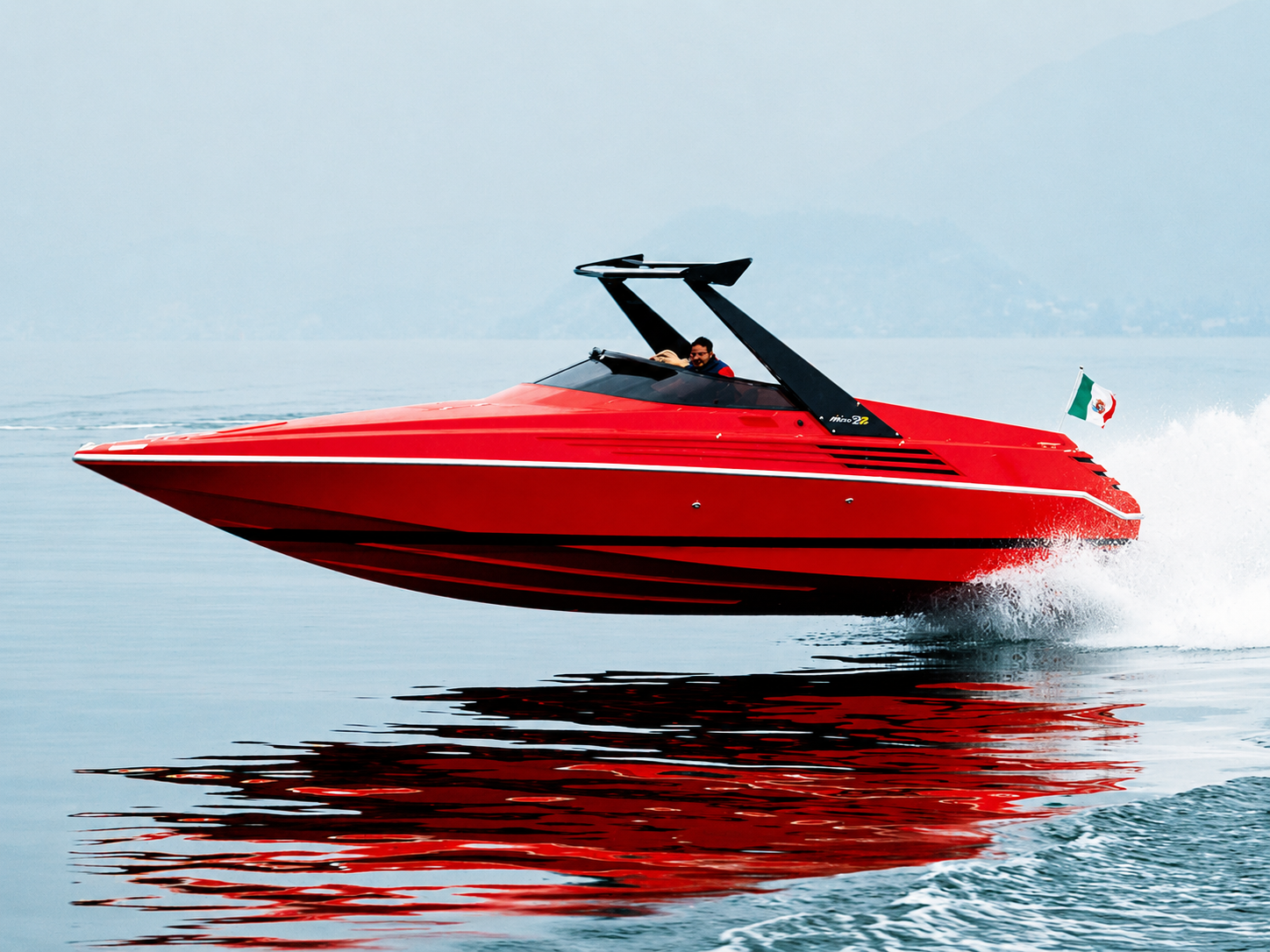
Pictured: Riva & Ferrari Collaboration
“It is one of the most beautiful pieces of Italian art I have ever seen.”
Nobody who says that is talking about a painting, and yet it gets said, in more or less those words, about a boat: the Riva Aquarama, the mahogany runabout that has spent six decades doing very little except look extraordinary while going rather fast across the water. Alberto Galassi, who ran Ferretti Group (Riva’s parent company) for over a decade, put the appeal more plainly than most. “Riva is beyond boating,” he said. “Riva is a myth.” Worth sitting with that word for a moment. Not brand. Not marque. Myth, built as much from story as from timber.
The Aquarama itself is real enough: an eight metre mahogany hull, twin engines, a top speed in the mid forties of knots depending on the era, built between 1962 and 1996 with fewer than 800 ever made. But the numbers rarely arrive first with a Riva. What arrives first is the quiet agreement, shared among the people who own one, that they’ve acquired something closer to moving sculpture than transport.
The Company It Keeps
It says something that when other Italian houses wanted to know what their engineering might look like on water, Riva was the name they rang. Ferrari and Lamborghini, the two marques against which nearly everything fast and Italian gets measured, both found their way to Sarnico at different points in the company’s history. Not as competitors circling the same buyer, but as collaborators recognising a shared standard. Within Italian craftsmanship, that makes Riva rather more than a boatbuilder. It makes them a peer.
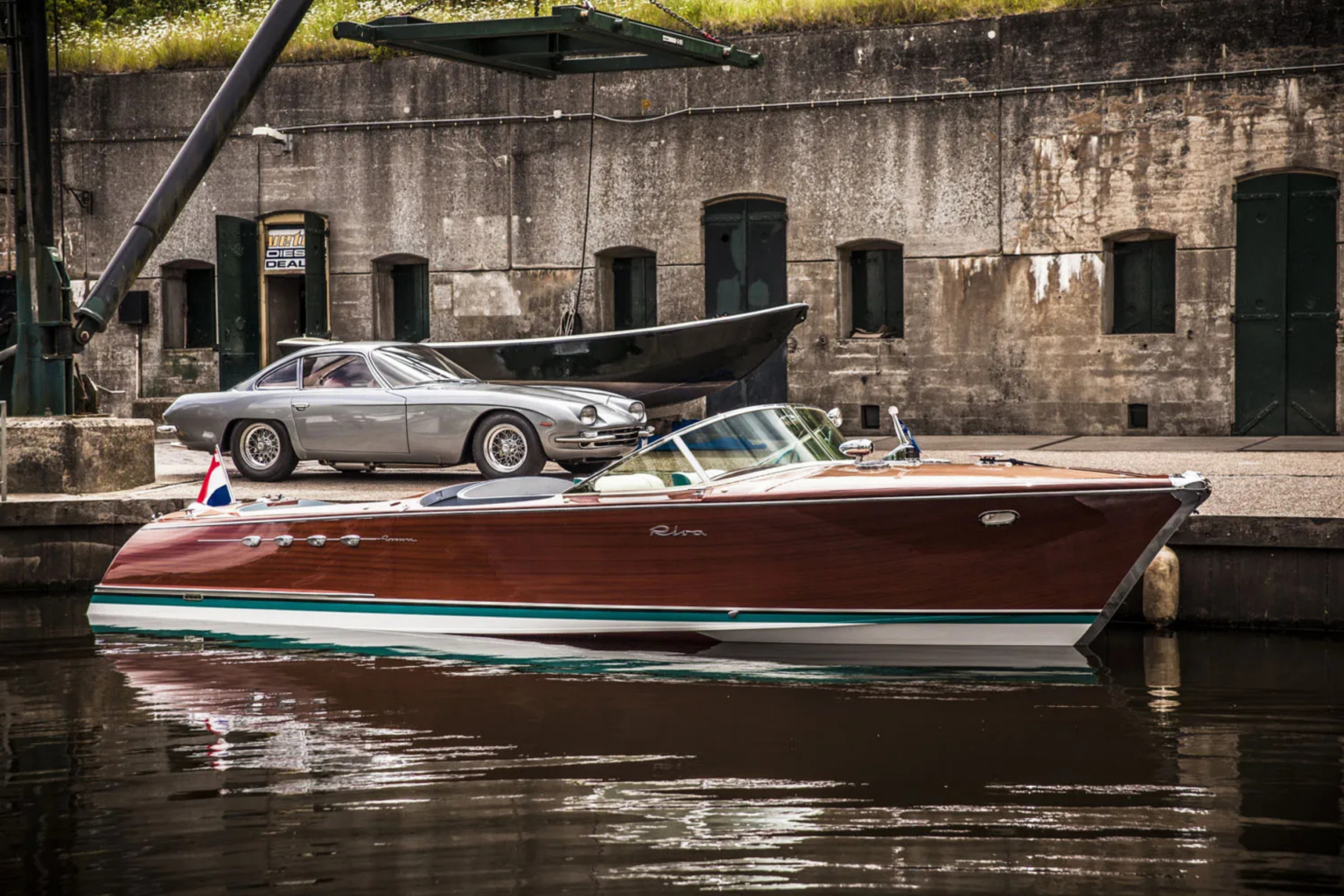
Pictured: Riva & Lamborghini Collaboration (above)
The two collaborations tell different stories, though, and the difference is instructive. In 1990, Riva and Ferrari formally built the Riva Ferrari 32, a joint run of just forty boats styled after the Testarossa, side strakes and all, with a Formula One inspired spoiler mounted over the cockpit. It was corporate, considered, two brands agreeing on what “fast and beautiful” should look like together. Lamborghini’s connection was rather more personal, and rather more Lamborghini. In 1968, Ferruccio Lamborghini simply commissioned Carlo Riva to build him an Aquarama and fit it with a pair of his own V12s, producing what remains, by most accounts, the fastest Aquarama ever built. One partnership was a product. The other was a whim, from a man who couldn’t resist making even his boat argue with him. Either way, the result was the same: two of the loudest names in Italian speed, conceding, quietly, that Riva had already understood the assignment.
Before It Was a Myth
Riva’s own beginning is a good deal less glamorous than any of that. In 1842, on the edge of Lake Iseo in northern Italy, a storm destroyed much of the local fishing fleet, and a young boatbuilder named Pietro Riva rebuilt what he could. No design philosophy yet, no myth, just a workshop and a town that needed its boats back. It took four generations, Carlo Riva chief among them, to turn that practical beginning into something aspirational. Through the 1950s and 60s, Carlo moved the yard’s attention from utility to desire, understanding well before most of his contemporaries that a boat could be sold the way a watch is sold: on feeling, not function.
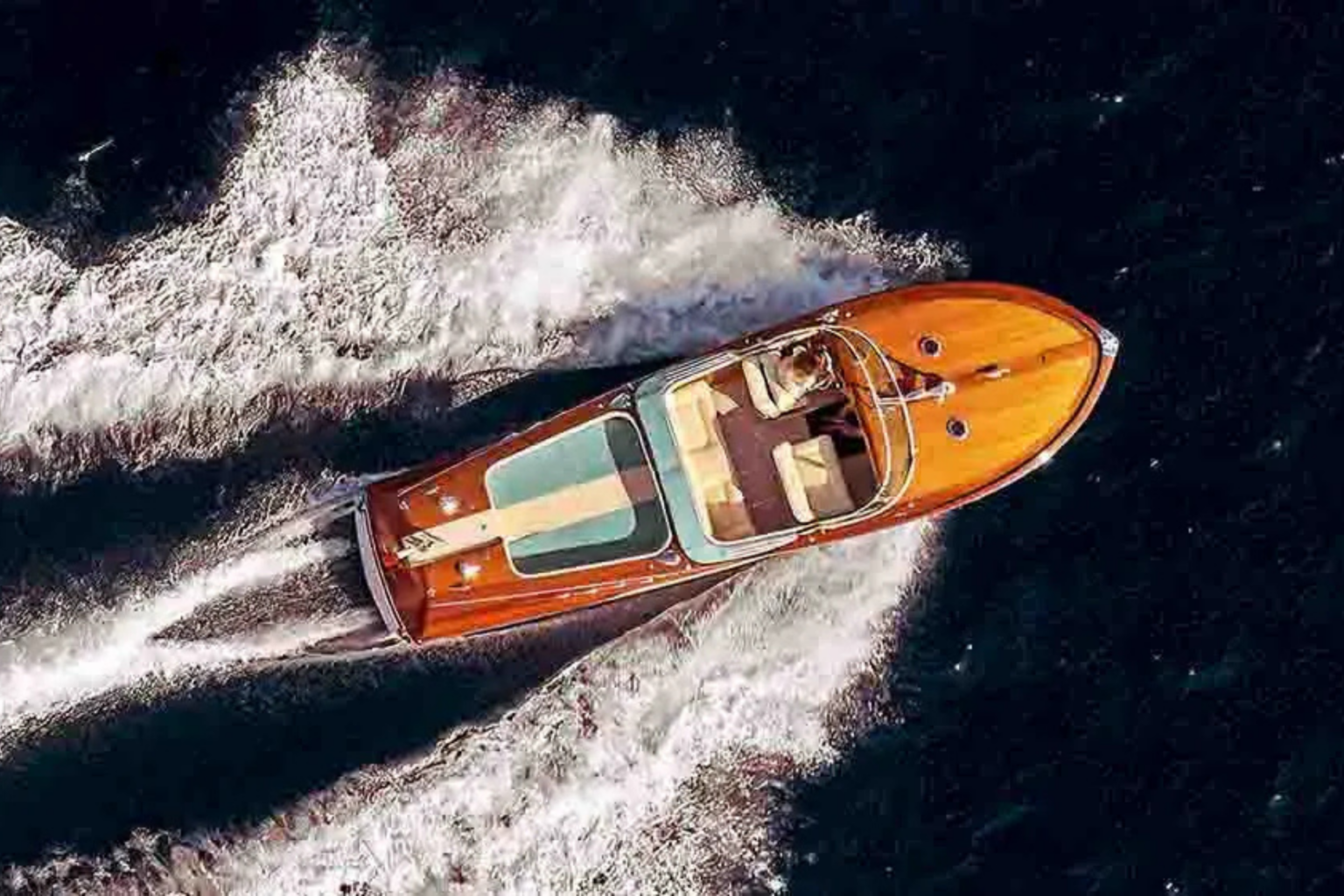
Pictured: Riva/Assouline (above)
From Hollywood Royalty to Actual Royalty, Riva is Still the Standard
The Aquarama arrived in 1962, its name borrowed from Cinerama, the wide format cinema of the day, echoed in its sweeping windscreen. It found its owners quickly, and those owners happened to be Sophia Loren, Brigitte Bardot, a scattering of European royals, and a supporting role in a run of films that stretches all the way to GoldenEye. But it wasn’t cast as a status symbol first. It earned that standing by being better built than almost anything else on the water: hand finished mahogany, a dozen coats of varnish, hand stitched leather, an interior treated with the seriousness of a car built for someone who notices the stitching. Reputation followed the craftsmanship, not the other way round, which is precisely why it has outlasted most things that arrived with more noise.
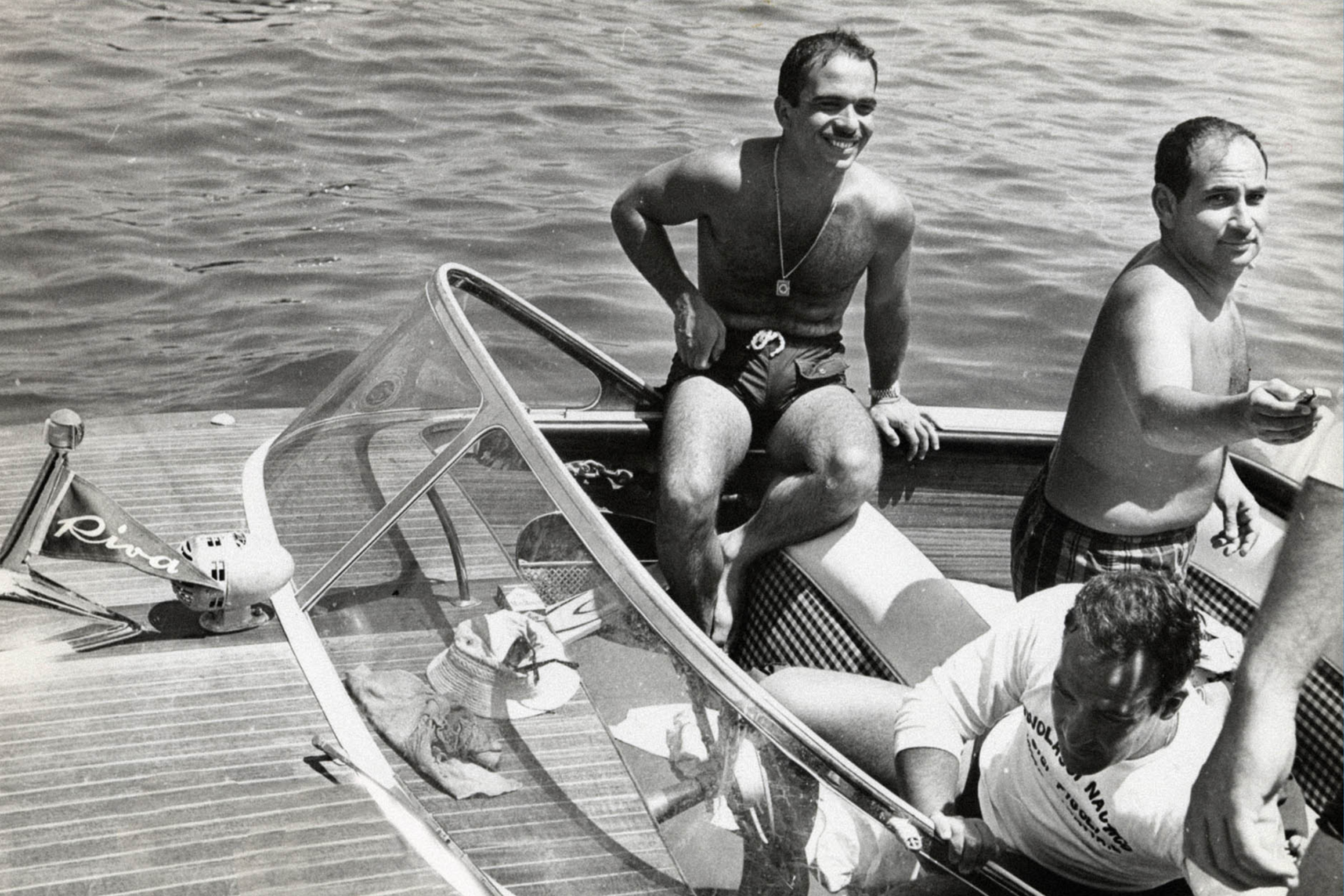
Pictured: S. M. King Hussein of Jordan on his Super Aquarama Scorpion II (above)
Six decades on, the boat is history. The company still has to answer for it. Riva today sits within Ferretti Group, whose leadership has had rather more turnover lately than the brand itself is accustomed to. Galassi, twelve years at Ferretti’s helm and, by his own account, a personal Aquarama owner, was characteristically direct about what he considered himself custodian of. Speaking to CBS News from the deck of his own boat, he reached for the one comparison that needs no footnote: everybody knows what a Ferrari is, he said. Riva is the same thing. In May 2026, Stassi Anastassov, formerly of Procter & Gamble and Duracell, took over as Ferretti’s chief executive following a contested shareholder vote, inheriting a brand he has already, in his first interview, placed in the company of Hermès. Riva will never have Ferrari’s scale, or Lamborghini’s talent for turning up on a schoolboy’s pencil case. It doesn’t need either. It remains, on a shorter list than both, one of the very few things in the world that invented a category and never actually left it.
Sources include: Andrea Berg / Shutterstock, Maurice Volmeyer Fotografie, Riva Historical Archive