Some places make an immediate impression. Capri, once favoured by the Roman Emperor Tiberius, is one of them.
MYTHICAL LEGACY
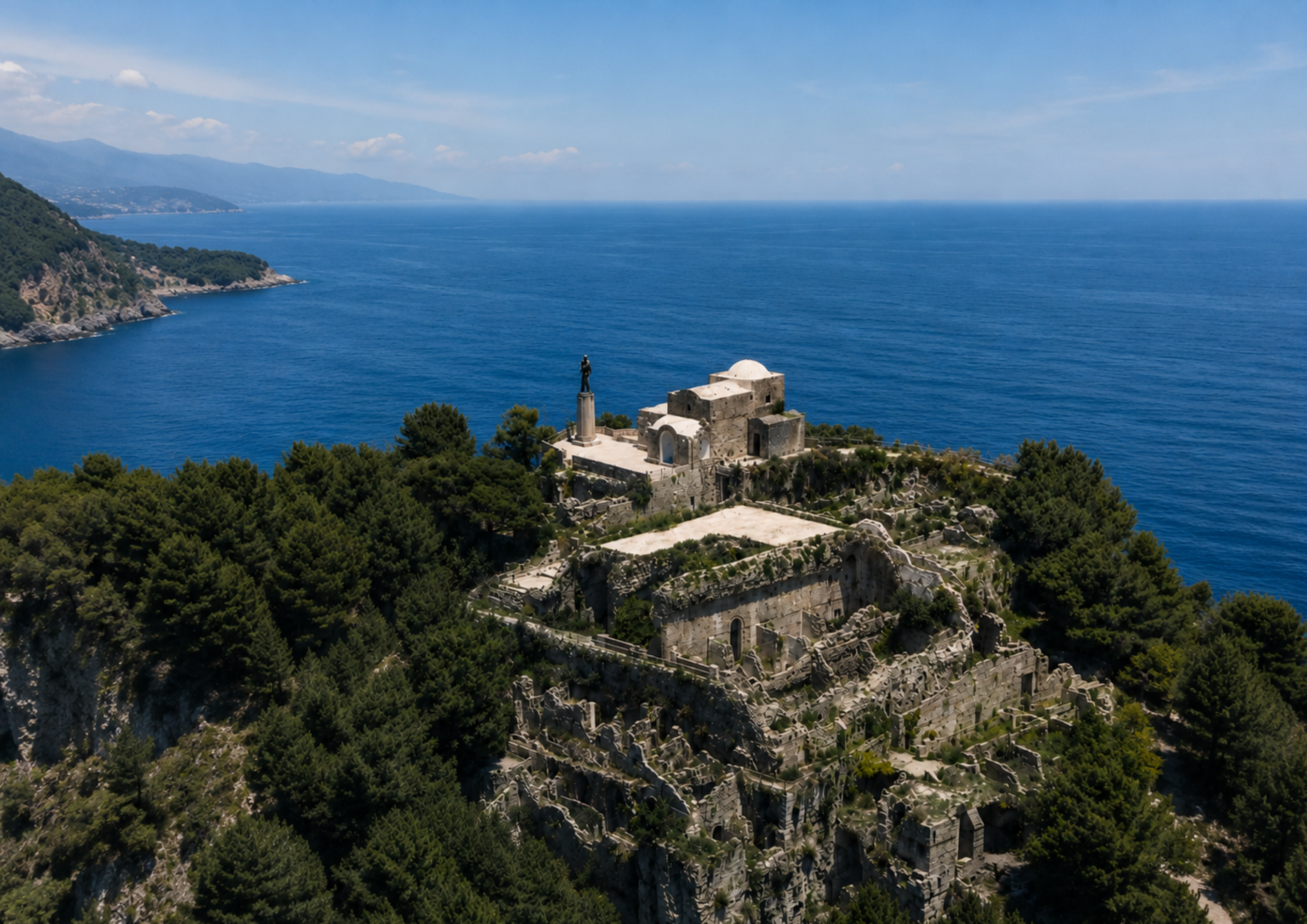
Tiberius withdrew to Capri in the first century AD, drawn by its cliffs, seclusion, and commanding views across the Bay of Naples. Centuries later, that same sense of distance remains part of the island’s appeal.
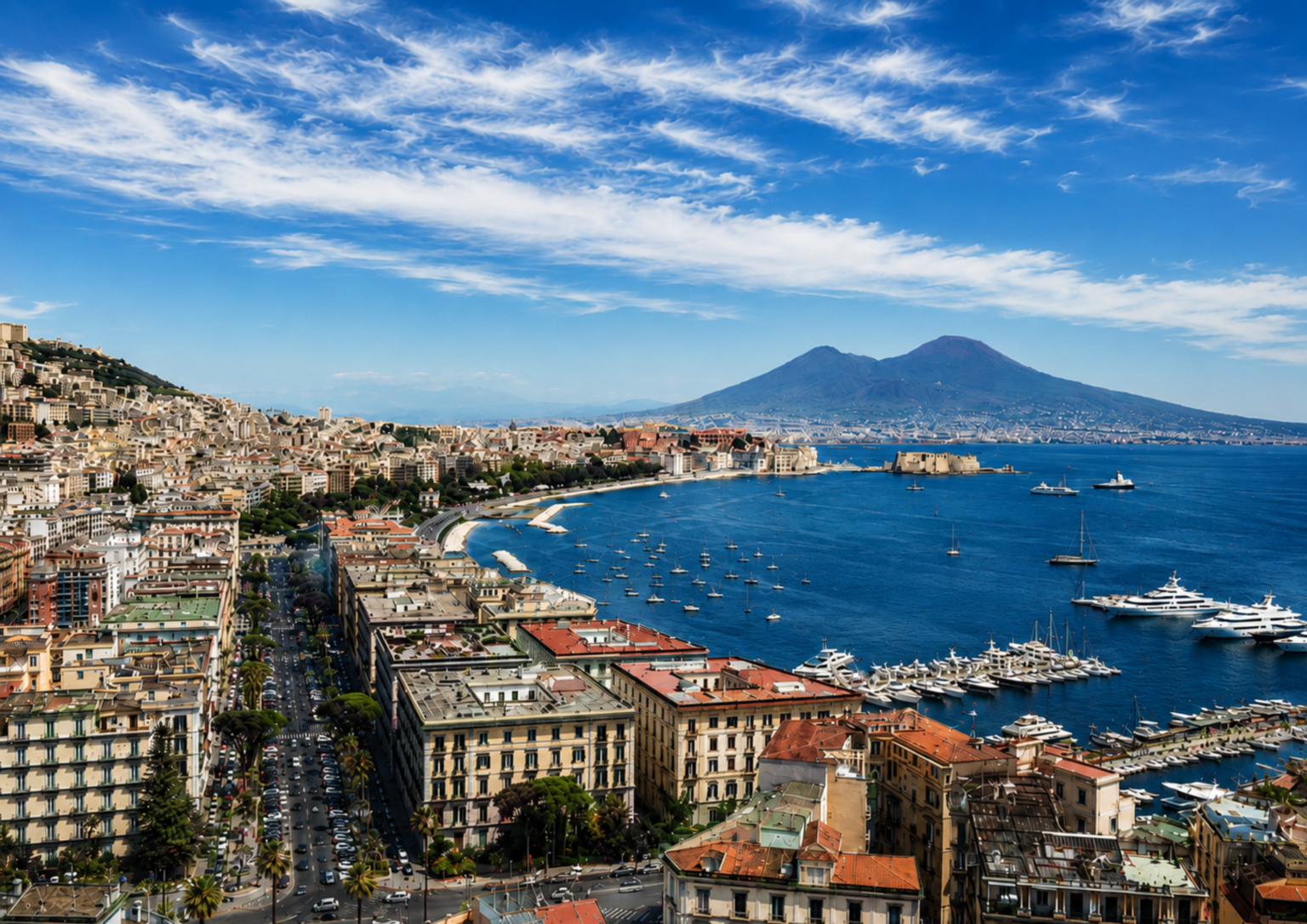
Capri has no runway, no sweeping airport approach, no immediate transfer from cabin door to hotel lobby. Even for those arriving by private jet, Capri insists on a pause. The usual route is through Naples, followed by a transfer to the harbour and then across the Bay of Naplesby boat. It is less direct than other Mediterranean escapes, but that is precisely the point.
VOLANIC VISTAS
The journey begins with the descent into southern Italy, with Vesuvius in the distance and Naples below. From there, the pace changes: the aircraft gives way to the car, and the car to the sea. By the time Capri comes into view — its limestone cliffs, hillside villas and the Faraglioni offshore — the transition from travel to island life is already underway.
THE GRAND PORT
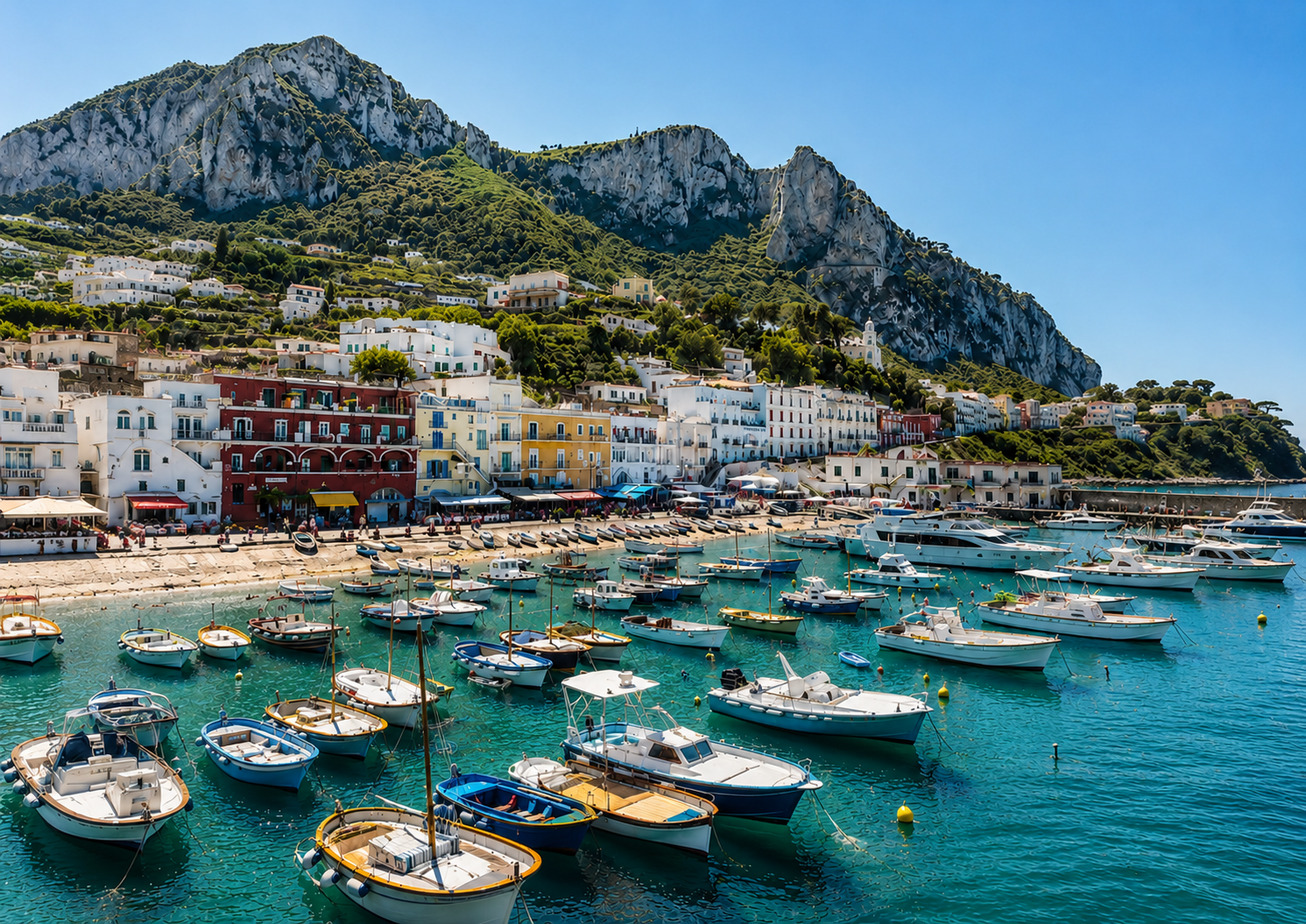
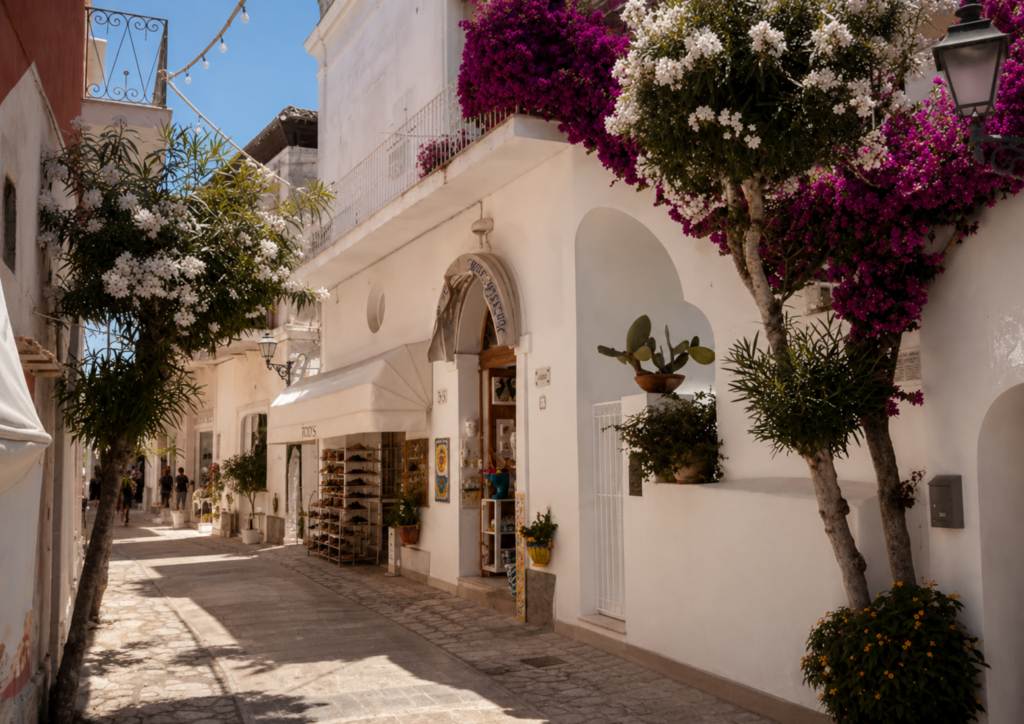
Capri’s appeal is revealed gradually. From the arrival at Marina Grande and the climb toward Capri Town to the whitewashed buildings, bougainvillea and terraces overlooking the sea, the island unfolds in stages. Although Capri is one of Italy’s best-known destinations, much of its character is found in the quieter details rather than its most famous views.
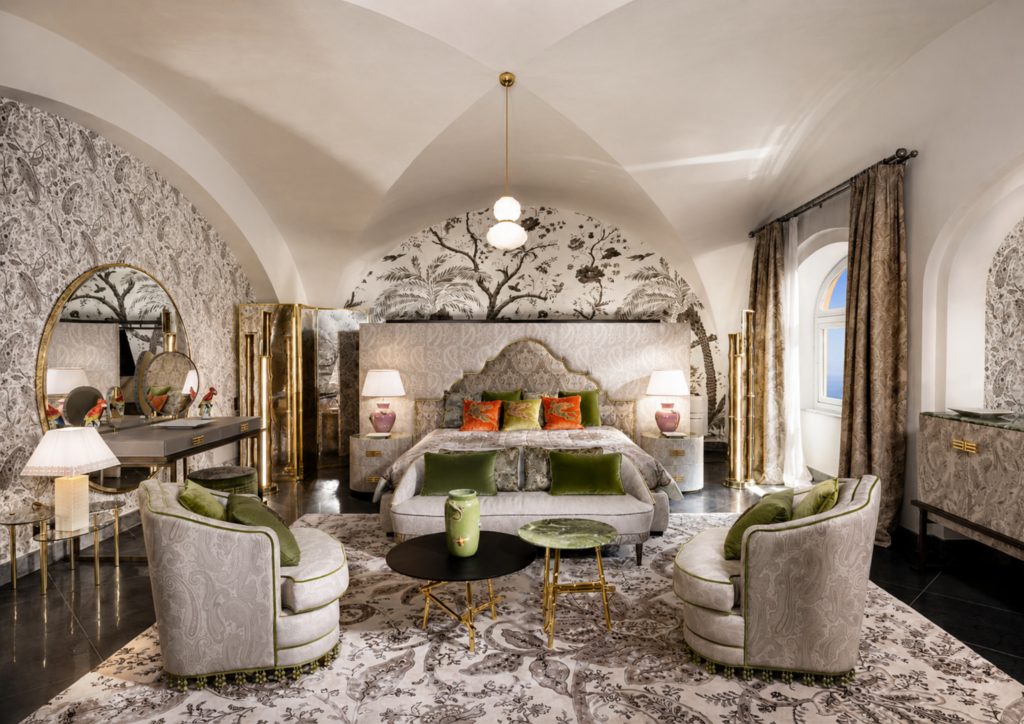
Morning is one of the best times to experience the island. Before the ferries arrive, shopkeepers open their stores, waiters prepare tables in the piazzetta and fishermen move through the harbour. At J.K. Place Capri, the atmosphere is more like a private summer residence than a traditional hotel: calm, sea-facing and attentive to detail. Breakfast can easily extend into a relaxed late morning.
SUITES AND RITUALS
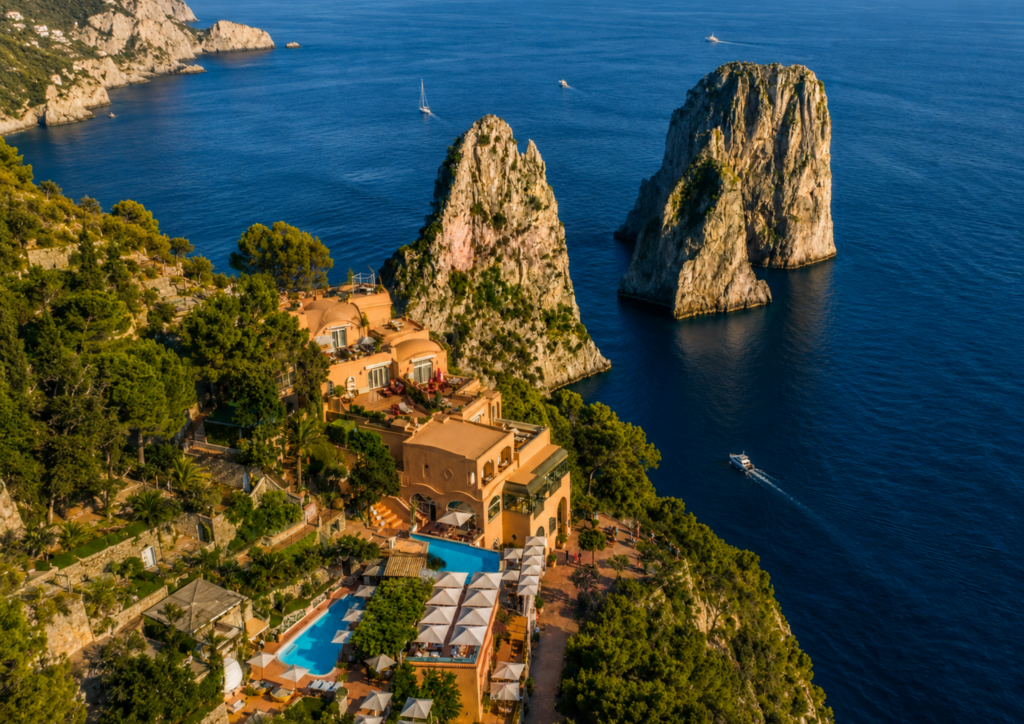
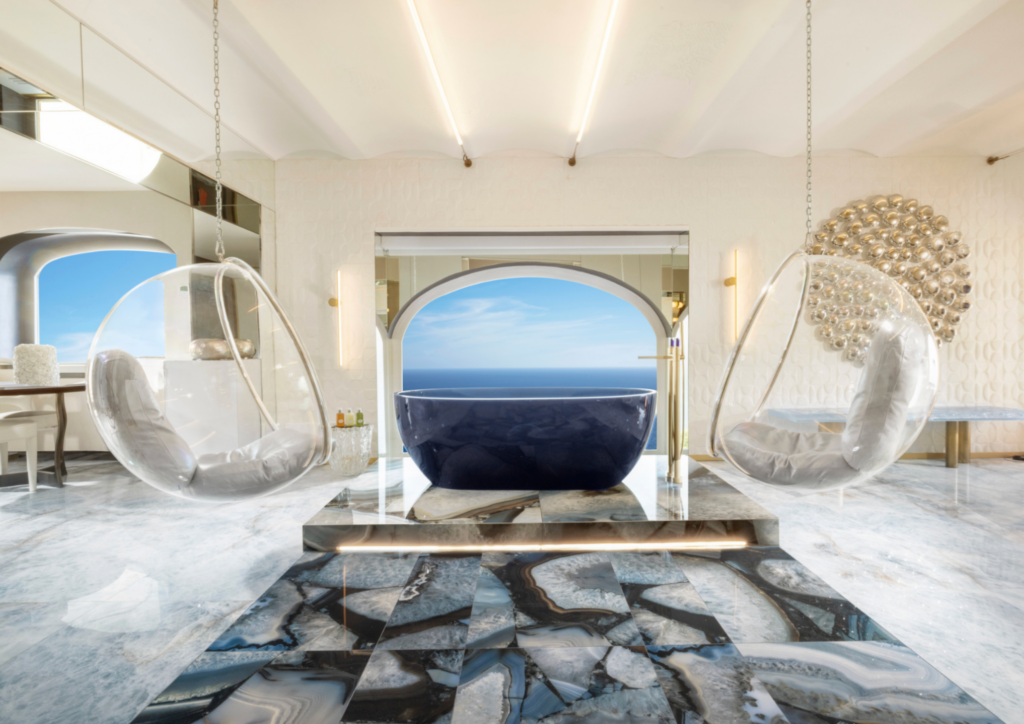
Across the island, Punta Tragara offers a different perspective on Capri. Set above the water with views toward the Faraglioni, it combines a dramatic clifftop setting with a sense of calm. Waking to the view is one of its defining pleasures, as the sea changes in colour and character throughout the day.
BOUTIQUES AND TERRACES
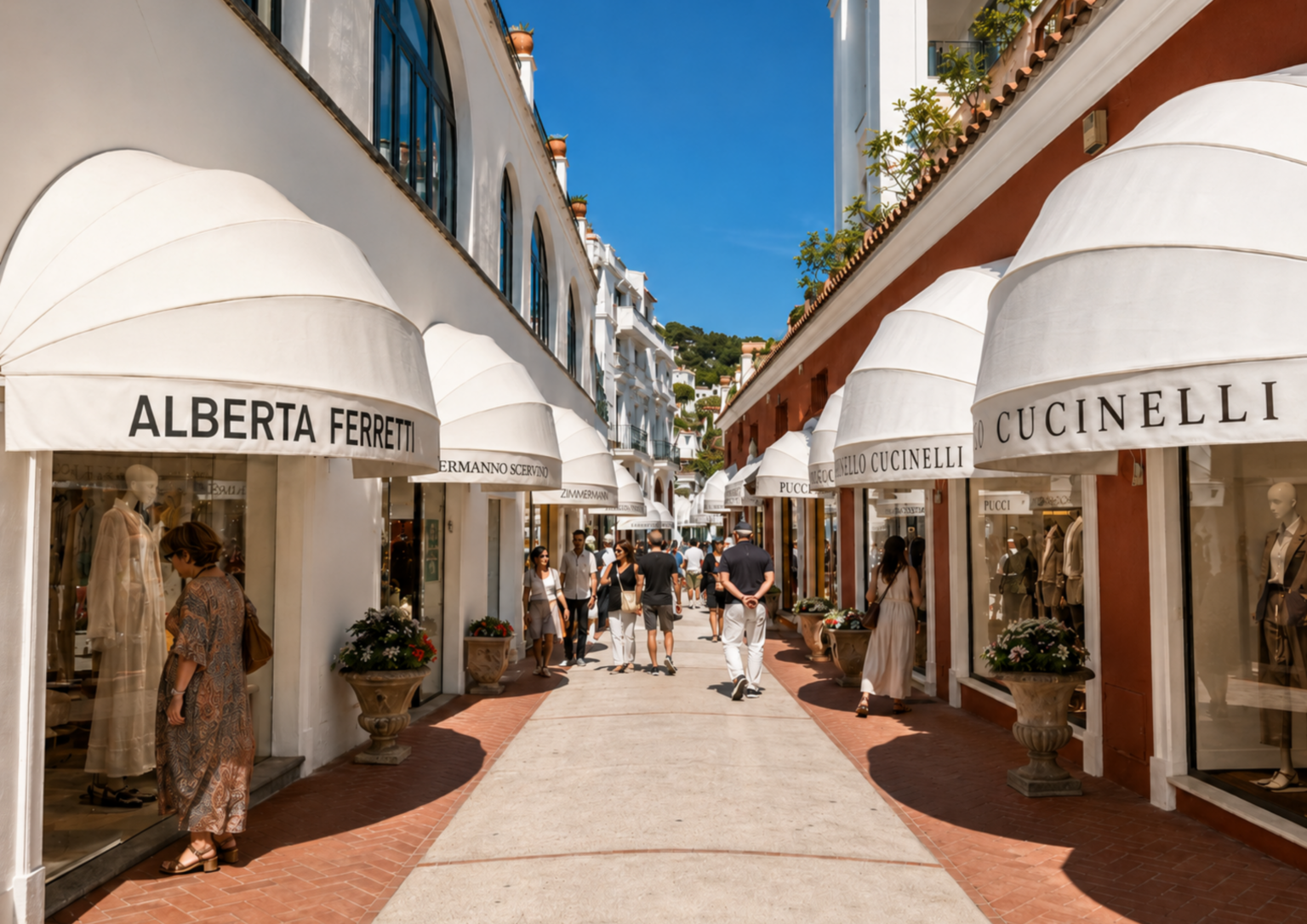
Later in the day, Capri is best experienced on foot. The passeggiata along Via Camerelle is a familiar summer tradition, with boutiques, jewellers, cafés and shaded awnings lining the route. The atmosphere is refined but relaxed, reflecting an understated style that is found in the island’s narrow lanes, quiet courtyards and simple, well-prepared food.
Aperitivo remains an important part of the day. At Quisi Bar, on the terrace of the Grand Hotel Quisisana, guests can watch the activity along one of Capri’s most established meeting points. Later, Bar Tiberio on the Piazzetta offers a more informal setting for a drink while observing the steady flow of people through the square.
WATERWAY EXCURSIONS
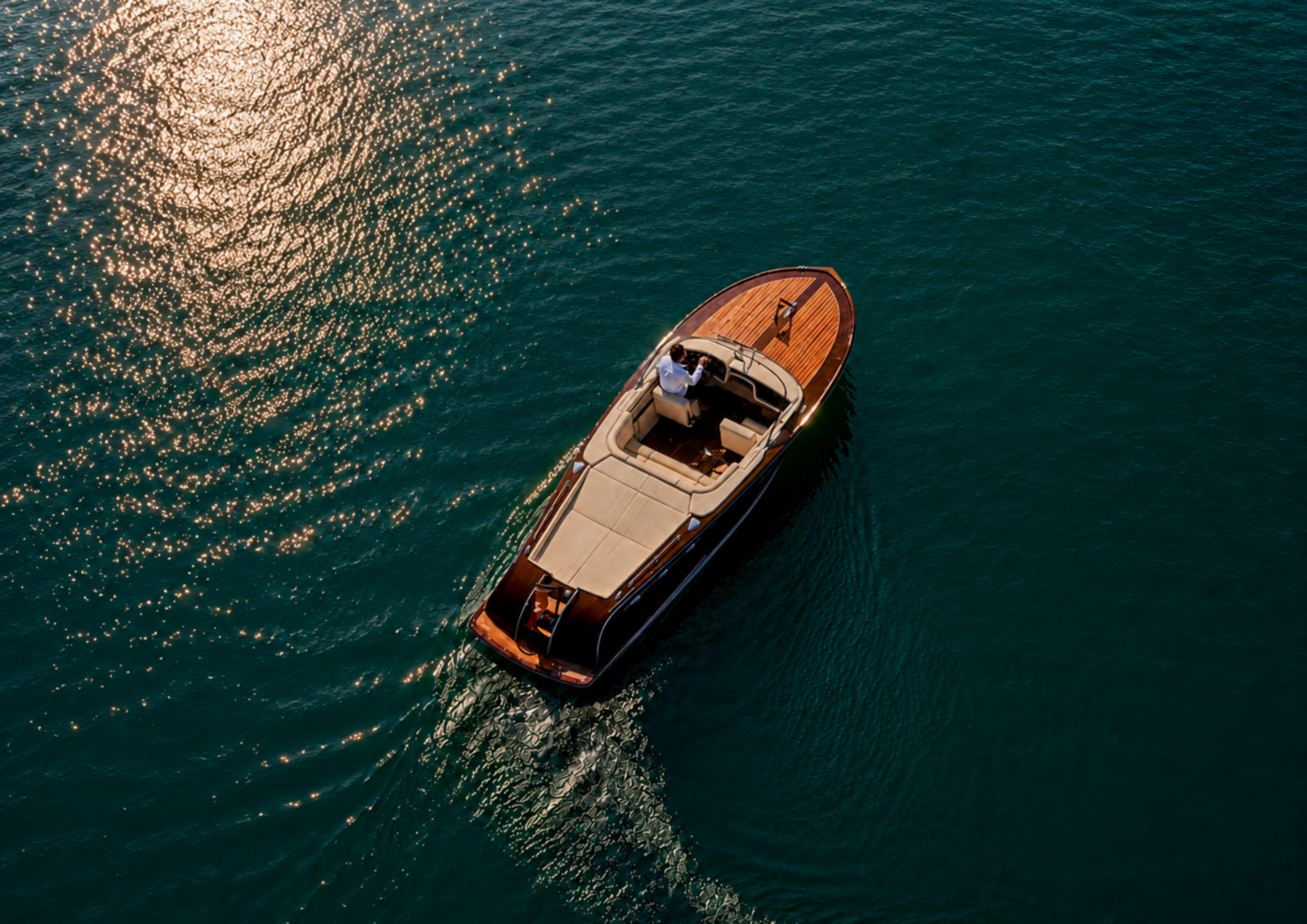
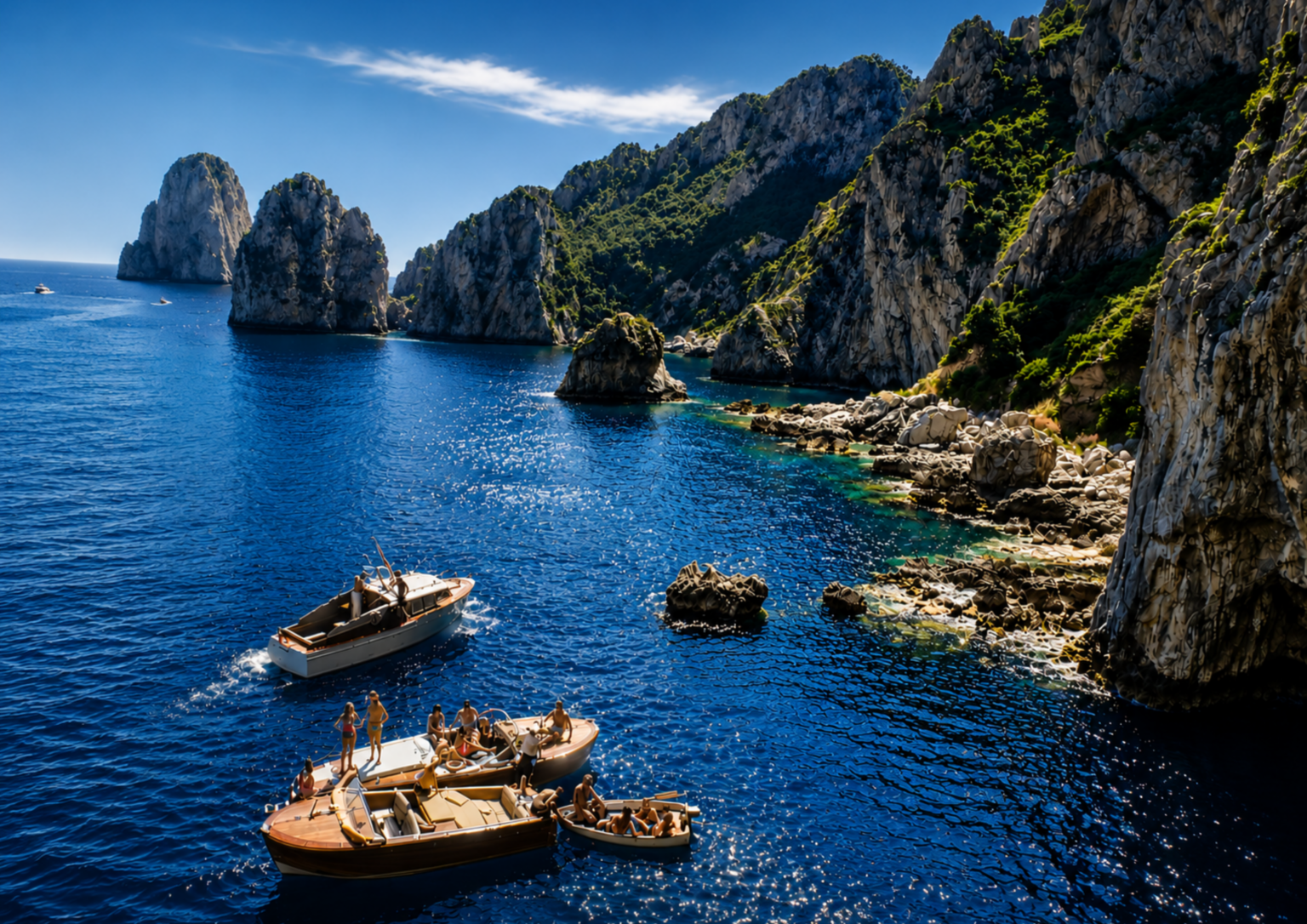
To appreciate Capri fully, it is worth seeing the island from the water. A boat trip offers a different perspective, revealing its caves, steep cliffs and swimming platforms set above the sea. The Faraglioni are especially impressive at close range, and a swim nearby remains one of the island’s most memorable experiences. The water is clear, cool and central to Capri’s appeal.
THE QUIETER THEATRE
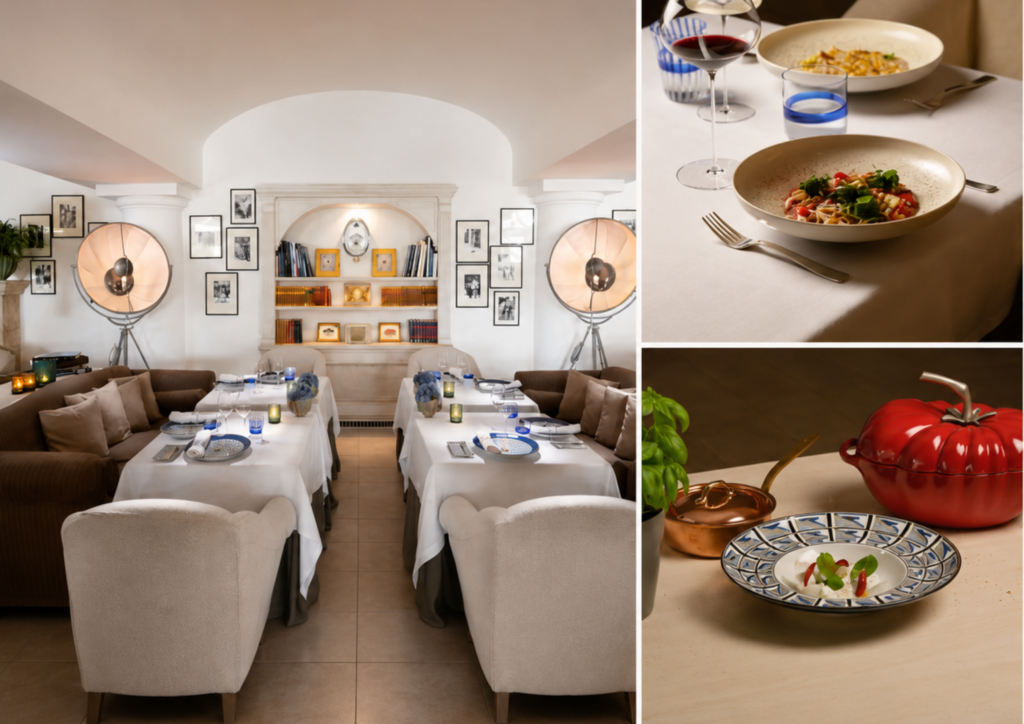
Lunch in Capri is best enjoyed without a strict schedule. A table near the sea, grilled fish, tomatoes and a glass of Falanghina are often enough. For a more formal experience, L’Olivo at Jumeirah Capri Palace in Anacapri offers a refined interpretation of local ingredients while retaining a relaxed Mediterranean character. Da Gelsomina provides a more traditional alternative: family-run, set above Anacapri and known for its garden produce and wide views.
Anacapri offers a quieter contrast to Capri Town. As the road rises and the crowds thin, the setting becomes more residential, with gardens, workshops, churches and views of the sea through pine and citrus trees. The chairlift to Monte Solaro gives visitors a broad view across the island and the surrounding coastline. Capri Town may be better known, but Anacapri has a more relaxed pace.
In the evening, the island becomes calmer as day visitors leave. Dinner begins late, and the streets and terraces take on a more subdued atmosphere. Some of Capri’s most enjoyable moments come after dark: a final drink on a terrace, the sound of boats on the water and the cooler air after a warm day.
THE ART OF ANTICIPATION
There are easier islands to reach, as well as newer resorts, larger beach clubs and more elaborate hotels. Capri’s appeal, however, lies in its consistency. Rather than changing with each season, it has retained a distinct sense of place.
Even with private aviation and efficient transfers, the final journey to Capri is still made by sea. That last approach is not simply a practical necessity; it marks the transition from travel to the island itself.
This is part of why Capri remains one of the Mediterranean’s most enduring summer destinations. Its appeal is not based on nostalgia, but on an understanding that the journey, the setting and the pace of arrival all contribute to the experience.