
The Art of REFINEMENT: The Citation Longitude
The Citation Longitude makes an interesting case for the things that rarely make it onto an aircraft’s specification sheet.
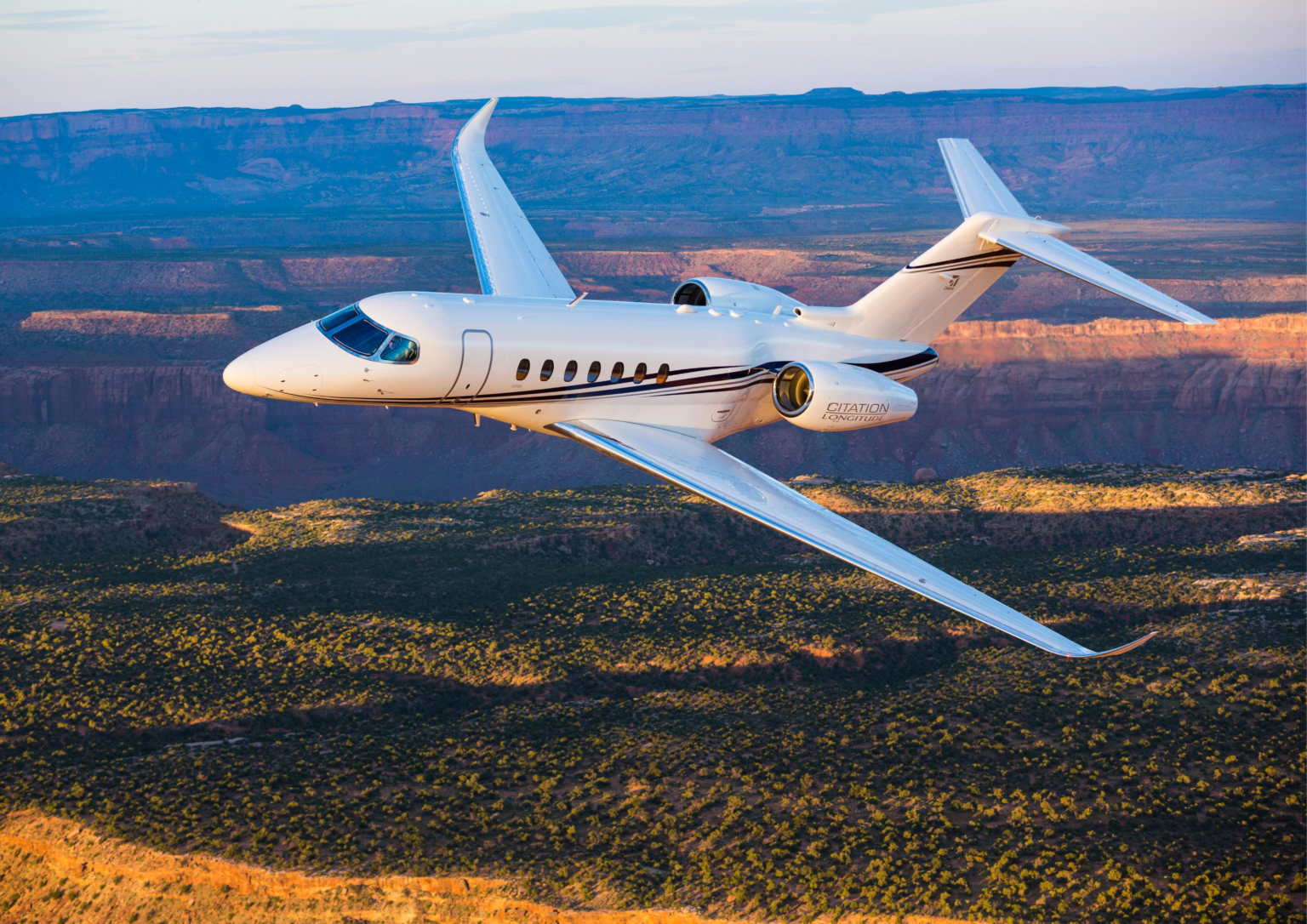
It takes a considerable amount of engineering to make something feel uneventful. The Citation Longitude offers a compelling illustration, with some of its most sophisticated design work devoted to reducing noise, vibration and the small distractions of spending several hours in the air.
As the flagship of Cessna’s Citation family, its performance credentials are substantial. With a published range of 3,500 nautical miles and a maximum cruise speed of 483 knots, it has little need to rely on understatement. But the more interesting story lies in what its designers have sought to remove from the experience, rather than what they have added.
A Different Chapter for Citation
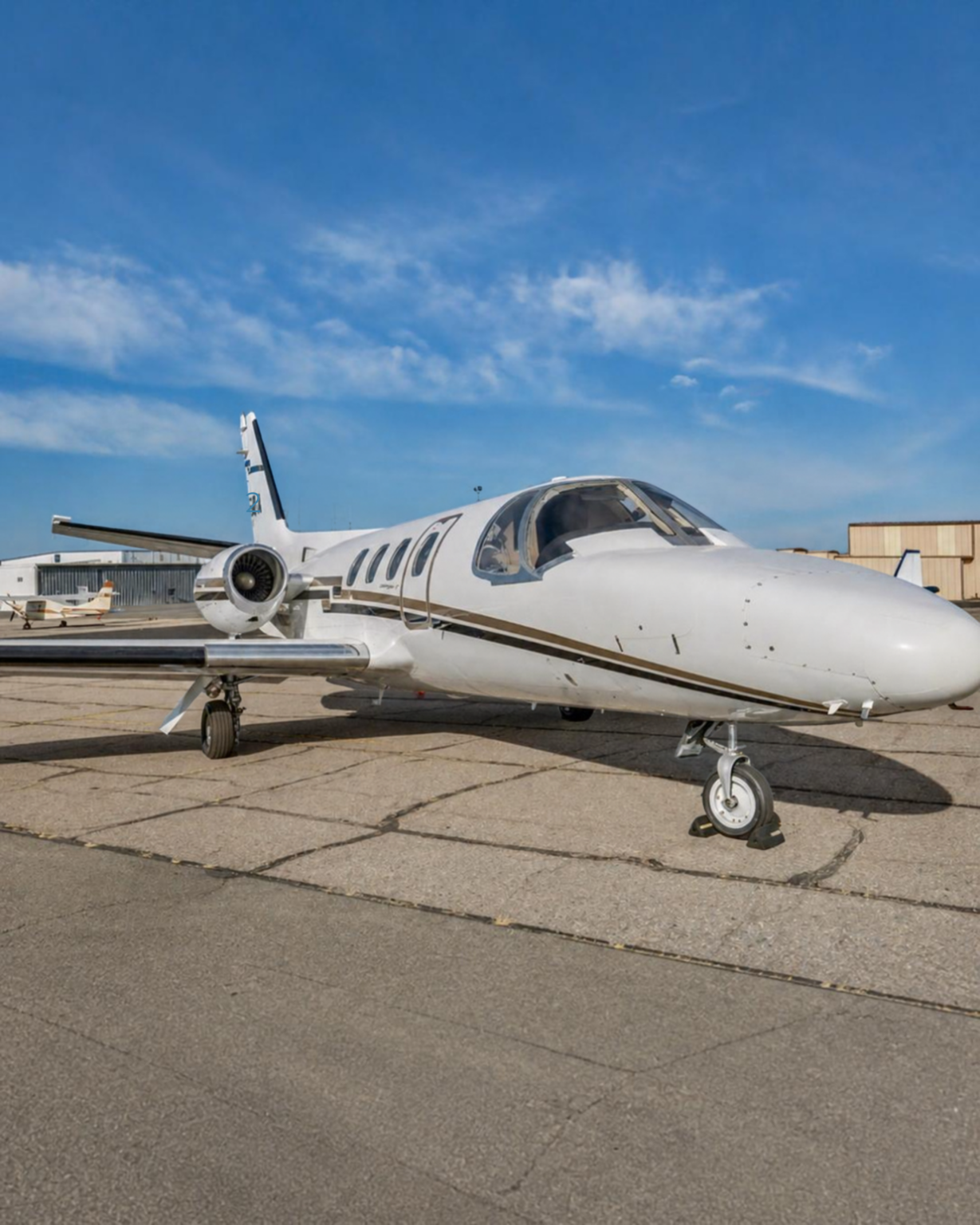
The Citation name has occupied a distinctive place in business aviation since the early 1970s. Cessna’s original business jet entered a market dominated by larger and faster alternatives, pursuing a different proposition centred on accessibility, relatively straightforward operation and the practical advantages of jet travel.
Over the following decades, the family expanded considerably. The Citation X, entering service in 1996, became particularly associated with speed, while later models extended the manufacturer’s presence across light, midsize and larger business aircraft.
The Longitude represents another stage of that evolution. Certified by the FAA in September 2019, it combined transcontinental range with a stand-up cabin and a more comprehensive approach to passenger refinement.
Its development also illustrates how aircraft design builds upon earlier generations. The Longitude shares its basic cabin cross-section with the Citation Latitude, extending the fuselage to provide additional interior space while incorporating new aerodynamic, structural and systems engineering.
Rather than pursuing one exceptional performance figure at the expense of everything else, the finished aircraft reflects a broader set of priorities. Cabin acoustics, in particular, received attention throughout its development rather than being addressed solely through the interior finishing process.
The Engineering of Silence
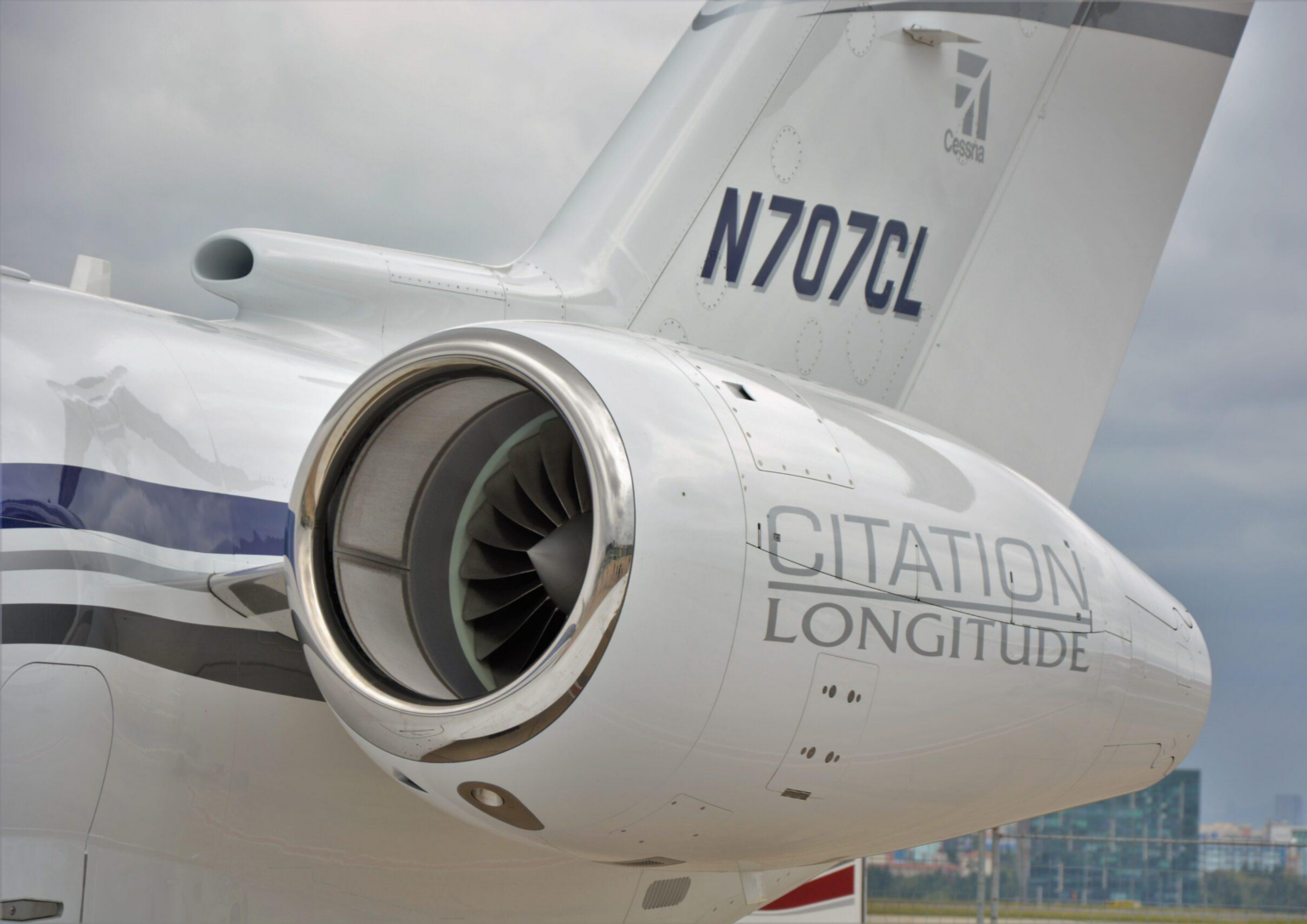
Aircraft cabins are complicated acoustic environments. Engine noise, airflow and structural vibration all contribute to what passengers hear, while sound can enter through less obvious areas such as windows, doors and the connections between components.
Effective noise reduction requires considerably more than adding insulation. During the Longitude’s development, Textron Aviation’s acoustics specialists worked directly with its design engineers, identifying potential noise sources throughout the cabin and surrounding structure.
The process combined computer modelling with flight-test measurements, allowing engineers to assess sound levels at individual passenger positions. Particular attention was given to areas where noise could enter the cabin, including the windows and entry door, before acoustic treatments and damping materials were developed for those locations.
An important distinction in acoustic engineering is that sound is not experienced through volume alone. Low-frequency noise from engines and airflow can be tiring or distracting even when the overall cabin does not seem especially loud. Its frequency, consistency and source all influence the environment passengers experience.
The Longitude’s acoustic programme therefore examined noise across different phases of flight, including climb, high-speed cruise and descent. This was a conscious departure from concentrating primarily on the relatively stable conditions of long-range cruise, according to Textron’s chief acoustics engineer, Gonzalo Mendoza.
Textron reports average cabin noise of approximately 67 decibels, based on its own testing. In a 2019 investor presentation, it published a more specific aft-cabin measurement of 67.2 dBA at 45,000 feet and Mach 0.80. While comparative noise measurements require consistent conditions to be meaningful, these figures provide an indication of the engineering attention devoted to the cabin.
There is also an important distinction between achieving a particular acoustic result and achieving it within the physical constraints of a business aircraft. Sound treatments must coexist with structural requirements, available cabin space and aircraft weight, making refinement part of a much wider engineering exercise.
Designing the Space Between
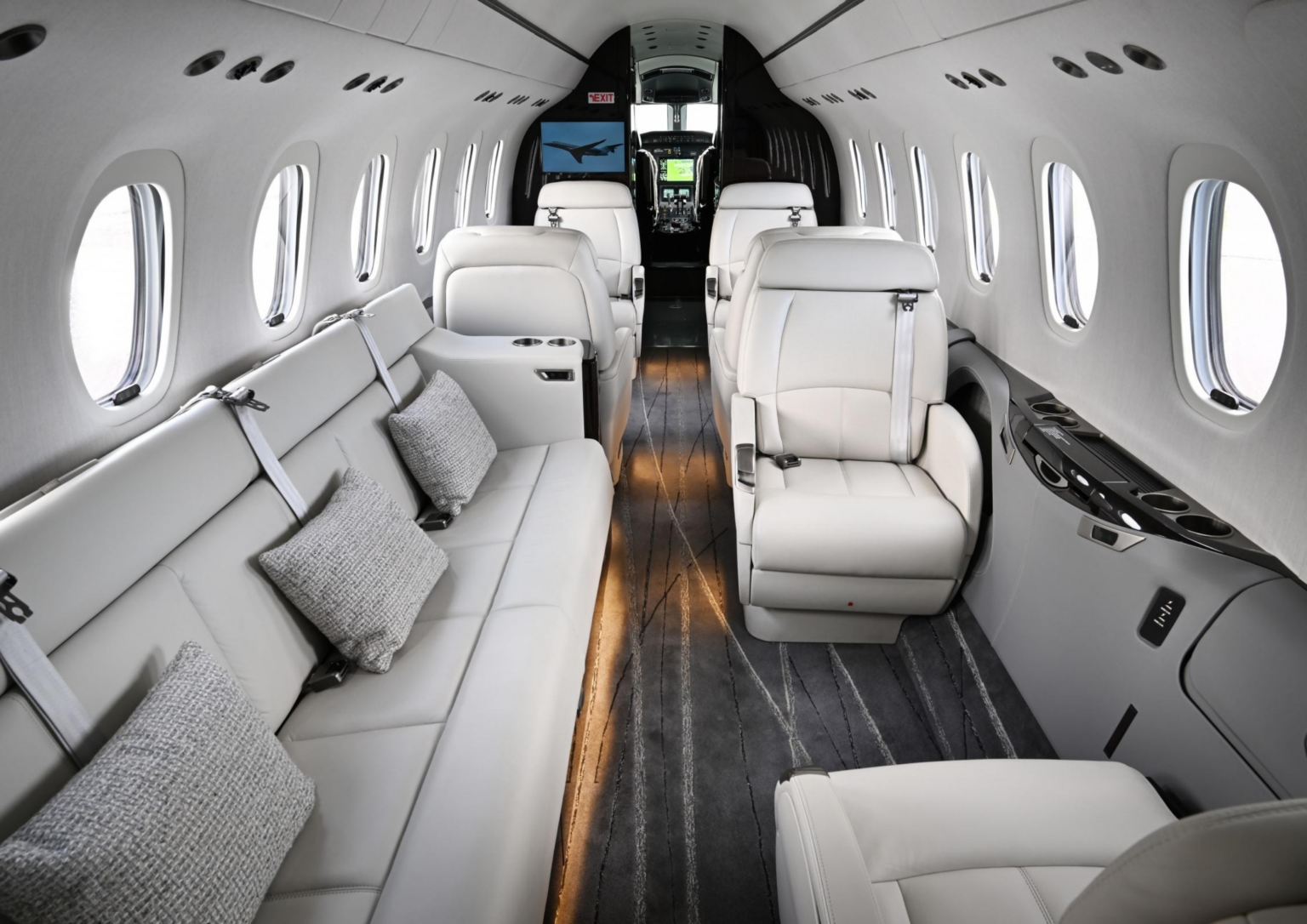
The Longitude’s physical cabin follows a similarly measured approach. At six feet high with a lay-flat floor, the cabin offers a comfortable environment for longer journeys without attempting to reproduce the separate living areas of a larger jet.
In its standard configuration, eight individual seats are arranged in facing groups of four, though, as pictured above, individual aircraft may feature alternative seating arrangements. Each seat is fully berthable, while an aft lavatory and in-flight-accessible baggage compartment add practical utility.
Cabin controls allow passengers to adjust elements of their immediate environment, creating a space designed as much around spending time aboard as travelling between destinations.
The relationship between the cabin’s physical design and its acoustics becomes particularly apparent during longer flights. Conversation is easier when passengers are not competing with background noise, while working and resting depend on the surrounding environment as much as the quality of the seat.
One less obvious feature was highlighted by aviation journalist Thomas A. Horne in his independent flight review for AOPA Pilot. The Longitude incorporates an expandable curtain across its entry-door opening, which also helps reduce noise from airflow around the door during flight. Closing the forward pocket doors provides further acoustic separation between the galley and main seating area.
Neither detail is likely to feature prominently in a conventional aircraft comparison, yet both demonstrate the practical value of considering the cabin as a complete environment rather than a collection of individual amenities.
Performance Without the Theatre
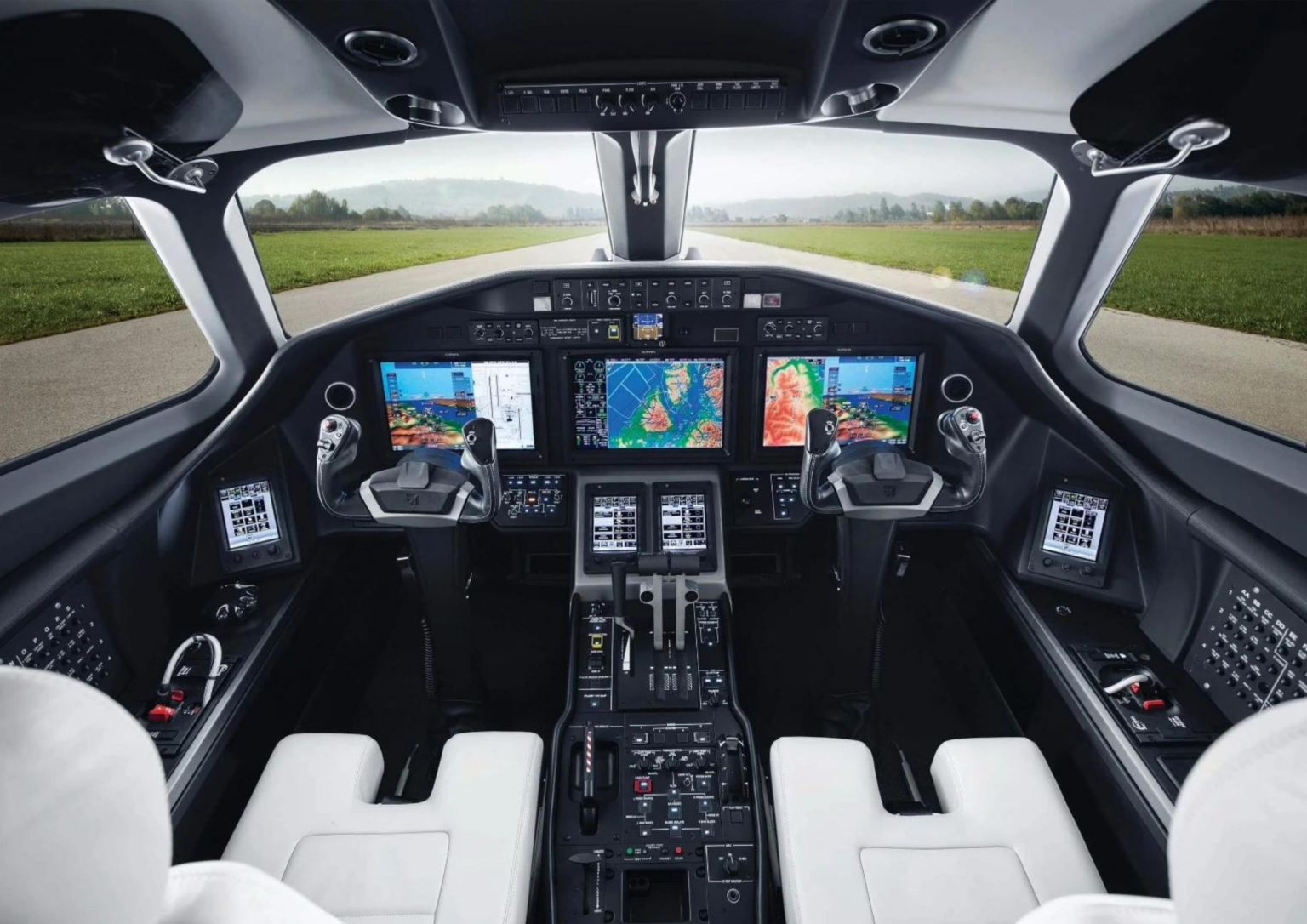
Cabin refinement has not come at the expense of an aircraft’s essential purpose. Powered by two Honeywell HTF7700L turbofan engines, the Longitude has a published maximum cruise speed of 483 knots and a range of 3,500 nautical miles under specified operating conditions.
That places a wide range of North American and Atlantic journeys within its intended mission profile. From Bermuda, for example, the aircraft is well suited to routes connecting the island with major destinations along the US East Coast and considerably further inland.
As with any private aircraft, actual nonstop capability depends on passenger numbers, baggage, winds, fuel reserves and operating conditions. Published maximum range is a measure of potential rather than a guarantee for every journey.
The Longitude also maintains a manufacturer-published cabin altitude of approximately 5,950 feet while cruising at 45,000 feet. Cabin altitude expresses the pressure experienced inside the aircraft as an equivalent altitude, making it a useful measure of the environment experienced by passengers during high-altitude flight.
In the cockpit, Garmin’s G5000 avionics suite and integrated autothrottle system support flight management, while the aircraft incorporates onboard diagnostics designed to assist maintenance and operational availability.
These systems are not without their own complexity, nor do they eliminate the compromises inherent in operating an aircraft of this size. Larger jets offer greater interior volume and different cabin arrangements, while other super-midsize designs place varying emphasis on range, payload and operating characteristics.
The Longitude’s contribution is the attention given to several aspects of the journey simultaneously, rather than allowing any single performance measure to define the aircraft.
The Value of What You Don't Notice
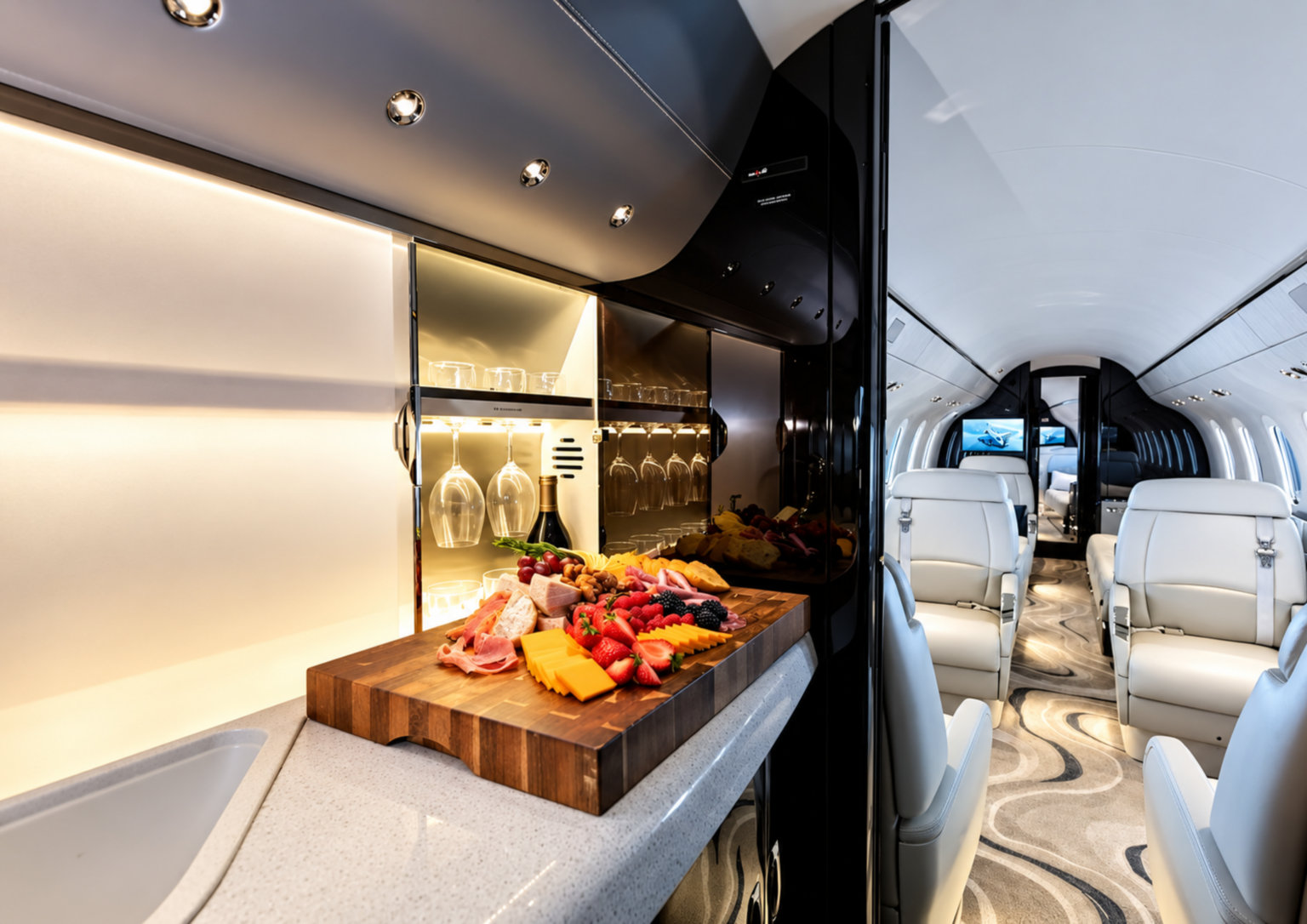
An aircraft’s most visible features are often the easiest to evaluate: an expansive cabin, an imposing exterior or an exceptional performance figure. The Longitude invites consideration of something less immediately apparent, from the acoustic treatment of its structure to the smaller design decisions that influence the atmosphere inside.
For a manufacturer whose Citation family has evolved considerably over more than five decades, it represents a development of a familiar philosophy. The original Citation prioritised practical accessibility, while subsequent generations pursued different combinations of speed, capability and operating efficiency. The Longitude adds another dimension through the attention paid to the experience of spending time aboard.
Its refinement is not intended as a substitute for performance. Rather, it offers a reminder that progress in aviation need not always be expressed through greater speed, distance or scale.
The most successful part of a flight may be the meeting that proceeds uninterrupted, the conversation that requires no raised voices or the opportunity to rest before arrival. In the Longitude, a considerable amount of engineering has been devoted to making those ordinary moments possible.
Sources include: AIR.ONE, AOPA Pilot, GlobalAir, New Atlas, Northrop & Johnson, Textron Aviation, Textron Aviation Media Center, Textron Inc. Investor Relations, Veryon