
The Architectural Genius Behind Port Royal
Robert Trent Jones Sr. built monsters. Bermuda got one of his best.
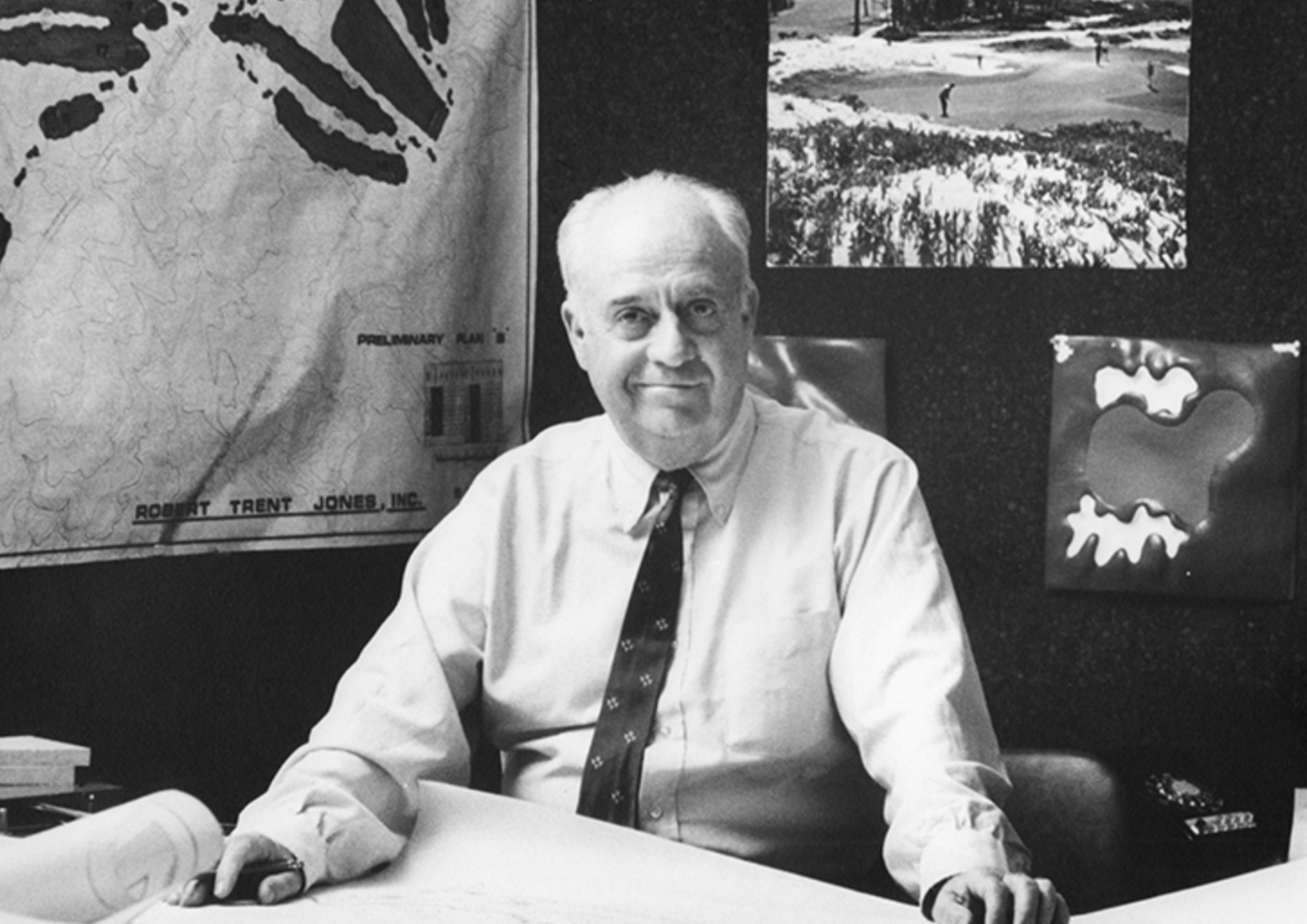
Source: RTJ2, Robert Trent Jones Sr. at his desk.
Two courses, one argument
There is a long-running argument among Bermuda golfers over which course deserves the island’s crown: Port Royal or Mid Ocean Club. The honest answer depends on who’s asking. Port Royal, being longer and more exposed to the wind, is arguably the tougher test at elite level and, as a public course, a fitting stage for the PGA TOUR each autumn. Mid Ocean, a 1921 design by Charles Blair Macdonald and Seth Raynor, is trickier for nearly everyone else, its blind shots and doglegs punishing an ordinary round far more than they punish a great one. Jones designed the former outright and was later brought in to sharpen the latter, giving him a rare claim on both sides of an argument he had a hand in creating.
Open by design
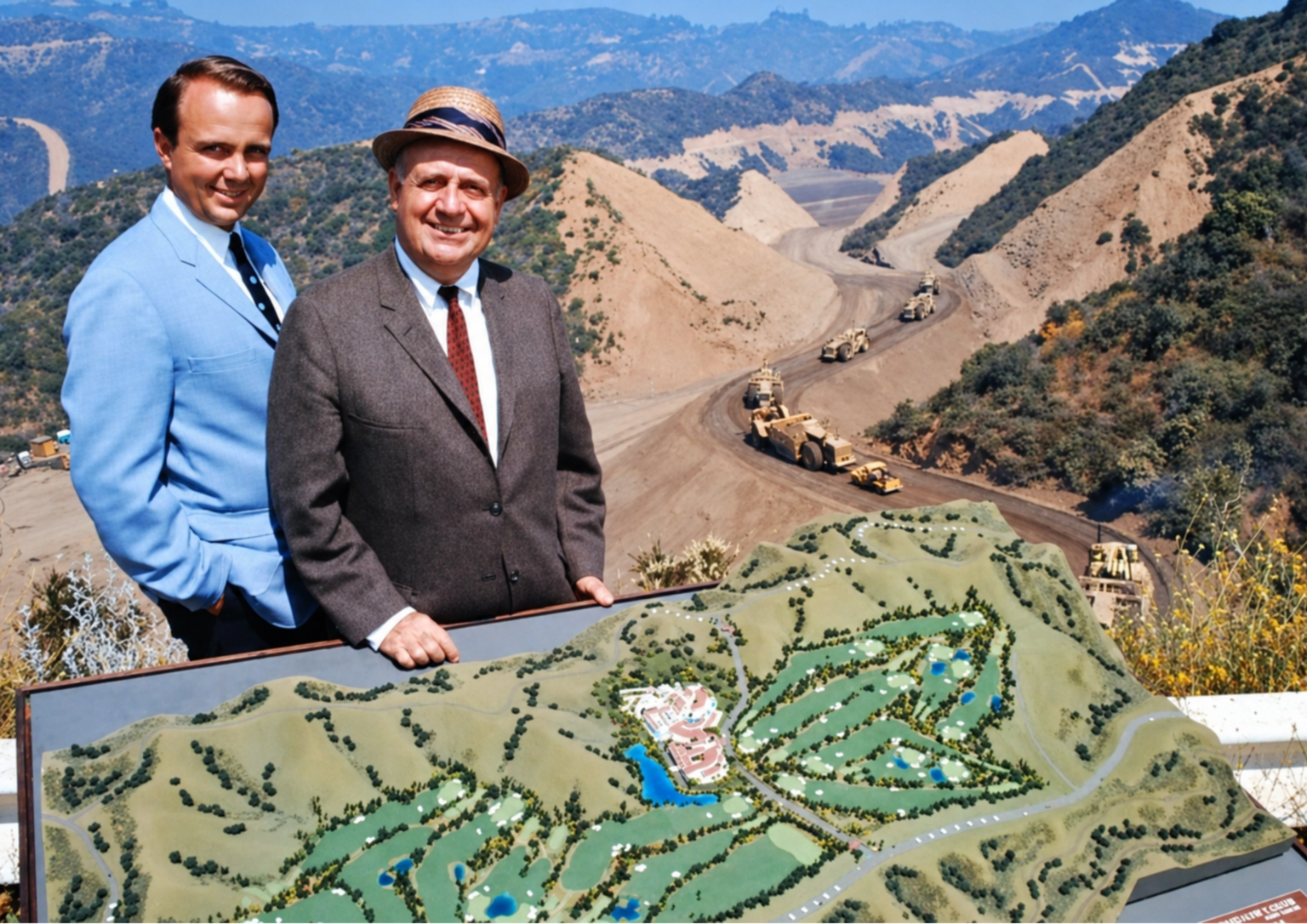
Source: Shutterstock, Robert Trent Jones Sr. with son Robert Trent Jones Jr.
Most people today know Port Royal as the public course that shares a fairway with the pros each fall, open to a visiting golfer the same week a major champion is fighting the wind on the very same holes. What’s easy to forget is what Bermuda golf looked like before it existed. Through the 1960s, the island’s best courses sat behind private membership, largely closed to Black Bermudians. When the government broke ground on a championship-caliber course open to anyone who could book it, in step with a broader desegregation push reaching the island’s fairways, it was as much a political statement as an architectural one.
By the time Jones was invited to lead the design, the golf world had mostly stopped debating his talent and started simply keeping score of it. Ron Whitten, Golf Digest’s longtime architecture critic, put it about as well as anyone has: Jones, he wrote, “did not invent golf course architecture, it only seems that way.” He had already turned Oakland Hills into Hogan’s monster, taken on Peachtree in Atlanta alongside the amateur legend Bobby Jones, and become the man the USGA called whenever a championship venue needed sharpening. Bermuda wasn’t hiring an unknown.
A hard par and an easy bogey
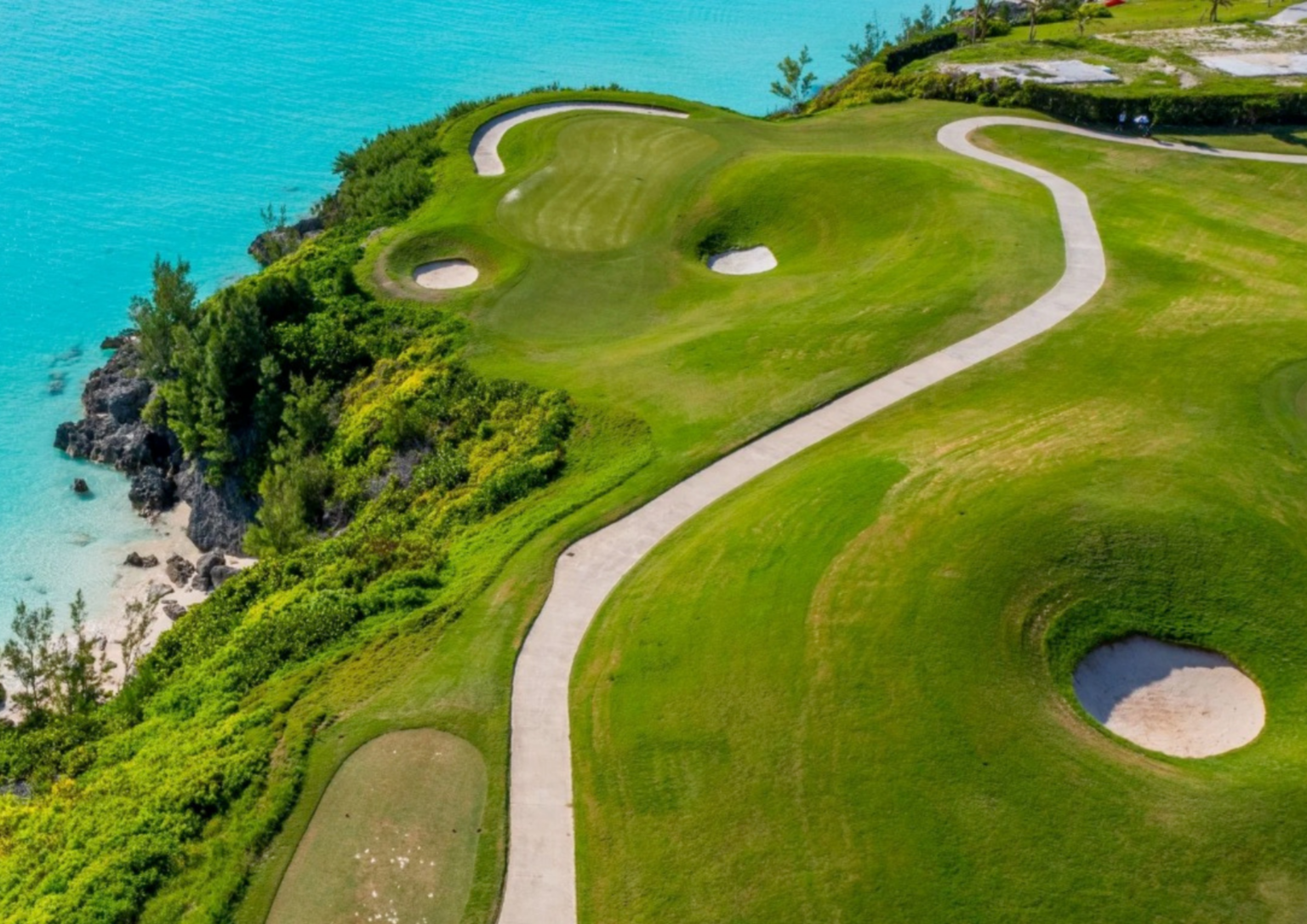
Source: Bermudagolf.bm
Port Royal reads, on the ground, as a fairly literal translation of what Jones believed about the game. He liked to say every hole should be “a hard par and an easy bogey”: reward the golfer who takes the aggressive line, leave a respectable way home for the one who doesn’t. He was considerably less patient with the idea that better equipment alone should lower scores, dismissing “the shattering of par without a proper challenge” as a fraud outright. Port Royal’s corridors are generous off the tee, the trouble waits at the green, and the prevailing Atlantic wind does most of the disciplining he never had to build into a bunker himself.
The detail most visitors miss is that the course’s most famous hole exists almost by accident. Persistent land disputes with local farmers forced Jones to reroute large sections of his original plan, and the rerouting produced the par-three 16th, tee and green perched on a bluff with nothing but Atlantic between them. Locals will tell you to look down before you swing. On a clear day the water below is thick with parrotfish, and the cedar saplings planted along the fairways during a later renovation have since grown tall enough to make the whole run to the 16th feel like it was always meant to look this way.
The long way to Bermuda
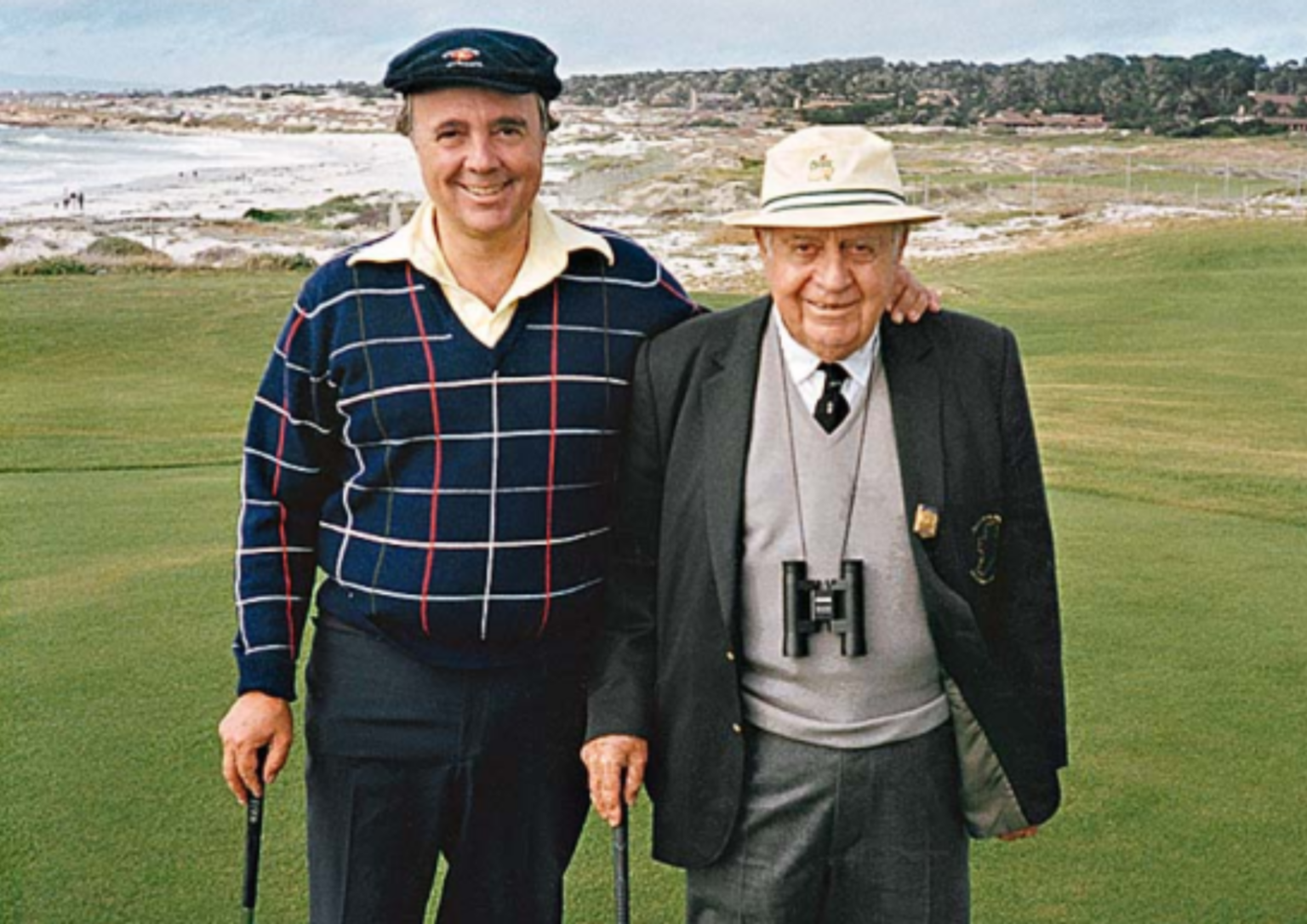
Source: RTJ2
Jones’s own path to that bluff started far from it. Born in Lancashire in 1906, he arrived in upstate New York as a child and found the game caddying at Rochester Country Club. No formal course in golf architecture existed yet, so he built his own at Cornell, borrowing lessons in landscape design, soil chemistry and horticulture, then apprenticed briefly under the Canadian architect Stanley Thompson before striking out on his own through the Depression. His first true landmark came in 1948 with Peachtree, the Atlanta course he built alongside Bobby Jones, which prompted him to start going by his middle name, Trent, so the two men would stop being confused. What followed was one of the more prolific careers in the sport’s history: designing or re-designing more than four hundred courses across forty-five states and thirty-five countries.
The sun never set
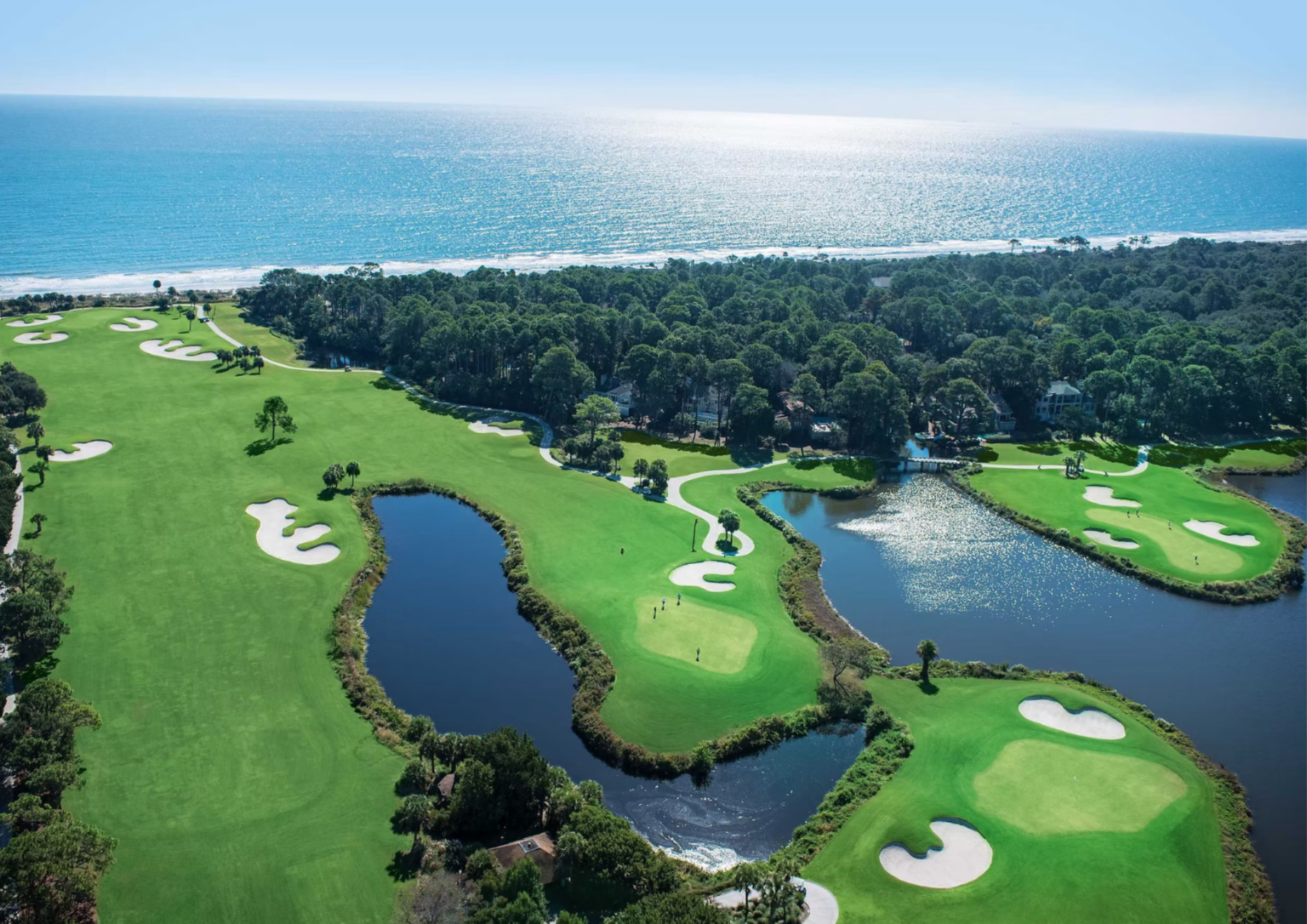
Source: My Palmetta Dunes
Jones was fond of joking that the sun never set on a Robert Trent Jones golf course, and by the late 1960s it was less a boast than an inventory. Perry Dye, son of the equally legendary Pete Dye and an accomplished course builder in his own right, put a finer point on it years later, weighing his own father’s considerable American legacy against Jones’s reach: “If it weren’t for him it really wouldn’t be a world-wide game.” It’s worth being precise about what Dye meant by that. He wasn’t crediting Jones with making golf more popular in some abstract sense. He meant it literally, courses that physically existed in country after country because Jones had gone there and built them, often with the U.S. military and the World Bank underwriting the work.
Mid Ocean gave Jones a different kind of assignment altogether. By the time he arrived in the 1950s, the course had already stood for three decades as one of Macdonald and Raynor’s finest achievements, its template holes and diagonal hazards untouched since golf’s Golden Age. His task wasn’t to reimagine it but to extend it, lengthening and reinforcing a design he hadn’t drawn without erasing the hand that had. Few architects are trusted to edit a masterpiece rather than replace it. Fewer still leave it recognizably intact.
Not everyone found the toughness of his own designs charming. At the 1970 U.S. Open, a reporter asked the pro Dave Hill what Jones’s Hazeltine National was missing. “Eighty acres of corn and a few cows,” Hill said, having just finished runner-up to Tony Jacklin. It’s the kind of line that stuck to Jones for years, and one he probably didn’t mind. A course people complained about was, by his own logic, a course doing exactly its job.
The test remains
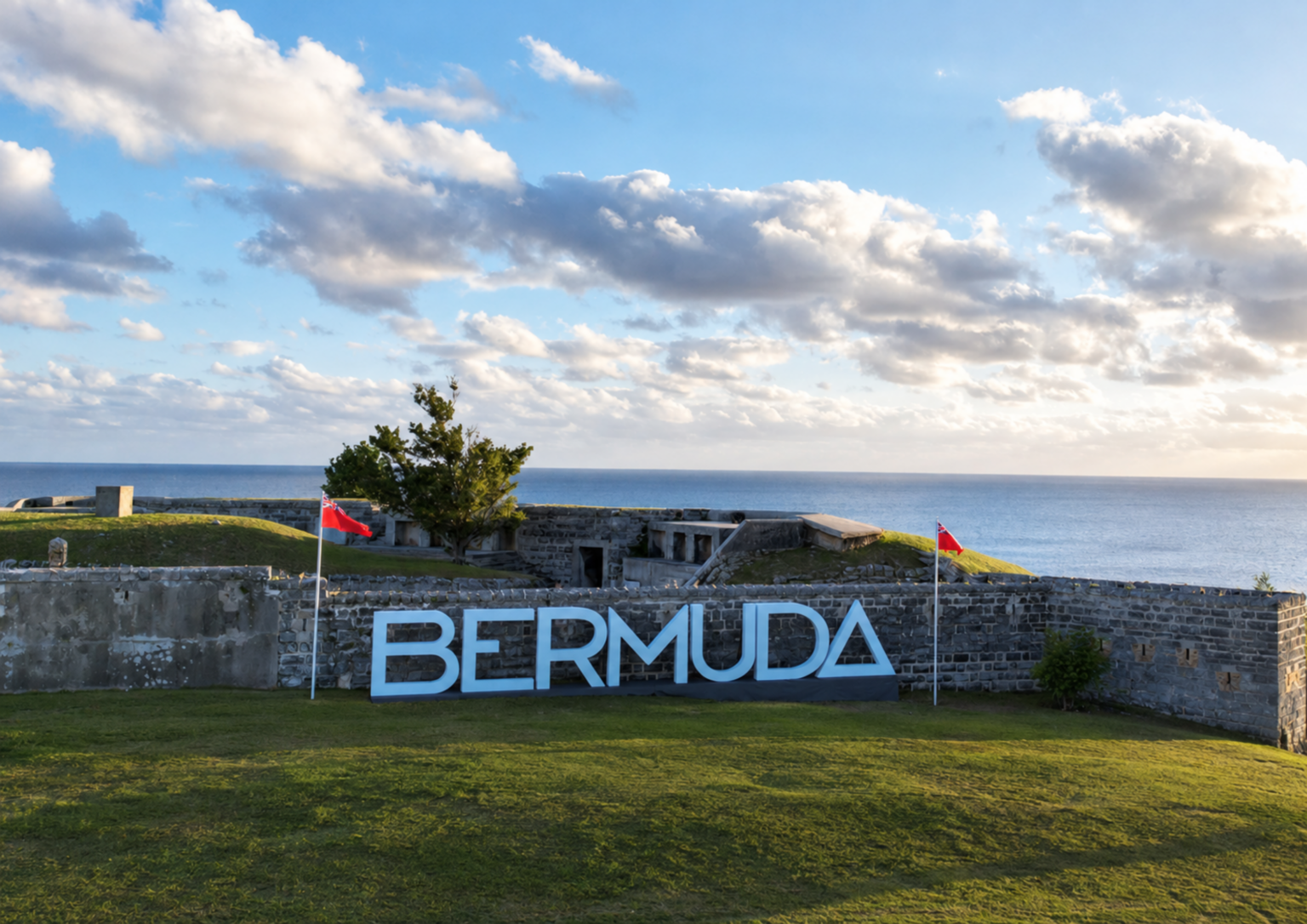
Source: butterfieldbdachampionship.com
The PGA TOUR’S Butterfield Bermuda Championship returns to Port Royal this October 22 to 25, its seventh year on the PGA TOUR’s autumn schedule. The same cliffside stretch that Jones stumbled into by way of a land dispute will decide more than a few final leaderboards, and the same course that opened its gates to any golfer willing to book a tee time will, for one week, host the best in the world doing exactly that.
Henry Picard had already won the Masters and the PGA Championship by the time he walked the new course in 1970, so it took him only one line: “This will go down as one of the greatest golf courses in the world.” He was right about the contours. He was right about the wind. More than fifty years and one PGA TOUR stop later, he hasn’t been proven wrong about much else.
Sources include: Ben Hogan, Bermudagolf.bm, Butterfield Bermuda Championship, Dave Hill, Golf Digest, Henry Picard, My Palmetta Dunes, Perry Dye, Robert Trent Jones Sr., Ron Whitten, RTJ2, Shutterstock.
Where the hotel ends
Not everyone found the toughness of his own designs charming. At the 1970 U.S. Open, a reporter asked the pro Dave Hill what Jones’s Hazeltine National was missing. “Eighty acres of corn and a few cows,” Hill said, having just finished runner-up to Tony Jacklin. It’s the kind of line that stuck to Jones for years, and one he probably didn’t mind. A course people complained about was, by his own logic, a course doing exactly its job.
The Butterfield Bermuda Championship returns to Port Royal this October 22 to 25, its seventh year on the PGA TOUR’s autumn schedule. The same cliffside stretch that Jones stumbled into by way of a land dispute will decide more than a few final leaderboards, and the same course that opened its gates to any golfer willing to book a tee time will, for one week, host the best in the world doing exactly that.
Henry Picard had already won the Masters and the PGA Championship by the time he walked the new course in 1970, so it took him only one line: “This will go down as one of the greatest golf courses in the world.” He was right about the contours. He was right about the wind. More than fifty years and one PGA TOUR stop later, he hasn’t been proven wrong about much else.
At a Glance
Aircraft: Gulfstream V
Introduced: 1997
Buyer: Mark Cuban
Purchase date: October 1999
Approximate value: US$40 million
Recognition: Largest single e-commerce transaction at the time (Guinness World Records)
“Flying out after a late-night game to be at a meeting the next morning. Leaving a meeting to get home in time for my daughter’s first daddy-daughter dance. It’s part of my life that I can’t be without.”
“There are too many examples to count of how the airplane has helped me,”
“It means I have more hours in my day to spend with friends and family. It means I can get more work done. It means I can travel comfortably with my family. It’s a life- and game-changer.”
— Mark Cuban