
STUDIES IN RED
From Buenos Aires to Miami and New York, Faena has spent two decades testing how far a hotel can extend beyond the room, using art as part of the architecture rather than an accessory to it. The more interesting question is what happens to the city once that world becomes complete.
Before the THEATRE
The red carpet at Faena New York begins on West 18th Street and continues through doors flanked by white-uniformed staff into a lobby the hotel calls the Cathedral. Diego Gravinese’s vast mural wraps around its curved walls, astrological figures and saturated colour rising above a white-and-gold staircase. Elsewhere, Keith Haring appears behind glass, Sebastián Errázuriz is represented in the collection, leopard print runs through the public rooms and Francis Mallmann cooks over fire downstairs. Art is not something encountered after check-in here. It helps establish the terms of arrival.
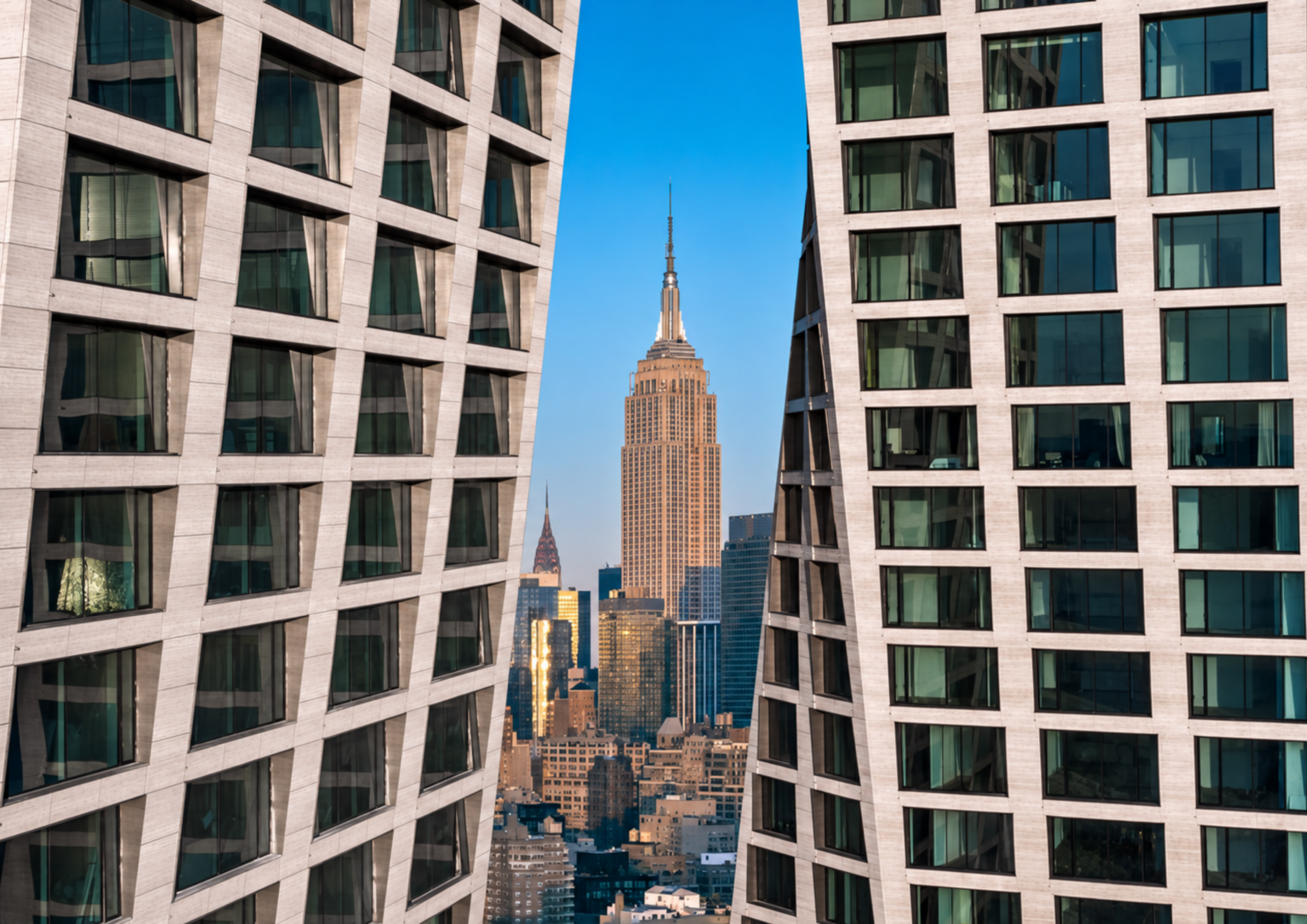
Those terms become more interesting because of what sits immediately outside. The High Line passes almost alongside the building, West Chelsea’s galleries begin within a few blocks, and the hotel occupies the lower floors of One High Line, Bjarke Ingels Group’s pair of twisting towers beside the Hudson. The neighbourhood was already unusually fluent in art, architecture and spectacle before Faena opened here in September 2025. The Financial Times picked up on the contrast between the hotel’s flamboyance and Chelsea’s more austere post-industrial character, while AFAR noted that the familiar maximalism is concentrated most strongly in the public spaces.
New York is therefore a useful place to encounter a hotel group that has spent more than twenty years shaping considerably more than bedrooms. From Buenos Aires onwards, Faena has used restaurants, performances, commissioned work, architecture and eventually entire cultural buildings to influence how a guest moves through a place and what catches the eye along the way. The recurring reds are the easiest part of that language to recognise, but art may be the more revealing thread. It fills thresholds, moves onto beaches and streets and, in Miami, acquired a building of its own.
To understand how that happened, the story begins in a converted grain warehouse in Puerto Madero.
The first study
When Faena Hotel Buenos Aires opened in 2004, Philippe Starck worked within an early twentieth-century industrial building whose red-brick shell already carried much of the character Faena would later make his own. Inside came red velvet, black marble, white leather and a more theatrical sequence of rooms, but the original structure remained visible enough to prevent the hotel feeling detached from its past.
Puerto Madero itself was undergoing a similar exercise in reinvention. Beginning in the late 1980s, the disused docklands became one of Latin America’s most closely watched urban redevelopment projects, bringing warehouses back into use and reconnecting valuable waterfront land with central Buenos Aires. The transformation was economically successful, but urban researchers have also questioned how fully the affluent new district integrated with the social life of the wider city. Faena did not initiate that transformation, but he entered a neighbourhood already concerned with how a place could be remade and presented anew.
His contribution was to bring some of that editing indoors. Rojo Tango remains one of the clearest examples. Inside the hotel’s cabaret, tango is compressed into an intimate, highly produced performance involving accomplished dancers, musicians, costume and lighting. The city’s less polished tango culture continues elsewhere in milongas, clubs and neighbourhood halls. At Faena, the same cultural material acquires a tighter frame, a sequence and a clear beginning and end.
The distinction is more interesting than a debate over authenticity. The performance is not pretending tango belongs to the hotel, nor is it merely an imported entertainment placed beside the bar. Instead, Faena takes something that belongs unmistakably to Buenos Aires and makes it unusually legible to a visitor arriving from elsewhere.
Art soon became part of the same process. In 2011, Faena and then artistic director Ximena Caminos opened the Faena Arts Center in another converted industrial building in Puerto Madero. Its early programme included a large-scale installation by Brazilian artist Ernesto Neto, curated by Jessica Morgan, then at Tate Modern, followed by projects involving artists including Richard Long. The scale and ambition sat closer to an independent cultural institution than a hotel gallery.
That history matters because it complicates the easy reading of Faena as a maximalist hotel brand that later discovered art. Culture was present early, not as a decorative layer but as part of a broader attempt to give the destination its own rhythm. Restaurants, tango, architecture, exhibitions and commissioned work could all belong to the same environment without necessarily occupying the same building.
A good hotel has always edited a city to some degree. It recommends one restaurant over another, frames a view, introduces certain objects and decides what belongs in the lobby. Faena simply made that instinct more explicit, and in Buenos Aires established a habit that would become considerably more ambitious when it reached Miami.
When the hotel became a district
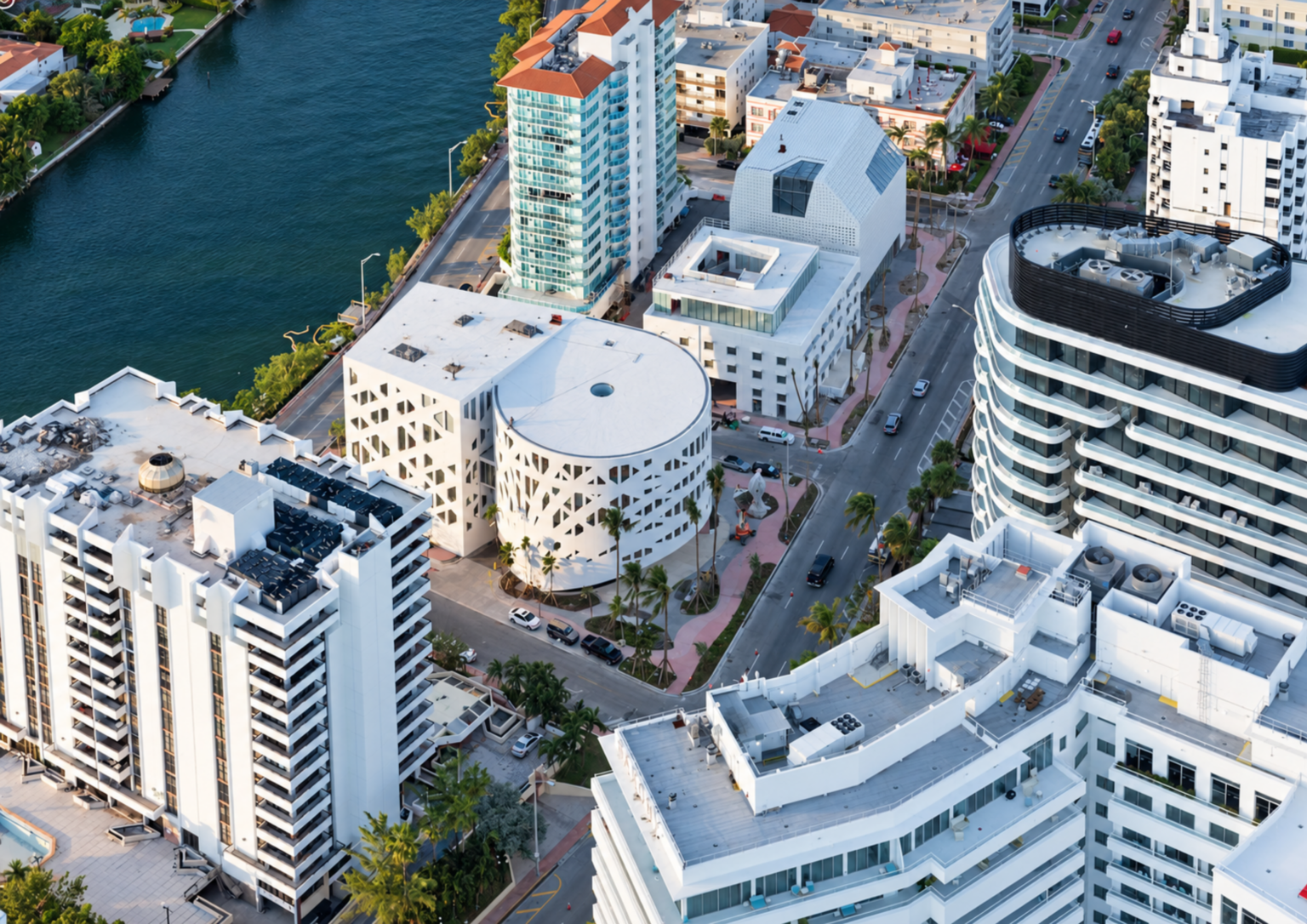
Faena Hotel Miami Beach opened in the former Saxony Hotel in 2015, with Baz Luhrmann and Catherine Martin involved in interiors where red, gold and tropical motifs appeared at a much larger scale. Damien Hirst’s gilded woolly mammoth, Gone But Not Forgotten, quickly became the most photographed piece associated with the property, positioned outside like an improbable relic beside the Atlantic.
The mammoth is memorable, but it can distract from the more consequential development across Collins Avenue. OMA designed Faena Forum as a multidisciplinary arts building, part of a wider three-block intervention that also included retail, public spaces and other architecture. Unlike a conventional hotel gallery, the Forum was conceived to accommodate visual art, dance, performance, talks and commissioned work in a flexible civic-scale building.
Its opening in 2016 showed how deliberately the programme was intended to move beyond the hotel. Tide by Side, a processional work involving artists and South Florida cultural groups, travelled along Collins Avenue rather than remaining safely inside the Forum. Other commissions brought choreographers, architects and visual artists into the same programme. Under Caminos, Faena Art increasingly occupied the space between formal institution, festival and public intervention.
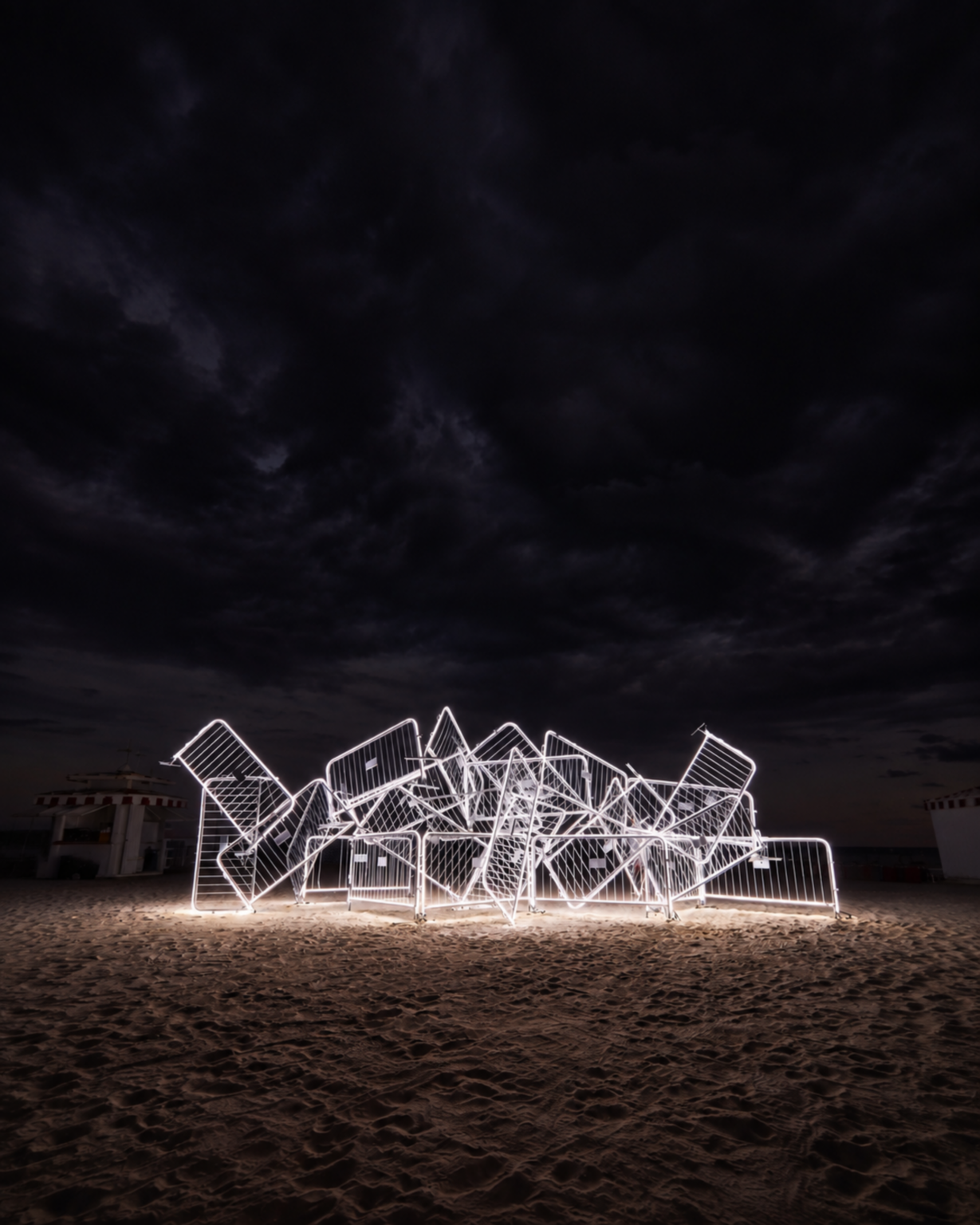
That reach continued onto the beach and into surrounding streets. Faena Art developed free programming during Miami Art Week, commissioned work outside conventional exhibition spaces and, at times, used the resort landscape itself as a temporary gallery. The Art Newspaper, looking back over the organisation’s first decade, traced this activity directly to the Buenos Aires arts centre, suggesting continuity rather than a sudden Miami reinvention.
Miami is therefore where Faena’s use of art becomes most relevant to the wider argument. In Buenos Aires, culture helped make the hotel more complete. In Miami, it became one of the tools through which the hotel began to participate in the identity of the neighbourhood around it.
There is an obvious tension in that. Art can give a private development the appearance of public life, particularly in a city where cultural patronage and high-value real estate often develop alongside one another. Yet Faena’s Miami programme has not been confined to residents or paying hotel guests. Significant parts of it have been free, visible from the street or physically located outside the property, and artists have used the platform to address subjects including land, race, gentrification and environmental pressure.
The more useful conclusion is therefore not that Faena District is public or private. It contains elements of both, and the ambiguity is part of what makes it interesting.
The same tension exists in the hospitality proposition. Within a few blocks, a guest can sleep, eat, drink, see live work, visit exhibitions, use the beach and spend relatively little time deciding where to go next. Each addition makes the experience richer, but each also reduces the practical need to encounter Miami beyond the district.
For a hotel, that completeness is impressive. For travel, it raises a different question: at what point does making a destination easier to experience begin to make the destination outside less necessary?
The argument for less
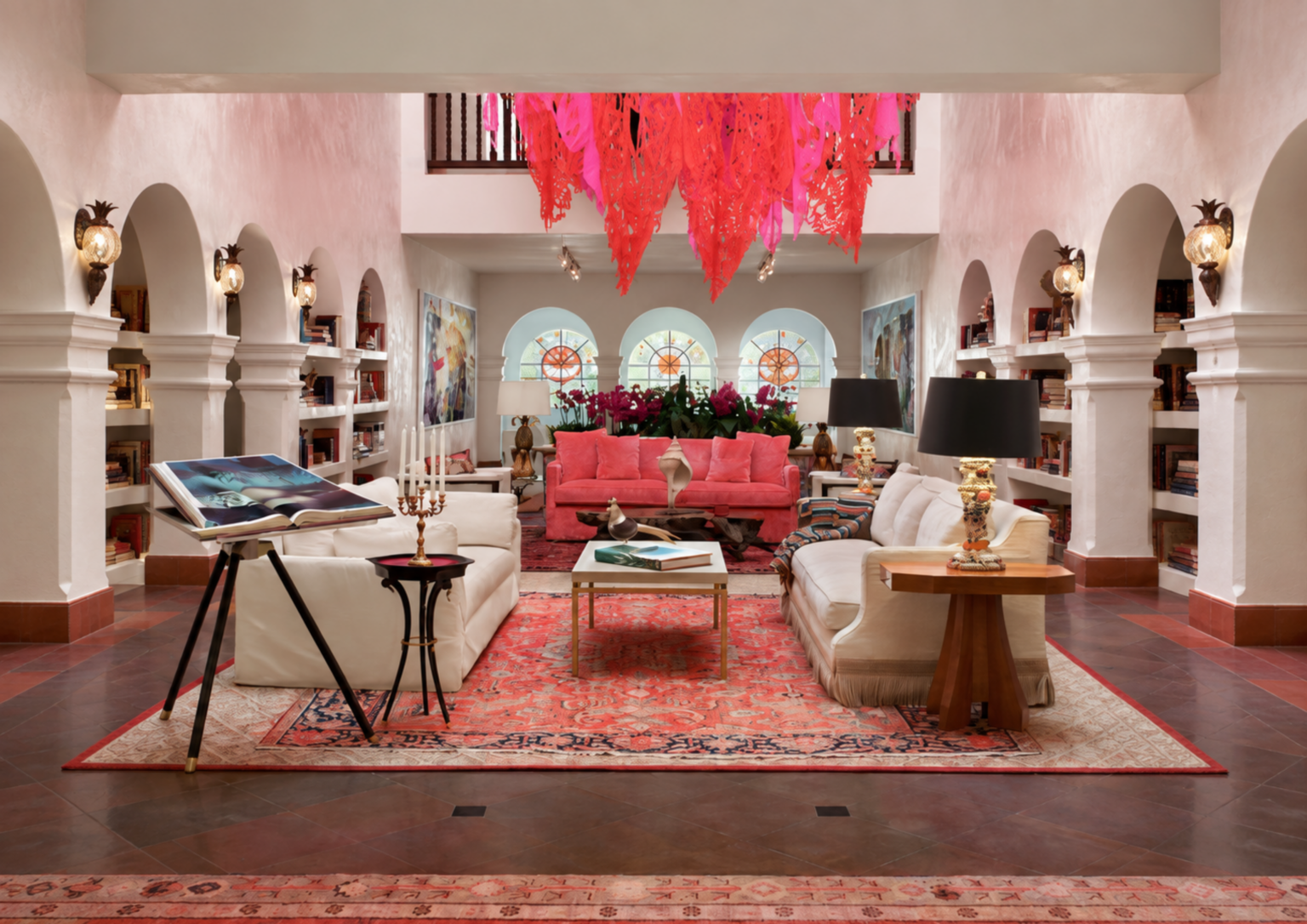
A few blocks north, Casa Faena provides a quieter counterpoint. The building predates the wider district by almost ninety years, opening in 1928 as El Paraiso Apartments with eighteen apartments and only two hotel rooms. Designed by Miami architect Martin L. Hampton in the Mediterranean Revival tradition, its arches, courtyard proportions and domestic scale were established long before Faena arrived.
That pre-existing character gives the building a degree of resistance. The main hotel introduces itself through monumental murals, polished surfaces and rooms designed to announce themselves. Casa still reads more clearly as a house. Art and pattern are present, but they share space with an architecture strong enough not to disappear beneath them.
The difference makes some of Faena’s quieter instincts easier to see. Without monumental scale, the emphasis shifts towards social rooms, transitions between inside and outside, the rhythm of a courtyard and the pleasure of a place that can influence an evening without attempting to become the evening.
Casa is useful precisely because it separates the Faena idea from some of its most recognisable visual signatures. Red, gold and animal motifs are easy to reproduce from one property to another. More difficult to transfer is the judgment behind them: how much atmosphere a place needs, how strongly it should direct attention and when existing architecture deserves to retain the louder voice.
Seen this way, Casa is not simply the subdued member of the Miami portfolio. It suggests that some of the most convincing Faena may be the Faena that knows when to recede. That distinction becomes more important in New York, where the surrounding city is considerably less willing to play a supporting role.
The city pushes back

Chelsea does not need a hotel to supply it with art. Gallery culture has shaped West Chelsea for decades, the High Line transformed redundant railway infrastructure into one of New York’s most recognisable public spaces, and the neighbourhood has become a dense catalogue of contemporary architecture, restaurants and cultural institutions.
Faena arrives here not as a catalyst for cultural activity but as another participant in an ecosystem that already has its own authority. The response is characteristically confident. Gravinese’s mural dominates the Cathedral, Keith Haring occupies a corridor, Sebastián Errázuriz appears elsewhere, performance fills the Living Room and Mallmann provides an Argentine thread at La Boca.
The concentration of those gestures in the public areas is telling because upstairs the volume drops. AFAR found the 120 guest rooms noticeably calmer, with blond woods, deeper blues and more selective flashes of pattern and scarlet. Through floor-to-ceiling windows, the city increasingly becomes part of the room’s composition.
It is a small design decision, but an editorially useful one. In Miami, much of the art and programming encourages a guest to move further into the Faena world. In New York, the windows repeatedly pull attention back towards Chelsea.
The difference reflects a larger change in circumstances. Faena cannot plausibly make West Chelsea culturally interesting because West Chelsea already is. Nor can one hotel dominate the conversation around art when hundreds of galleries, artists, architects and institutions are making their own competing claims within walking distance.
The challenge is instead one of proportion. Can Faena remain recognisably Faena without reducing the city to scenery?
New York suggests that the answer may involve concentrating the strongest gestures rather than spreading them evenly. The entrance tells you clearly that you have crossed into a particular world, but the bedrooms allow more of Manhattan to enter it. That is a subtler form of authorship than Miami, and possibly a more useful one.
What travels next
The question of scale becomes more significant as Faena moves beyond traditional hotels. On the Miami River, Faena Residences is planned as two 68-storey towers connected by a substantial bridge containing cultural, art and wellness spaces. The development extends a pattern that began with the arts centre in Buenos Aires and expanded through the Forum in Miami Beach: cultural space is becoming embedded directly into the architecture of daily life.
There is a natural logic to that progression. The hotel guest who once entered a carefully constructed Faena environment for several nights can now buy into one permanently. Restaurants, residences, cultural programming and wellness increasingly belong to the same proposition.
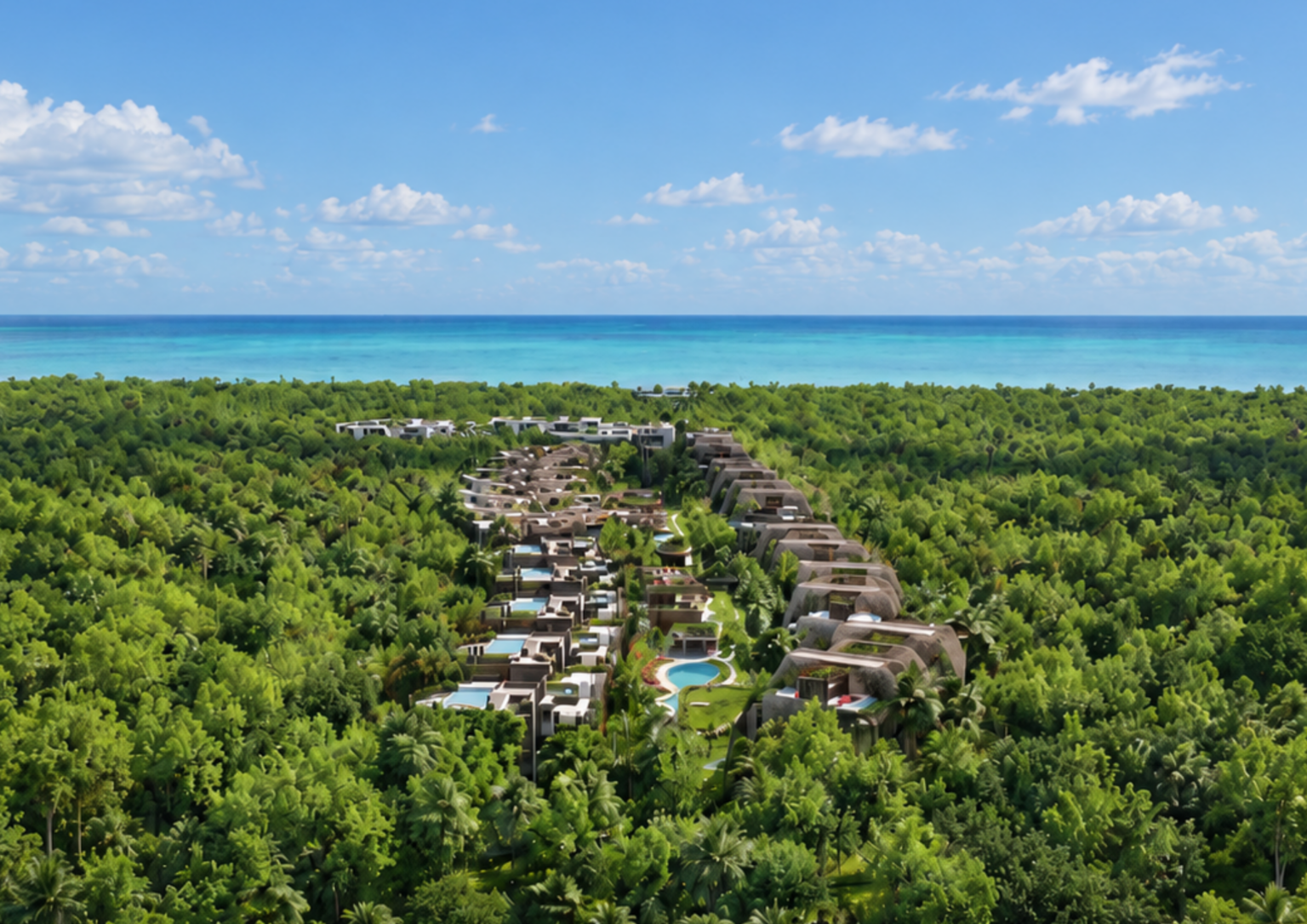
Tulum poses a more complicated test. The planned 12-acre Faena resort and residential district is being designed by Brandon Haw Architecture around a combination of hotel buildings, residences, gardens, wellness spaces and an oceanfront club. The architecture has been presented as more responsive to the jungle, local materials and regional construction traditions than the overt theatricality associated with Miami.
Those claims will ultimately matter less than what is built. Tulum has absorbed extraordinary tourism growth over the past two decades, together with pressure on water, waste infrastructure, cenotes and the surrounding ecology. In a destination where the language of sustainability and connection to nature is now common across high-end development, restraint has to mean more than making architecture appear recessive in a rendering.
This makes Tulum an unusually revealing next chapter. Miami rewarded Faena’s capacity to add buildings, programming, artworks and experiences until the district became increasingly complete. Tulum may show whether the same instinct can operate in the opposite direction, allowing landscape and place to determine what should not be added.
Where the hotel ends
Two decades after Buenos Aires, Faena’s signatures are easy to recognise. Red recurs, art is rarely incidental, performances occupy spaces another hotel might devote to additional seating, and commissioned work can appear on walls, beaches, streets or in buildings designed specifically to contain it.
Taken together, those choices reveal something more interesting than maximalism. Faena has become unusually adept at directing attention.
A mural determines the first thing a guest sees. A performance can decide where the evening goes. An exhibition offers a reason to cross the street, while a festival temporarily turns a private district outward. Architecture, restaurants and art operate less as separate amenities than as successive parts of the same edited experience.
There is pleasure in submitting to that degree of authorship. Travel requires constant choices in places we may barely understand, and a well-considered hotel can remove some of that friction while pointing towards people, food, work and spaces that might otherwise be missed. The best editing opens a destination rather than replacing it.
The distinction becomes increasingly important as Faena grows. Casa remains interesting because its older architecture retains some authority. New York is interesting because Chelsea does the same. Tulum may prove interesting if the landscape is allowed to set terms of its own.
Perhaps that is the more useful way to measure Faena’s next chapter. Not by whether the red survives, or by the number of artists commissioned, but by whether a hotel so skilled at directing the gaze also knows when to let it wander.
The most convincing hotels do more than create a world of their own. They allow the place around them to retain some authority over the experience. At its best, Faena does exactly that.
Sources include: AFAR, ArchDaily, Architectural Digest, Architizer, Bloomberg, Brandon Haw Architecture, Condé Nast Traveler, Faena, Faena Residences Miami, Field Condition, Financial Times, Greater Miami & Miami Beach, Historic Hotels of America, Lincoln Institute of Land Policy, Luis De Jesus Los Angeles, Miami Herald, Michelin Guide, National Geographic, OMA, The Art Newspaper, The Times, Travel + Leisure, Vogue, Wallpaper.

At a Glance
Aircraft: Gulfstream V
Introduced: 1997
Buyer: Mark Cuban
Purchase date: October 1999
Approximate value: US$40 million
Recognition: Largest single e-commerce transaction at the time (Guinness World Records)
“Flying out after a late-night game to be at a meeting the next morning. Leaving a meeting to get home in time for my daughter’s first daddy-daughter dance. It’s part of my life that I can’t be without.”
“There are too many examples to count of how the airplane has helped me,”
“It means I have more hours in my day to spend with friends and family. It means I can get more work done. It means I can travel comfortably with my family. It’s a life- and game-changer.”
— Mark Cuban