
Built for Big Game: Hemingway, Merritt, Viking and the Making of the Modern Sportfisher
With the Bermuda Triple Crown beginning this week, attention turns back offshore: to the boats, crews and quiet rituals that make big-game fishing such a particular world.
It feels like the right moment to revisit a piece of sportfishing history — not one that begins with today’s tournament machines, but with Ernest Hemingway, a modified wooden boat and the early question that helped shape an industry: what does a boat need to become when fishing moves seriously offshore?
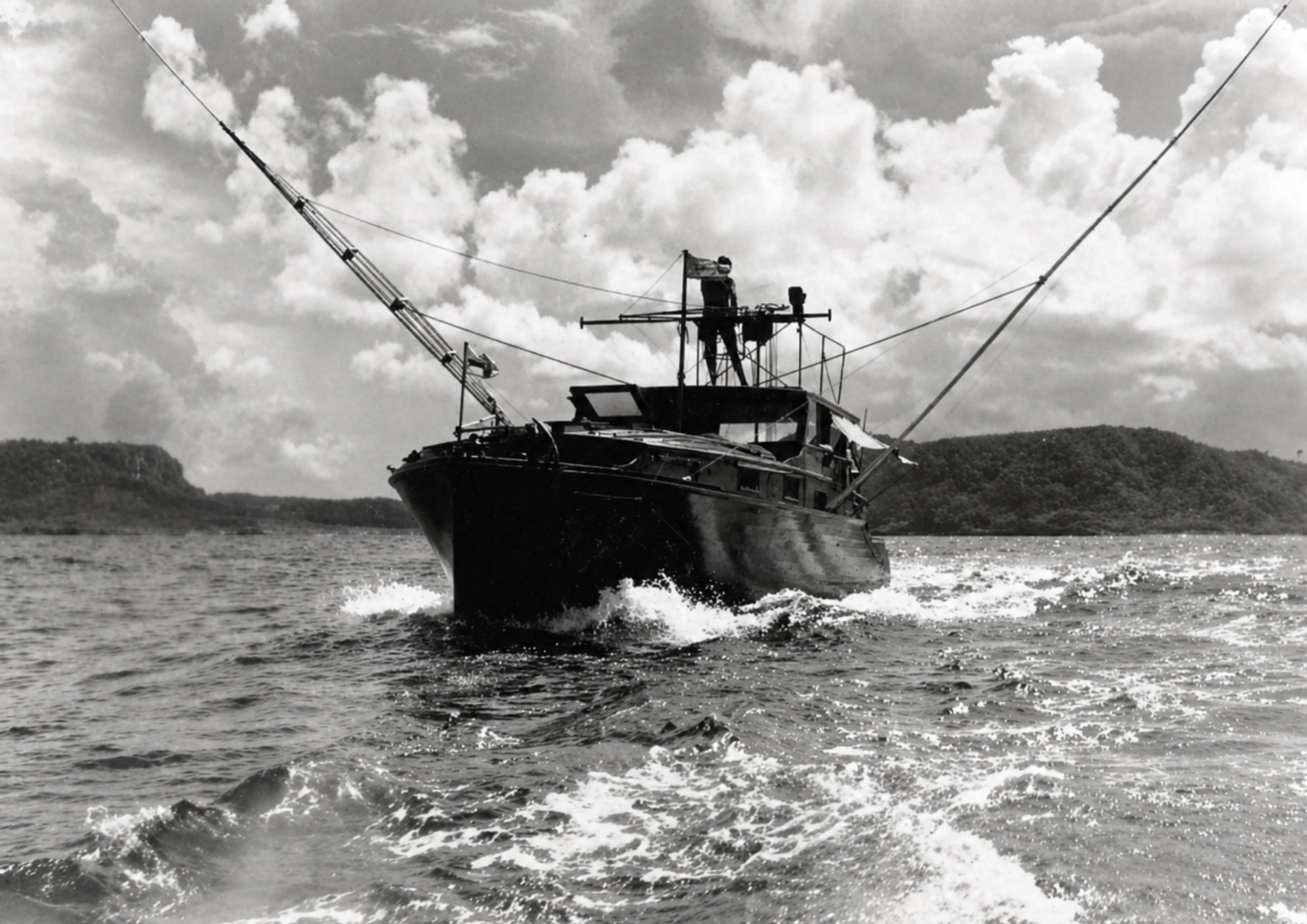
before the sportfisher
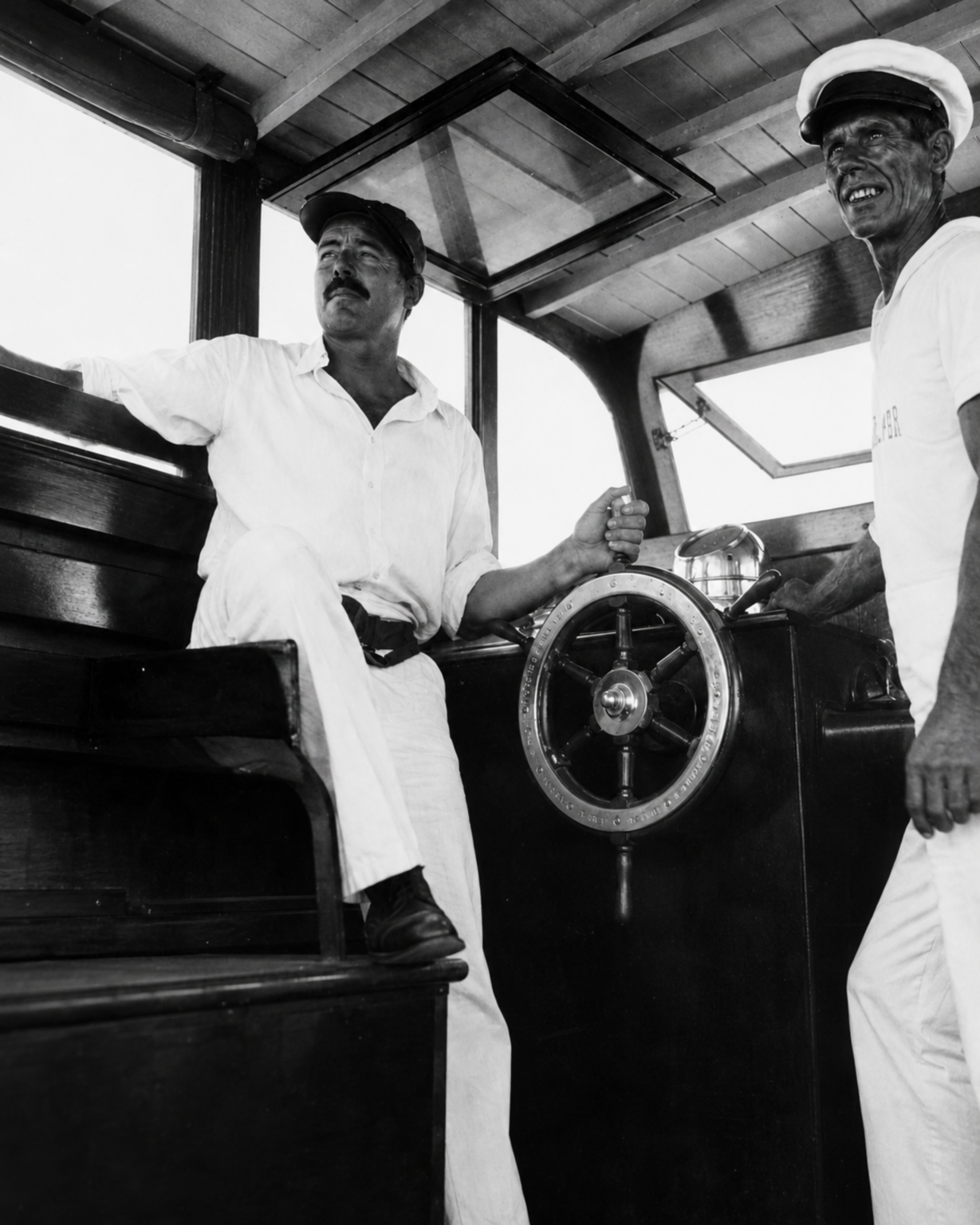
Ernest Hemingway did not fish from a Merritt. He did not fish from a Viking either.
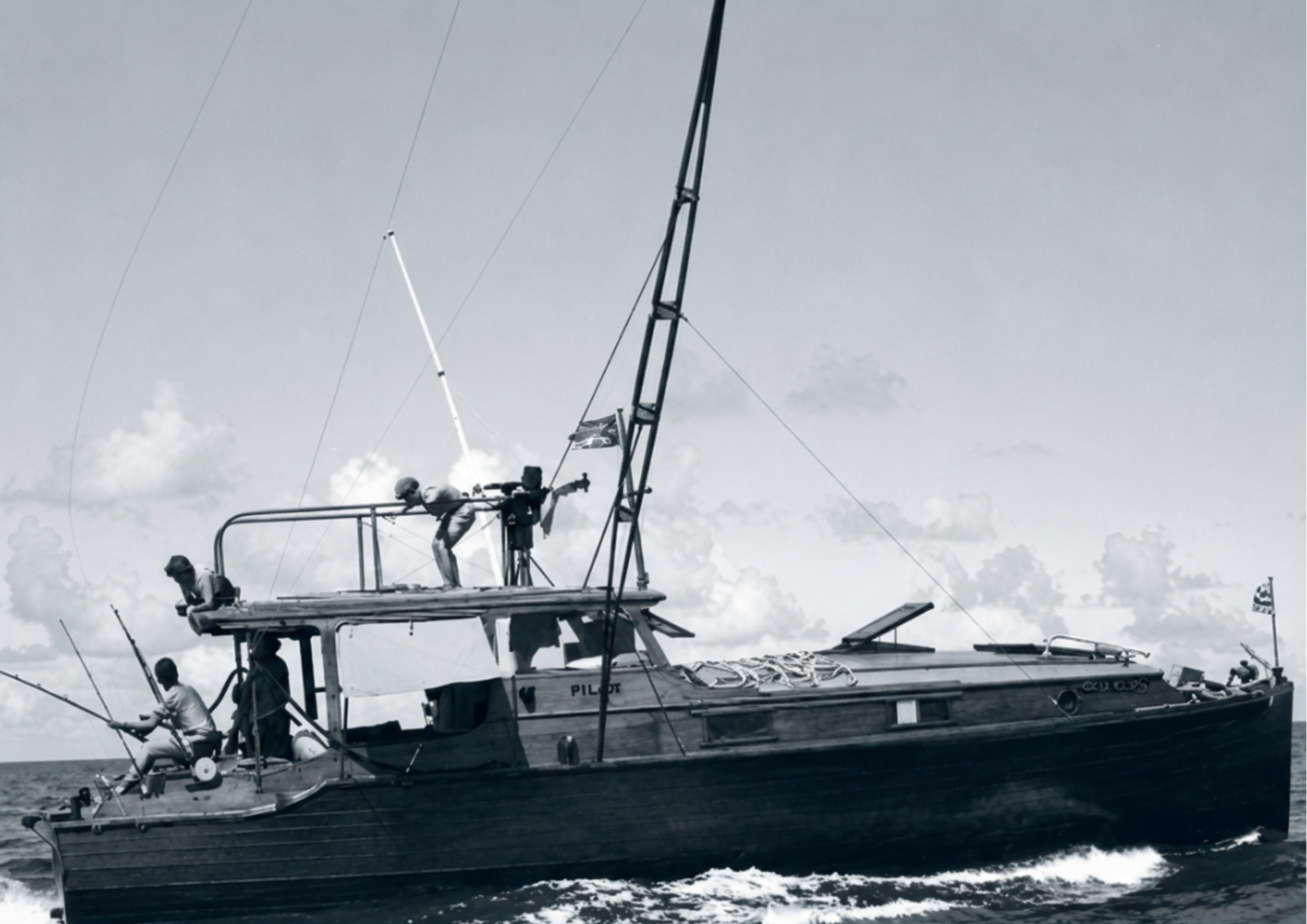
His boat was Pilar, a 38-foot Wheeler Playmate built in Brooklyn in 1934. It was a handsome, capable wooden boat, but it was not a modern sportfisher in the way we would understand one today. That is precisely what makes it interesting.
Hemingway had Pilar modified for the kind of fishing he wanted to do around Cuba, Key West and Bimini. She was part pleasure boat, part working platform, and part experiment. Larger fuel capacity, a livewell and other practical adaptations made her better suited to long days offshore and large fish.
In that sense, Pilar belongs to a transitional moment in big-game fishing. The culture was forming faster than the boats.
The stories came first
Hemingway helped give big-game fishing much of its early mythology. Marlin, tuna, hard weather, long fights and the physical drama of fishing far offshore all became part of the literary and sporting imagination.
But behind the romance was a practical problem.
The more seriously people chased large fish offshore, the more obvious it became that ordinary boats were not enough. Many early fishing boats were adapted cruisers. They could get anglers to the grounds, but they were not necessarily designed around the actual work of finding, raising and fighting big fish.
Visibility from the helm mattered. Cockpit space mattered. Manoeuvrability mattered. Speed mattered. Range and reliability mattered. The boat had to become part of the fishing system, not simply the transport.
That is the useful line from Hemingway to the modern sportfisher. Not a direct lineage of brands, but a progression of need.
Merritt and the custom answer
Merritt Boat & Engine Works represents one of the great custom answers to that need.
Founded in Pompano Beach, Florida, Merritt grew out of the world of South Florida charter fishing and boatyard work. Its early purpose-built sportfishing boats helped define what the American custom sportfisher would become: lighter, more responsive, more practical from the bridge and cockpit, and shaped around the specific requirements of serious offshore fishing.
A Merritt was not just a yacht with fishing equipment added. It was a fishing boat built with yacht-level care.
The bridge had to give the captain a clear view of the spread. The cockpit had to work under pressure. The boat had to be able to back down, turn, travel efficiently and handle long days in open water. Comfort was important, but it was not the starting point.
The boat became part of the tackle.
Rod, reel, bait, teaser, crew and hull all began to work together as one system. A good sportfisher could help a crew cover more water, present baits more cleanly, react faster and fight a fish more effectively once it appeared.
That is why older Merritts still attract such attention. They are not merely classic boats. They are physical records of a particular way of solving a problem.
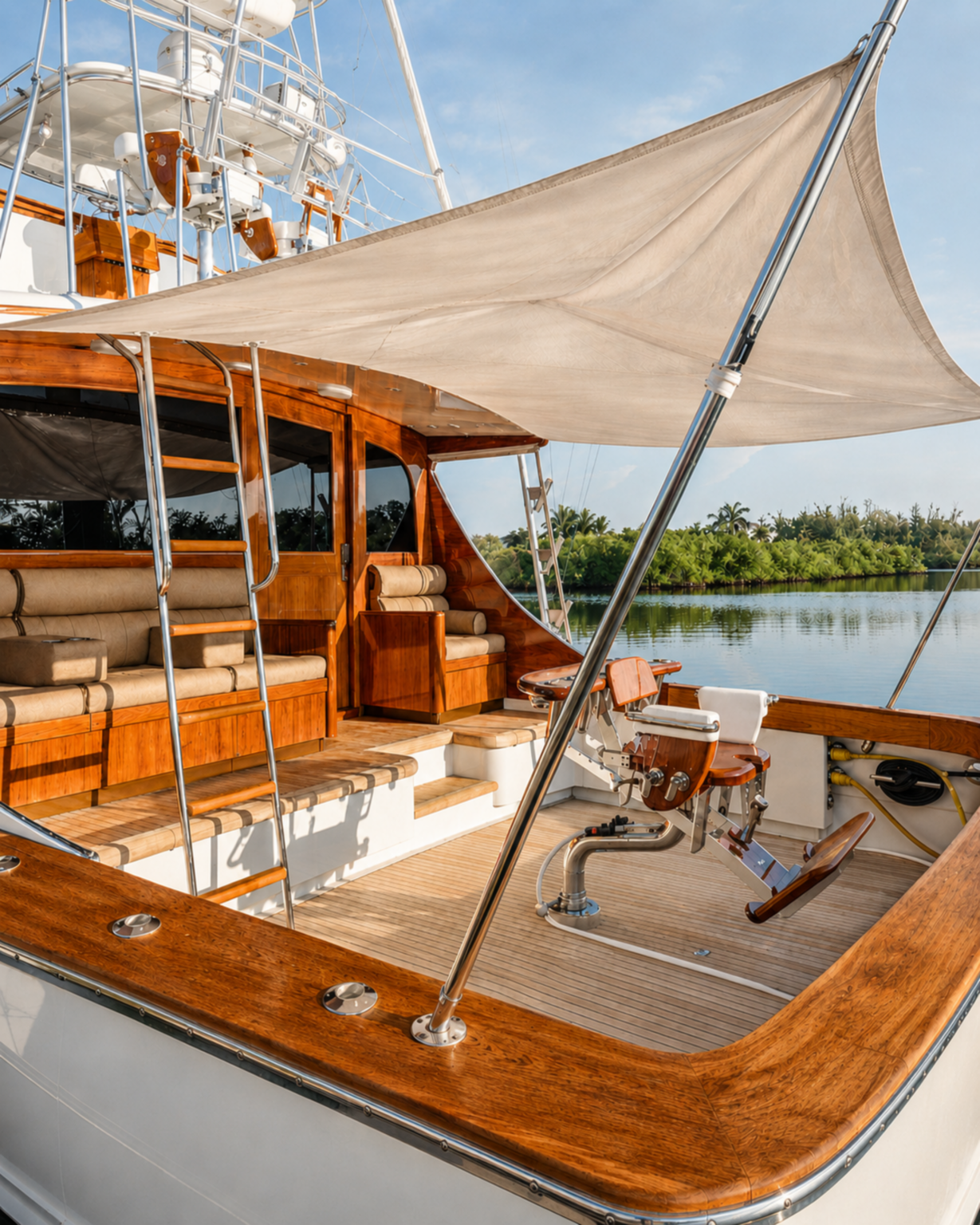
Viking and the production answer
Viking Yacht Company belongs to the same broader story, but offers a different answer.
Founded in New Gretna, New Jersey, in 1964 by brothers Bill and Bob Healey, Viking became one of the defining names in production sportfishing yachts. In this context, “production” should not be read as a lesser version of custom. Viking’s achievement was to show that tournament-level capability could be engineered, refined and repeated at scale.
If Merritt represents the custom boatyard tradition, Viking represents disciplined production engineering.
One asks: how precisely can a boat be built around an owner, captain and fishing style?
The other asks: how consistently can offshore performance, comfort and fishability be delivered across a wider fleet?
Both questions matter. Both came from the same underlying shift: big-game fishing had become serious enough to demand boats designed specifically for it.
From adaptation to specialisation
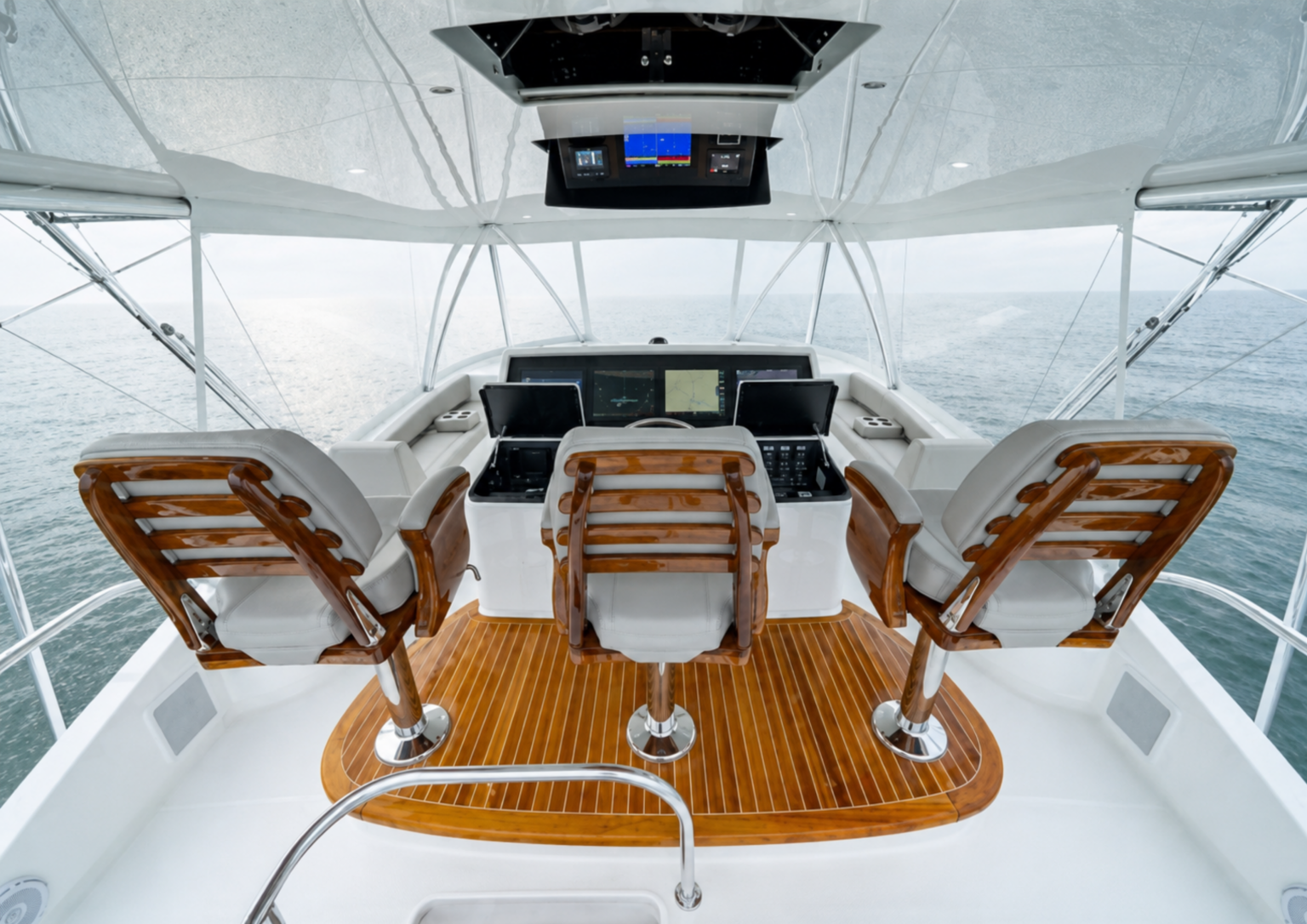
That is the real arc.
Hemingway’s Pilar was not a modern tournament machine, but she shows the direction of travel. Anglers were already asking more from their boats. They needed more range, more function, better handling and better layouts. They were adapting what they had because the ideal boat had not yet fully arrived.
Merritt and Viking belong to the decades that followed, when those adaptations became design principles.
Today’s sportfishers are far removed from Pilar. They are larger, faster, more comfortable and filled with electronics Hemingway could not have imagined. Satellite weather, sonar, stabilisation systems, powerful diesels, towers, integrated navigation and refined hull forms have changed the experience completely.
Yet the basic questions remain familiar.
How do you find the fish? How do you get there efficiently? How do you see what is happening behind the boat? How do you handle a large fish close to the transom? How do you keep captain, crew and angler working as one?
Modern builders answer those questions with far more technology, but the questions themselves are old.
The machinery of a mythology
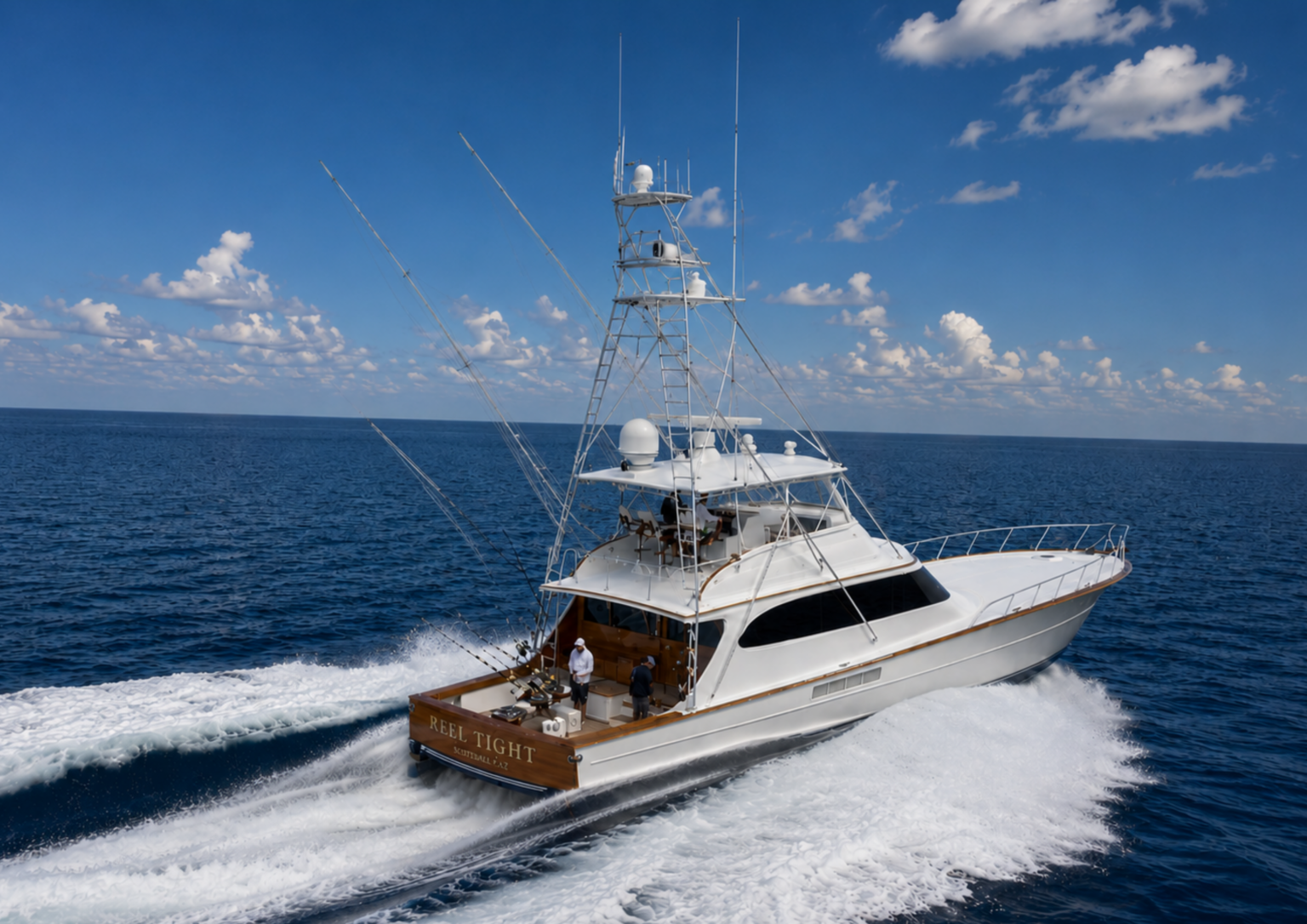
That is what makes the connection between Hemingway, Merritt and Viking more interesting than a simple brand history.
Hemingway gave big-game fishing part of its mythology. Pilar shows the point at which that mythology still relied on improvisation. Merritt and Viking show what happened when the improvisation became an industry.
One is the story of a writer and his modified wooden boat. The others are the story of boatbuilders turning offshore fishing into a specialised discipline.
A modern sportfisher is often beautiful, expensive and comfortable, but it is also a highly specific piece of machinery. Its bridge, cockpit, tower, transom and engine room all trace back to a practical offshore problem: once people began chasing very large fish seriously, they needed boats built for the task.
Hemingway helped make big-game fishing famous. Builders such as Merritt and Viking helped give it the boats.