
Before the World Was Watching: When Jimmy the Sideman Took Centre Stage
Before London, Monterey and the mythology, Jimi Hendrix came to Bermuda as somebody else’s guitarist. One outdoor performance briefly upset that hierarchy, leaving the Isley Brothers backstage while their unknown sideman became the attraction. The story captures Hendrix at the point where his billing still said supporting act, but the audience had already decided otherwise.
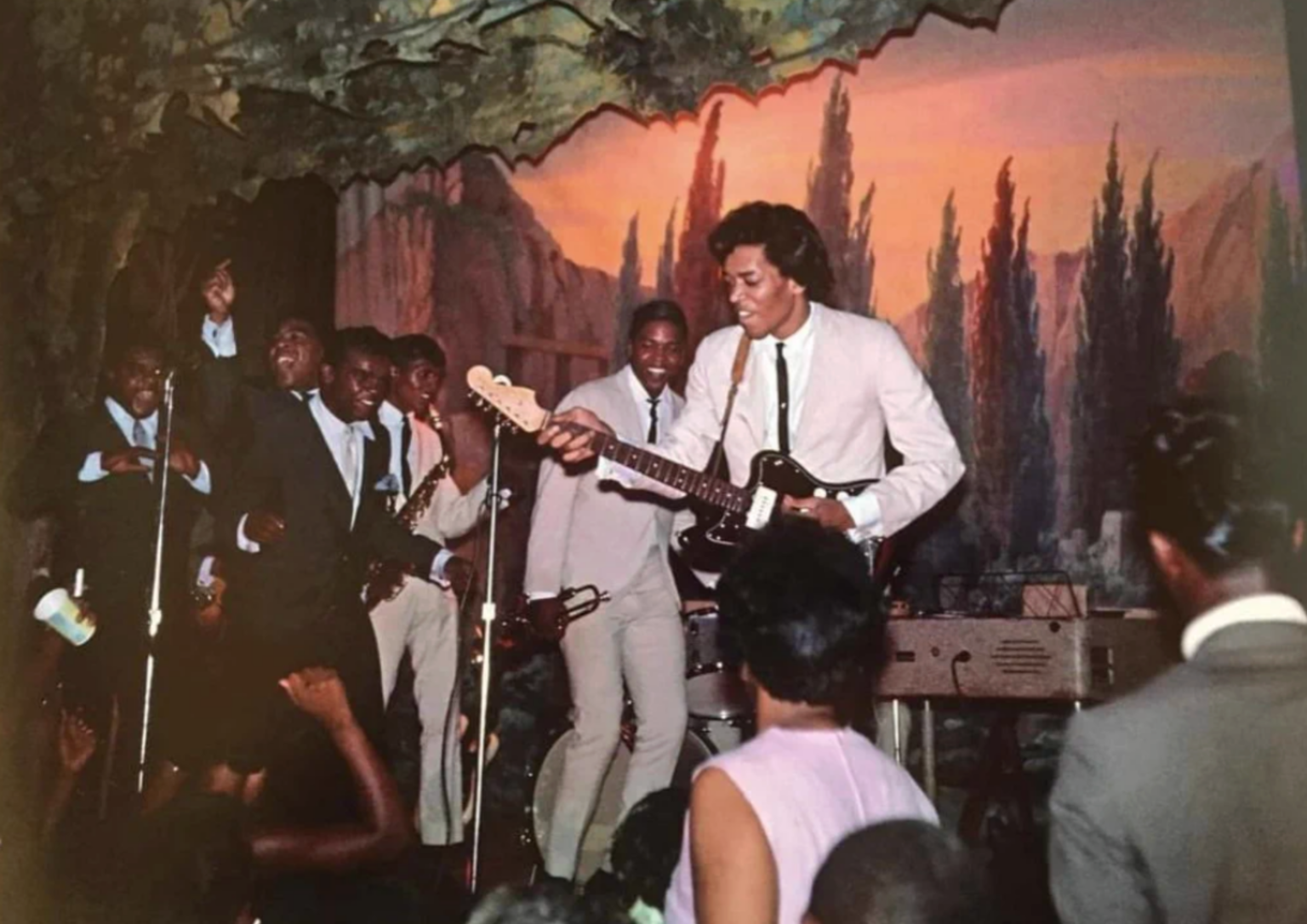
The Isley Brothers were backstage when they heard the noise.
Their band had gone out first to accompany the evening’s Bermudian performers, and Ronald Isley assumed one of those acts had caused the commotion. As he later told it, the brothers looked outside and found their young guitarist on his knees, playing with his teeth while the audience crowded around him. People unable to find seats were watching from the surrounding hills.
The guitarist was 21 years old and still generally known as Jimmy Hendrix. His was not the name at the top of the bill. He was there to follow the arrangements, support the singers and leave the centre of the stage to somebody else.
In Bermuda, that arrangement briefly came apart.
The man at the back
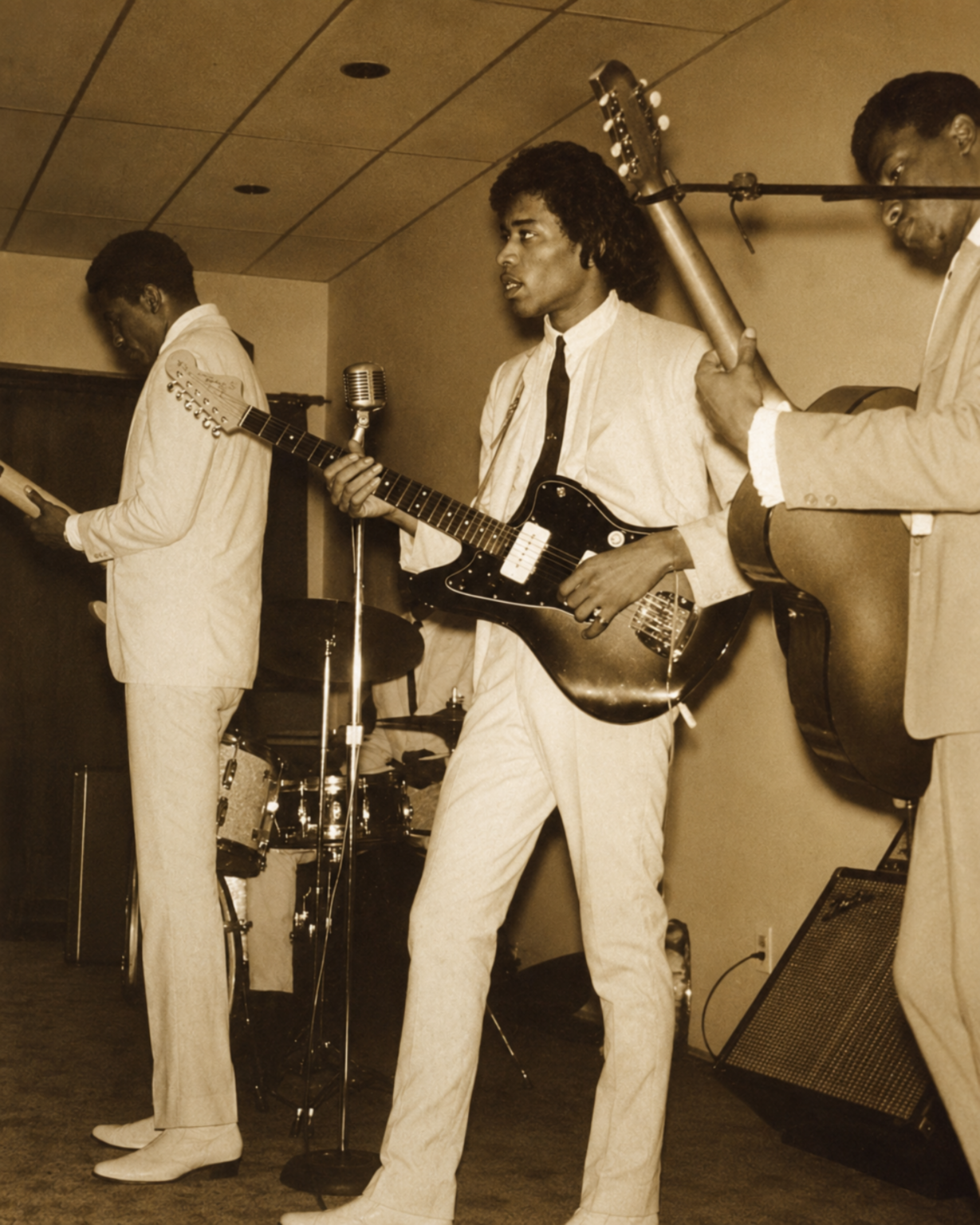
By the spring of 1964, Hendrix was playing guitar for the Isley Brothers. They were established performers, with “Shout” and “Twist and Shout” behind them and a touring show built around a familiar hierarchy: the singers out front, the musicians behind them.
Hendrix understood that structure. He had spent much of the preceding period playing clubs and theatres on the American circuit, where crowded bills and short sets rewarded musicians who could seize attention quickly. Playing behind his back, dropping to his knees and using his teeth belonged to a wider tradition of stagecraft long before those gestures became inseparable from the Hendrix image. He absorbed the methods, sharpened them and made them his own.
For a backing musician, being noticed was a complicated success. The same ability that might secure the next job could unsettle the one already in hand. Hendrix had to make the show more exciting without making the audience forget whose name was on the poster.
The stagecraft later associated with Hendrix did not suddenly arrive with fame in London. It developed through the less glamorous business of touring, backing singers and competing for attention on bills crowded with other performers.
Around the same period, he recorded with the Isleys on “Testify”, a two-part single released on their T-Neck label. It preserves the professional position he then occupied: a remarkable guitarist still working inside somebody else’s arrangement.
The oddity is not that Hendrix showed off. Showmanship was part of the job. It is that, before the headliners had even taken the stage, the guitarist travelling with them had already become part of the story.
The Night Jimmy Broke the Bermuda Bill
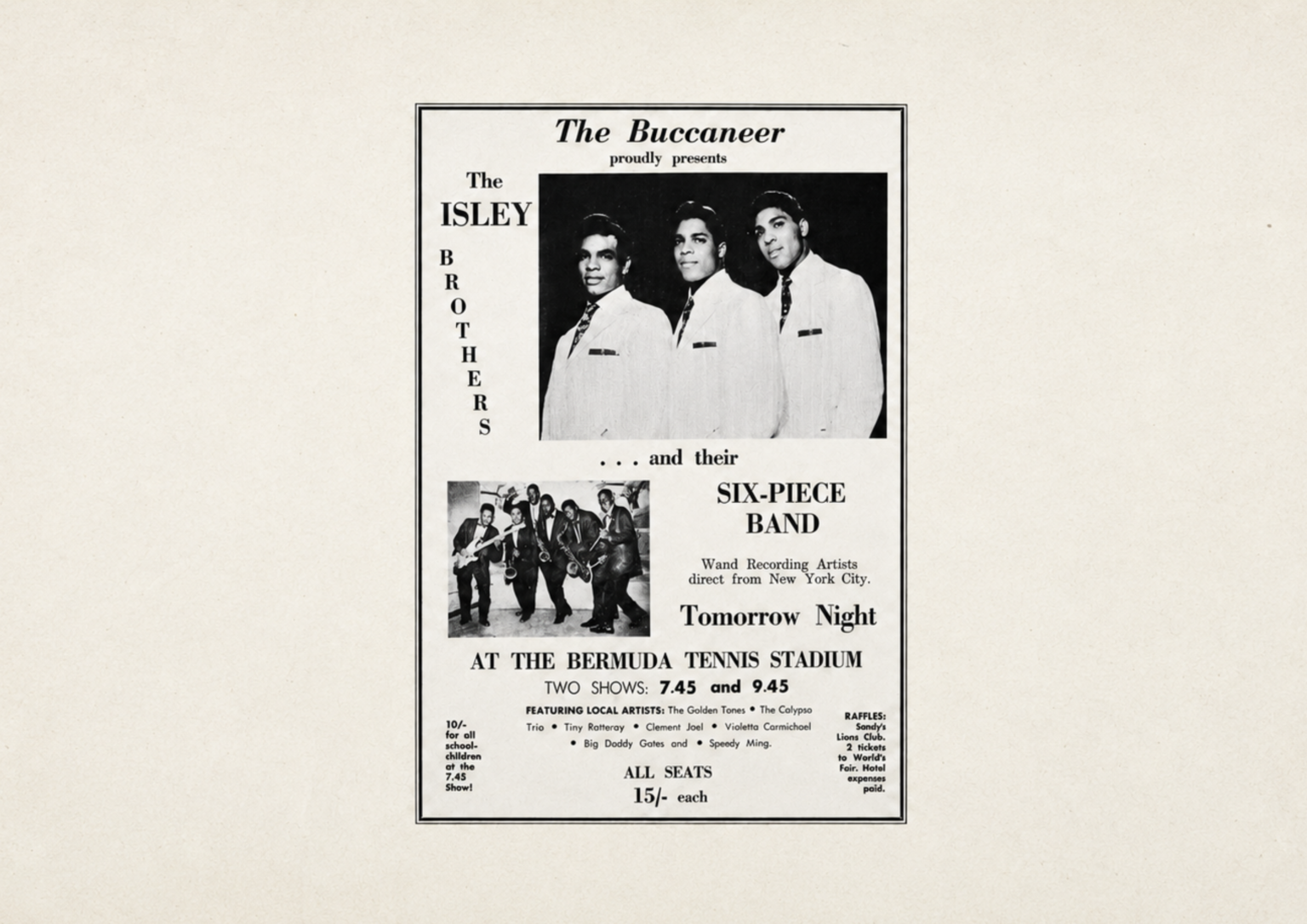
On Saturday, 23 May 1964, the Bermuda Tennis Stadium was prepared for two evening shows. The Isley Brothers had top billing, a six-piece band behind them and a substantial Bermudian cast around them: the Golden Tones, the Calypso Trio, Tiny Ratteray, Clement Joel, Violetta Carmichael, Big Daddy Gates and Speedy Ming.
The poster preserved the order neatly. The Isleys at the top, with island’s performers beneath them. The backing band barely a category at all.
Then, in Ronald Isley’s telling, the hierarchy began to come apart.
The commotion around Hendrix became the detail that endured. Isley remembered discovering that the guitarist behind him had become the spectacle.
The story later drifted towards Cup Match. The calendar does not support it: the documented engagement took place in May, while Cup Match followed at the end of July. Yet myths rarely grow without revealing something. Cup Match gave the anecdote a grander Bermudian stage; the original advertisement gives it something more interesting—two shows, reduced admission for schoolchildren and a long local bill assembled for a Saturday evening at the Tennis Stadium.
Big Daddy Gates later remembered appearing with the Isleys while Hendrix was on guitar. His recollection keeps the night rooted in Bermuda’s own performance culture: visiting American headliners, established island entertainers and a young guitarist whose place in the order was becoming difficult to maintain.
Hendrix did not leave Bermuda famous. No career changed direction overnight and no new name rose above the door. He continued travelling as a sideman. The machinery that would turn Jimmy into Jimi was still more than two years away.
What happened in Bermuda was smaller—and more revealing. For a few minutes, the printed order of importance no longer matched the audience’s attention.
Jimmy was still a sideman. He had simply flipped the bill.
BEF0RE THE PHOTOGRAPHS
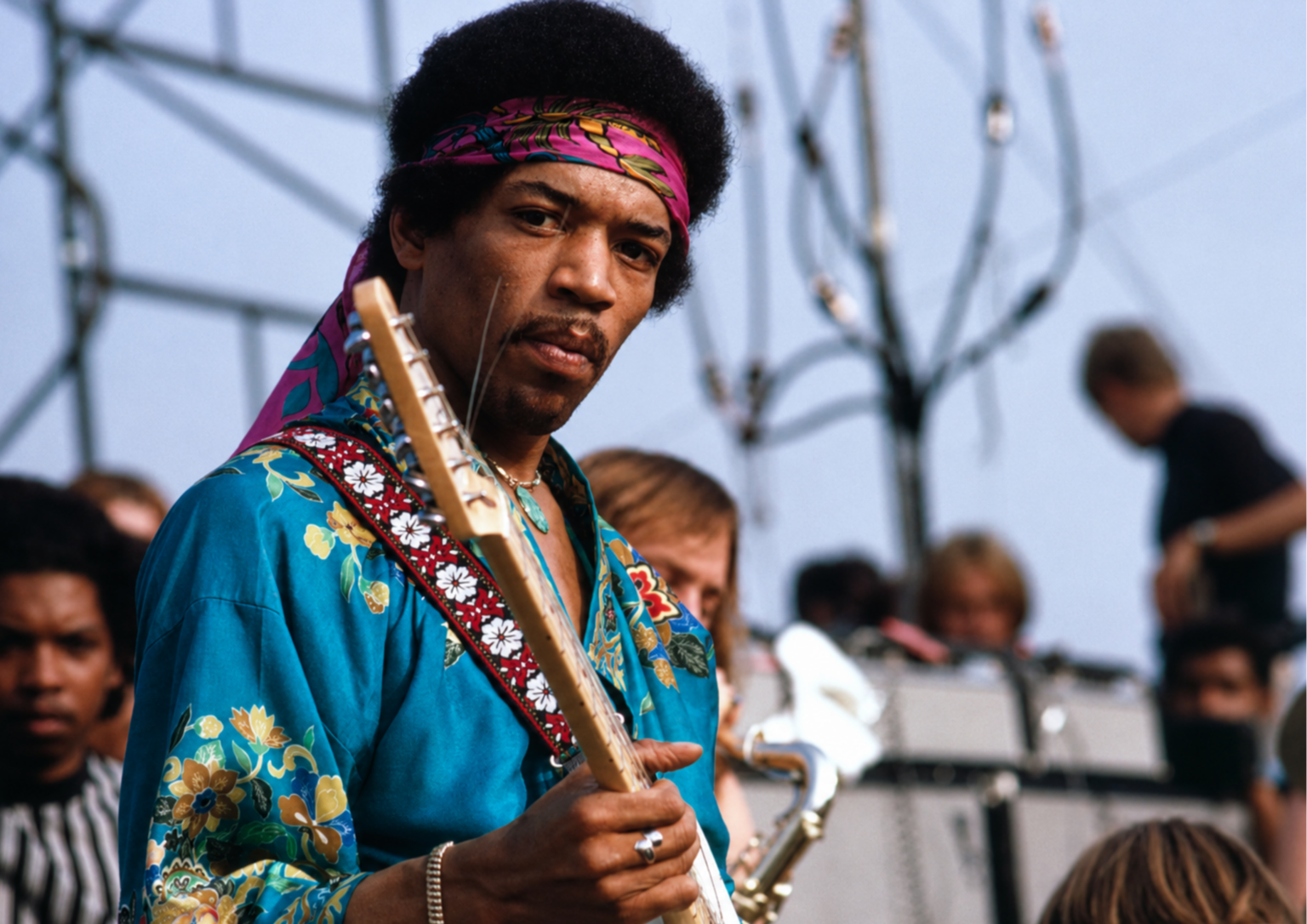
Hendrix continued working behind other performers, including Little Richard, before leading Jimmy James and the Blue Flames in Greenwich Village. In 1966, Chas Chandler brought him to London and encouraged the slight but consequential change from Jimmy to Jimi.
The musician already existed. The internationally recognisable figure was still being assembled.
Within months, the name had a band behind it: the Jimi Hendrix Experience. His career soon became inseparable from its imagery—the clothes, the hair, Monterey, Woodstock and the guitar used as both instrument and theatre. Audiences no longer discovered him unexpectedly at the back of somebody else’s stage. They arrived knowing he was the spectacle.
That period of international fame was remarkably brief. Hendrix moved to London in 1966 and died in September 1970, aged 27. Yet the photographs became permanent, fixing him in public memory as though he had always been Jimi.
Bermuda caught him before the image had settled. There was no Experience, no Monterey and no audience arriving to see Jimi Hendrix. There was Jimmy, playing within a crowded island bill and officially positioned behind the singers while the crowd behaved as though he belonged somewhere else.
He did not become Jimi that night. The name, the band and the machinery of fame would come later.
What Bermuda caught was a glimpse of the mismatch before the mythology: Jimmy Hendrix was still travelling as somebody else’s guitarist, but already playing beyond the part.
Sources include: Bernews; EarlyHendrix; the Bermuda National Library Digital Collection and The Royal Gazette archive; Experience Hendrix; CBS News; Graham Reid’s Elsewhere; and The Jimi Hendrix Record Guide